All posts by mwalimu bewere

Makini School Fees Structure 2020

Makini School Fees Structure 2020

This is the fees structure of Makini School as of 2020. It is one of the best performing schools in Kenya that was founded in February 1978. The school’s main campus is located along Makindi Road Off Ngong Road. It has other four campuses in Kibos Kisumu, Migosi Kisumu, Kisumu Main Campus along Nyerere Road, and another one along State House Avenue in Nairobi.

The school teaches using the Kenyan National Curriculum from grade 1 to 8. Below are the fees structures of all the Makini School Campuses for the year 2020.

 1. Makini School Ngong Road Fees Structure 2020

New Admissions (One Time Payments)
Application form/interview (Non-Refundable) 1,650.00
Registration fee (Non-Refundable) 2,200.00
Refundable deposit 13,200.00
Day Care
Termly tuition fees (inclusive of lunch, tea break, computer, games & swimming, chess) 65,400.00
Pre-Primary 1
Termly tuition fees (inclusive of lunch, tea break, computer, games & swimming, chess) 65,400.00
Pre-Primary 2
Termly tuition fees (inclusive of lunch, tea break, computer, games & swimming, chess) 68,300.00
Grade 1
Termly tuition fees (inclusive of lunch, tea break, computer, games & swimming, chess) 71,300.00
Grade 2
Termly tuition fees (inclusive of lunch, tea break, computer, games & swimming, chess) 79,400.00
Grade 3
Termly tuition fees (inclusive of lunch, tea break, computer, games & swimming, chess) 79,400.00
Grade 4
Termly tuition fees (inclusive of lunch, tea break, computer, games & swimming, chess) 78,200.00
Class 5
Termly tuition fees (inclusive of lunch, tea break, computer, games & swimming, chess) 78,200.00
Class 6
Termly tuition fees (inclusive of lunch, tea break, computer, games & swimming, chess) 78,200.00
Class 7
Termly tuition fees (inclusive of lunch, tea break, computer, games & swimming, chess) 102,600.00
Class 8
Termly tuition fees (inclusive of lunch, tea break, computer, games & swimming, chess) 102,600.00
Termly Optional Activities
Karate 3,000.00
Horse riding 4,500.00
Tae Kwon Do 3,500.00
Skating 4,000.00
Ballet 3,500.00
Golf 5,000.00
Other Termly Payments
P.T.A Fund 1,000.00
Group Insurance cover 550.00
Yearly Payments
School Diary 450.00

2.Makini School Junior Academy – Statehouse Avenue Fees Structure 2020

New Admissions (One Time Payments)
Application form/interview (Non-Refundable) 1,650.00
Registration fee (Non-Refundable) 2,200.00
Refundable deposit 13,200.00
Day Care
Termly tuition fees (inclusive of lunch, tea break, computer, games & swimming, chess) 57,200.00
Pre-Primary 1
Termly tuition fees (inclusive of lunch, tea break, computer, games & swimming, chess) 57,200.00
Pre-Primary 2
Termly tuition fees (inclusive of lunch, tea break, computer, games & swimming, chess) 59,800.00
Grade 1
Termly tuition fees (inclusive of lunch, tea break, computer, games & swimming, chess) 71,300.00
Grade 2
Termly tuition fees (inclusive of lunch, tea break, computer, games & swimming, chess) 72,500.00
Grade 3
Termly tuition fees (inclusive of lunch, tea break, computer, games & swimming, chess) 72,500.00
Grade 4
Termly tuition fees (inclusive of lunch, tea break, computer, games & swimming, chess) 78,200.00
Termly Optional Activities
Karate 3,000.00
Horse riding 4,500.00
Tae Kwon Do 3,500.00
Skating 4,000.00
Ballet 3,500.00
Golf 5,000.00
Other Termly Payments
P.T.A Fund 1,000.00
Group Insurance cover 550.00
Yearly Payments
School Diary 450.00

3. Makini School Kisumu Main Campus Fees Structure 2020

New Admissions (One Time Payments)
Application form/interview (Non-Refundable) 500.00
Registration fee (Non-Refundable) 1,000.00
Refundable deposit 10,000.00
Grade 2
Termly tuition fees (inclusive of lunch, tea break, computer, games & swimming, chess) 32,400.00
Grade 3
Termly tuition fees (inclusive of lunch, tea break, computer, games & swimming, chess) 32,400.00
Grade 4
Termly tuition fees (inclusive of lunch, tea break, computer, games & swimming, chess) 38,500.00
Class 5
Termly tuition fees (inclusive of lunch, tea break, computer, games & swimming, chess) 38,500.00
Class 6
Termly tuition fees (inclusive of lunch, tea break, computer, games & swimming, chess) 38,500.00
Termly Optional Activities
Chess 1,300.00
Activity fee 1,150.00
Group Insurance 550.00
Swimming 2,300.00
P.T.A. Fund 1,000.00
Other Termly Payments
Yearly Payments
School Diary 450.00

4. Makini School Kibos Fees Structure 2020

New Admissions (One Time Payments)
Application form/interview (Non-Refundable) 500.00
Registration fee (Non-Refundable) 1000.00
Refundable deposit 10,000.00
Standard 6
Termly tuition fees (inclusive of lunch, tea break, computer, games & swimming, chess) 38,500.00
Standard 7
Termly tuition fees (inclusive of lunch, tea break, computer, games & swimming, chess) 43,200.00
Standard 8
Termly tuition fees (inclusive of lunch, tea break, computer, games & swimming, chess) 43,200.00
Form 1
Termly tuition fees (inclusive of lunch, tea break, computer, games & swimming, chess) 108,000.00
Form 2
Termly tuition fees (inclusive of lunch, tea break, computer, games & swimming, chess) 108,000.00
Form 3
Termly tuition fees (inclusive of lunch, tea break, computer, games & swimming, chess) 113,100.00
Termly Optional Activities
Form 4
Termly tuition fees (inclusive of lunch, tea break, computer, games & swimming, chess) 113,100.00
Termly Optional Activities
Activity fee 1,150.00
Group Insurance 550.00
Swimming 2,300.00
P.T.A. Fund 1,000.00
Other Termly Payments
Boarding Fees 36,800.00
School Diary 450.00
Chess 1,300.00

5. Makini School Migosi Fees Structure 2020

New Admissions (One Time Payments)
Application form/interview (Non-Refundable) 500.00
Registration fee (Non-Refundable) 1,000.00
Refundable deposit 10,000.00
Day Care
Termly tuition fees (inclusive of lunch, tea break, computer, games & swimming, chess) 28,100.00
Pre-Primary 1
Termly tuition fees (inclusive of lunch, tea break, computer, games & swimming, chess) 28,100.00
Pre-Primary 2
Termly tuition fees (inclusive of lunch, tea break, computer, games & swimming, chess) 30,800.00
Grade 1
Termly tuition fees (inclusive of lunch, tea break, computer, games & swimming, chess) 32,400.00
Termly Optional Activities
Chess 1,300.00
Activity fee 1,150.00
Group Insurance 550.00
Swimming 2,300.00
P.T.A. Fund 1,000.00
Other Termly Payments
Yearly Payments
School Diary 450.00

Please note that the fees are subject to change. Contact the school using the avenues below for fee policies and payments.

Makini School Contacts

Phone: +254 20 3874950

Email: admissions@makinischool.com.

Crawford International School Fees Structure 2020

Crawford International School

This is the fees structure for Crawford International School as of 2020. Crawford International School is located in Tatu City, 5km from exit 11 on Thika Superhighway and 3km from both the Northern and Eastern bypasses. The school is part of South Africa’s AdVtech education group which boasts of 19 top private schools in South Africa. Crawford was launched in Kenya on 25th January 2019

They teach using the British Curriculum and the Cambridge International Examinations Board is the preferred choice of syllabus. There are also state of the art facilities in Crawford International School to ensure that they offer a world-class education i.e ICT Computer rooms, Innovation GO Lab (Science, Technology, Engineering, Art, Mathematics) laboratory, Dance, Drama, Music and Art Studios, Physics, Chemistry and Biology Laboratories, Multipurpose Sport and Cultural Hall, Library, 25 metre swimming pool with change rooms and pavilion, sports fields for rugby, cricket and football, basketball and tennis courts, Student Piazza, girls’ and boys’ boarding establishment, canteen and a sanatorium.

Classrooms are equipped with digital projectors, interactive smart boards, and whiteboards. Laptops are provided for all teaching staff. Students and staff have access to high-speed Broadband Internet and wireless network. On top of that, they have a fleet of buses which operate on a daily basis to transport students to and from school.

Crawford International School Fees Structure For 2020

Class

​​

​​ Fees Per Academic Year in Ksh

​​

Kindergarten

​​

KG1

​​

450,000

​​

KG2

​​

450,000

​​

Reception

​​

480,000

​​

Year 1

​​

540,000

​​ 

Application ​​ Fee

​​ 

5,000

​​

Admission Fees

​​

40,000

​​

Lunch Fees

​​

45,000

​​ 

School Textbook Deposit

​​ 

25,000

​​

Preparatory School

​​

​​ Year 2

​​

600,000

​​

Year 3

​​

630,000

​​

Year 4

​​

720,000

​​

Year 5

​​

720,000

​​

Year 6

​​

720,000

​​ 

Application Fee

​​ 

5,000

​​

Admission Fees

​​

40,000

​​

Lunch Fees

​​

75,000

​​

School Textbook Deposit

​​

25,000

​​

Middle School

​​

7

​​

870,000

​​

8

​​

900,000

​​

9

​​

900,000

​​

Junior High School

​​

10

​​

960,000

​​

11

​​

960,000

​​

Senior High School

​​

12

​​

1,000,000

​​

13

​​

1,000,000

​​

For Middle school, Junior High School and Senior High school

​​ 

Application Fee

​​ 

5,000

​​

Admission Fee- Day Scholars

​​

40,000

​​ 

Admission Fee- Boarders

​​ 

50,000

​​

School Textbook Deposit

​​

50,000

​​

Lunch – day scholars

​​

90,000

​​

Boarding (Weekly)

​​

720,000

​​

Boarding (Full)

​​

Not Offered

​​

Individual music lessons

​​

45,000

Crawford International School Contacts

Tel: +254 020 765 1053

Email : info@crawfordinternationalschool.com

Brookhurst International School Fees Structure 2020

Brookhurst International School Fees Structure 2020

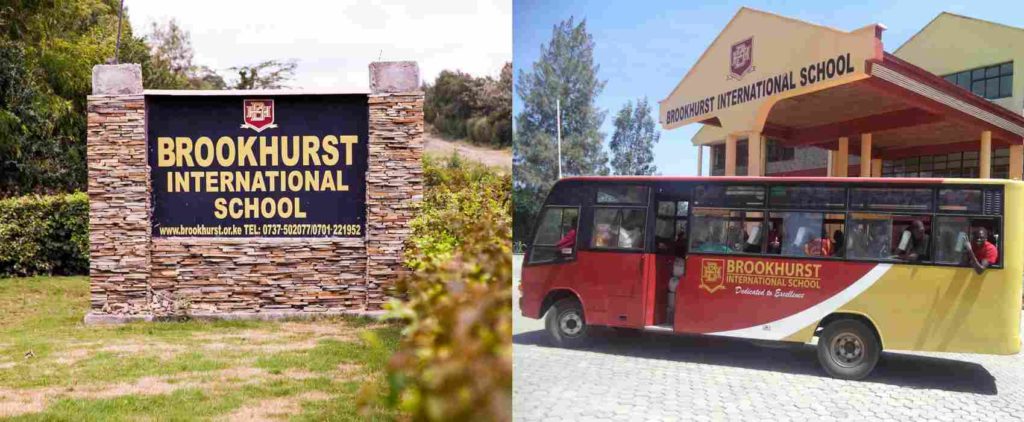
This is the fees structure of Brookhurst International School as of 2020. It’s located along Pipeline Road in Kiserian, Kajiado county. They teach using the British National Curriculum from year 4 to 13; middle-high school ( years 4 to 7), junior high school ( years 8 and 9), senior high school ( year 10 and 11) and A-Level ( year 12 and 13).

Brookhurst boasts of modern facilities which enable it to offer word class education; 16 spacious, well-designed classrooms, 4 of which have been specially designed for Art and Music. Each class has a whiteboard and a projector that make the learning experience more practical. The school’s Sanatorium is equipped with a qualified clinical officer to address minor health needs of the students and have partnered with AAR to handle emergencies.

They also have well-equipped laboratories and libraries. For instance, students and teachers at Brookhurst have access to 4 global online libraries best suited for the British National Curriculum. Boarding facilities are also well-furnished for boys and girls i.e modern beds, reading space, and spacious individual lockers.

Let’s have a look at their fees structure for the academic year 2020/ 2021 in Kenyan Shillings.

​​ 

Class

​​ 

Fees

​​ 

Boarding

​​ 

Year 4 – 6

​​ 

170,000

​​ 

Year 7 – 9

​​ 

230,000

​​ 

Year 10

​​ 

245,000

​​ 

Year 11

​​ 

260,000

​​ 

Year 12

​​ 

280,000

​​ 

Year 13

​​ 

290,000

​​ 

Day School

The fees covers tuition, transport and lunch.

​​ 

Year 4 – 6

​​ 

155,000

​​ 

Year 7 – 9

​​ 

185,000

​​ 

Year 10

​​ 

200,000

​​ 

Year 11

​​ 

215,000

​​ 

Year 12

​​ 

235,000

​​ 

Year 13

​​ 

245,000

​​ 

Additional payment for new students

​​ 

Admission fee

​​ 

5,000

​​ 

Caution money

​​ 

10,000

​​ 

Bedcover and pillow for boarders

​​ 

5,000

Please note that the fees are subject to change. Contact the school using the avenues below for fee policies and payments.

Tel: +254 701 221 952 or +254  737 502 077

Email:info@brookhurstschool.or.ke

You can also visit the school in Kiserian, along Pipeline Road or visit their offices at Branton court off Ndemi Lane Ngong Road in Nairobi.


List Of Best Performing Secondary Schools in Garissa County

1.Garissa High School

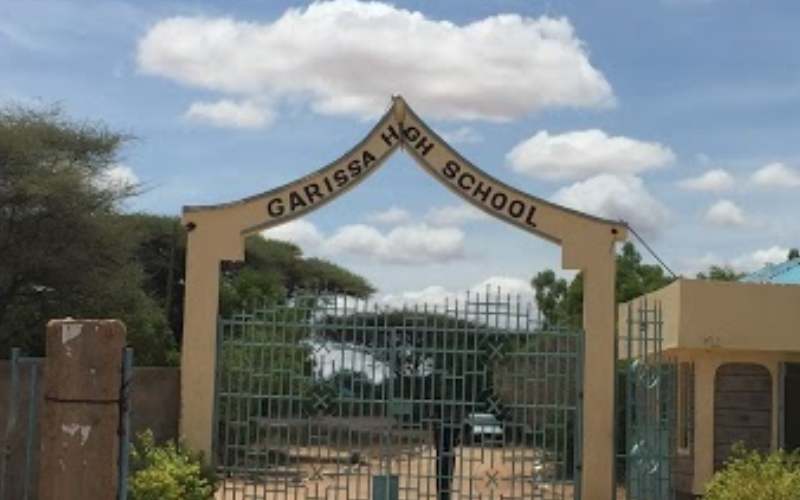
This is a list of the best performing secondary schools in Garissa County. Garissa County is found in the former North Eastern Province. The top student in the county, Ahmed Issack from Garissa High School scored an A- (minus) of 75 points in 2019 KCSE.

Despite being a hardship area, many schools managed to record an impressive performance in the 2019 KCSE.

Here is the list for the best performing secondary schools in Garissa County.

1.Garissa High School

Category: National School

Location: Dujis Township Constituency

2. Umu-Salama Girls High School

Category: Extra-County School

Location: Medina

3. Young Muslim High School

Category: Private School

Location: Iftin

4. Hajji Boys High School 

Category: Extra-County School

Location: Garissa Township

5. Hagadera High school 

Category: Private School

Location: Jarajila near Garissa Town

6. Gedi Mixed Secondary School

Category: Sub-County School

Mean Score: 6.456

Location: Dadaab

7. Iftin Girls High School

Category: Sub-County School

Location: Iftin

8. Dadaab Secondary School

Category: Sub-County School

Location: Dadaab near Dadaab Town

9. Khadija Girls High school 

Category: Private School

Location: Central Garissa

10. Iqra High School 

Category: Private School

Location: Central Garissa near Garissa Town

List and Functions Of TSC Commissioners in Kenya

List and Functions Of TSC Commissioners in Kenya

This is a list of all Teachers Service Commission ( TSC) Commissioners in Kenya and their functions. The Teachers Service Commission (TSC) of Kenya is an Independent Commission which was established back in July 1967 through an Act of Parliament to give teachers uniform terms and conditions of service. It’headquartered in Upperhill, Nairobi with offices in all the 47 Counties. There are 9 TSC commissioners who comprise of a chairperson and a vice chairperson. Dr. Lydia Nzomo is the current chairperson while Cleopas Tirop is the vice chairperson. All TSC commissioners serve for a period of 6 years on a full-time basis undertaking the following roles. They are all appointed by the president.

Functions of TSC Commissioners in Kenya

1. Registration of trained teachers.

2. Recruiting and employing registered teachers.

3. Assigning teachers employed by the Commission to serve in any Kenyan public school or institution.

4. Promotion and transfer of teachers.

5. Exercising disciplinary control over teachers.

6. Terminating the employment of teachers.

7. Reviewing the standards of education and training of persons entering the teaching service.

8. Reviewing the demand for and supply of teachers

9. Advising the national government on matters relating to the teaching profession.


How To Apply For A TSC Number in Kenya 2020

How To Apply For A TSC Number in Kenya 2020

This is a quick guide on how to apply and register for a Teachers Service Commission (TSC) number in Kenya as of 2019. This is a unique identification number given to all the qualified teachers in Kenya who have been successfully recruited by the Teachers Service Commission. Having highlighted on this website before on the TSC recruitment requirements for teachers in Kenya, on this post we are going to look at how you can apply and get your TSC number

You should scan and upload the following documents :

1. Original Professional and Academic Certificates
2. National identity card
3. Bank slip

Deposit Ksh 1,055 through Direct Banking or via MPesa. (KSh 1,000 is a non-refundable registration fee of and Ksh 55 for Bank Commission Charge to the TSC). Application for a duplicate certificate will be KSh 2055. All payable to National Bank of Kenya Ltd, Harambee Avenue branch, Account Name: TSC-Secretariat Account Number: 01001005707400. For Mpesa, the Pay Bill Business Number is 625625.

4. One passport size photo
5. KRA pin
6. GP69 form: You can download the GP69 form here. This form must be signed by a government doctor.
7. Certificate of good conduct: Here is a simple guide on how to apply for a certificate of good conduct in Kenya.
8. Entry and work permits for non-Kenyans. They are also required to upload a letter of clearance from the Ministry of Education.
Vetting Committee.

CLICK HERE to start your online registration for a TSC number.

A teacher who meets the requirements for registration will be issued with the certificate of Registration bearing a TSC number within 30 days.

Why teachers are irreplaceable!

I’ve said it many times before:

The job of a teacher is to inspire, to challenge, to excite their students to want to learn …..

If we can’t inspire the students in our classroom, we are simply not doing our job.  If we are unable to challenge them with tasks that provoke them to think, reflect and grow, we are still not doing our job.  And if we are unable to excite in our students a desire to learn, to ignite a passion and love of learning, then learning will just not happen.

Although I’ve blogged these thoughts often, this time the words are not just mine.  Instead they are said, very passionately

The fundamental role of a teacher is not to deliver information, it is to guide the social process of learning …

The most important thing a teacher does is make every student feel like they are important, to make them feel accountable for doing the work of learning ……

….. what really matters is what happens inside the learner’s head and making a learner think seems best achieved in a social environment with other learners and a caring teacher.

It is indeed through the influence of the teacher who creates a nurturing and caring classroom environment, that our students are able to learn, grow and achieve.

We must never doubt the incredibly strong impact that teachers have on their students.   Creating a caring, nurturing and safe learning space within the confines of each classroom is what it really is all about!  It is the role of teachers

  • to take time to get to know their students
  • to provide individualized programs which nurture the skills of each learner
  • to develop in each student an ‘I can’ attitude from which confidence can grow
  • to ensure a safe and secure classroom where risk taking is encouraged
  • to create opportunities in which students can be actively immersed in new learning
  • to guide students’ learning by providing them with a scaffold they will be able to use throughout their life to pursue future learning
  • to encourage students to be patient and to not expect that learning is instantaneous
  • to foster an understanding of the value and benefits gained from collaboration
  • to guard against students competing against each other
  • to help students appreciate the value of learning by doing

With this question sitting in the back of my mind over the last few days, I realize that this is the kernel of the issue I constantly grapple with when I try to inspire within students and teachers alike a love of reading and a love of learning.   Inspiration has many facets.  It encompasses much.  And it requires the guiding hand of a teacher to ensure that it happens.

What does inspiration involve and aim to achieve in our classes?

  • to awaken the mind of the learner
  • to arouse focused attention
  • to fill students with enthusiasm
  • to excite passionate interest
  • to motivate students to go one step further than they may do otherwise
  • to initiate activities in which students can learn with and from each other
  • to enable the student to also be the teacher
  • to stir imagination
  • to encourage risk taking
  • to create excitement
  • to arouse and enthuse involvement and participation
  • to light an insatiable spark within the heart and soul of the learner
  • to stimulate learners to be lifelong learners!


LEARNING AT HOME WON’T WORK , FIND BETTER OPTION

When President Uhuru Kenyatta shut down schools mid last month, it was estimated that it would be a temporary measure and that, sooner rather than later, learners would go back to class.

But that was not to be. They have now been out for six weeks, part of which coincides with the April holiday, with no end in sight. And now, anxiety is building up.

When will schools reopen? If the situation does not change now, will there be national examinations this year? This is a matter that the government must deal with concretely and definitively.

President Kenyatta and Education Cabinet Secretary George Magoha have stated categorically that, at the moment, the government has no intention of cancelling the exams.

Granted, if schools reopen, perhaps in mid-May, it will be possible to recover the lost time. The school calendar can be revised by, among others, shortening the August holiday to a week, and two, pushing the exams dates to the end of November and part of December.

LEARNING PACE

However, in the meantime, the question is, how will the extended stay at home affect learners? How can Standard Eight and Form Four candidates prepare for the exams?

So far, the stock response is that the government is offering online learning through programmes developed by the Kenya Institute of Curriculum Development. Fair enough.

However, what the public has not been told is, what is the content on offer and how is the delivery?

KICD has a large corpus of teaching content transmitted through radio, television, audiovisuals and online. Typically, though, this is supplementary content to support classroom teaching facilitated by teachers.

The material is not ordinarily the basic source of learning and for good reason: learning is determined by variables such as entry behaviour that presupposes prior knowledge, context, experience and pace. It is not universal.

And that is why classroom teaching is important; teachers can determine those variables and pitch their lessons accordingly.

Indeed, every class has fast and slow learners, both of whom have to be handled differently. To imagine that KICD content would be easily understood by all is not just unrealistic but unfair.

SCARCE RESOURCES

Fundamentally, digital and online learning raises the cardinal question of access — physical, mental and social.

Although statistically it is argued that many households have access to gadgets such as radio, television and smartphones, through which they can obtain the lessons, the reality is different.

Having gadgets is one thing but having the infrastructure, such as power supply for limitless access, as well as a conducive environment for consuming the content is another matter.

Worse, many parts of the country do not have internet connection and that automatically hinders them from downloading content or streaming.

Two, a practical reality in most households is that children are additional hands to be deployed to help in domestic chores and farm work.

When they are not in school, they are routinely asked to perform those duties. Since the KICD programmes are scheduled, it is idealistic to imagine that families will daily release their children to participate in TV lessons when there are tasks to be performed.

If, ordinarily, such social demands contribute to absenteeism and dropouts, how about when schools are closed?

LIMITED SPACE

The third element related to access is cognition and, specifically, helping learners to understand new and difficult concepts.

When in class, teachers explain concepts, answer questions or clarify facts. For the broadcasts and online content, that is not possible.

We are flagging a matter of great concern that ought to be handled with singular resolve and urgency.

Arguably, the broadcast and online programmes are no replacement for classroom teaching and should not be construed as adequate for learners to complete and understand the syllabus and candidates to prepare for exams.

Far too many learners are left out, accentuating the inequality that the school system is meant to eliminate.

The Kenya Secondary School Heads Association and the teachers’ unions have asked the government to consider a phased reopening of schools.

That means bringing back Forms Four and Three as well as Standard Eight and Seven learners and asking schools to keep health protocols. That is plausible.

But if the government has a better option, it should pronounce itself on it now. Keeping everyone guessing is not right.

Communication is pivotal at this point when the world is traumatised by the miseries caused by the coronavirus pandemic.

Time is running out, children are wasting away and parents are agonising, and so the government must give direction on the school calendar, especially reopening and national exams.

SOURCE nation.co.ke

Online learning a mirage in rural areas, MP tells Magoha

teacher and pupils under a tree

Education CS George Magoha has been criticised over his assertion that learning is going on online and through radio and TV lessons.

Mwingi Central MP Gideon Mulyungi said on Monday the CS is out of touch with the reality on the ground since most students in rural areas are unable to access online learning materials. Others have no access to TVs.

The lawmaker said it was unfortunate for Magoha to appear on TV and insinuate that schoolchildren are studying online while at home.

“From the perspective of my constituency and the picture in most parts of the country, this is not happening and it is a lie,” Mulyungi said.

He said learners in rural areas and some urban areas cannot afford the luxury of online learning due to a myriad of reasons.

The legislator said the only place online learning could be taking place is in urban areas where learners have access to internet connectivity, smartphones, laptops, airtime and data bundles. He insisted that in rural areas such facilities were unavailable.

“In other areas, there is no electricity and this is more the reason why the much-hyped government laptop project collapsed,” Mulyungi said.

He said in the wake of Covid-19 parents have turned their focus of putting food on the table and not online learning.

Mulyungi urged Magoha to come up with well-thought-out innovative and practical solutions to ensure all students continue with their studies.

The MP asked Magoha to also show how learners will catch-up with time lost during the Covid-19 pandemic and how parents will be compensated for the fees they had paid before schools were closed due to the coronavirus.

source https://www.the-star.co.ke/


Uhuru hints at partial reopening of schools

President Uhuru Kenyatta yesterday hinted at a partial reopening of schools and dismissed speculation that the KCPE and  KCSE exams could be cancelled.

Speaking during a live radio interview from State House, Nairobi, the President said the Education ministry will look at measures to enable candidates to sit the exams.

Since schools were closed on March 15, the future of the candidates has been a subject of debate, with divergent opinions causing anxiety.

But in the absence of more specific national guidance, Education expert Janet Muthoni says there is a need to work out the intricacies of what the school day will look like when they reopen.

“If we want to get kids back in the fall, we need to talk about what that’s going to look like today.”

Her worry is “the fear of what a disease outbreak could mean in schools if the government takes that path”.

While children who contract the virus appear less likely to become sick, scientists believe they can pass the infection along to other people, hence causing widespread infection among staff and families.

Educators have asked whether Education CS George Magoha plans to conduct an audit of the necessary materials and supply chain for cleaning, disinfecting and preventing the spread of the disease should children return to school.

The Kenya Union of Post-Primary Education teachers, in a memorandum to the Education ministry, demanded the school calendar rescheduled and exams postponed.

In view of the foregoing, President Kenyatta said the government will release a schedule on how learners will return to schools, especially those who are to sit the national exams.

“We need to know when it will be done and how it will be done. When that time comes, we will elaborate details of how we will make sure all this is taken care of,” he said.

The Kenya Certificate of Primary Education (KCPE) exam was scheduled to start on November 2 and end on November 3, while the Kenya Certificate of Secondary Education (KCSE) exam was to start on November 4 and end on November 30.

Recovering lost time

Already, three weeks of the school calendar have been lost. Although its impact on school activities cannot be underestimated, headteachers say it is easily recoverable.

They argue that if normalcy returns and schools are opened before June, then it is possible to recover the time lost.

Schools were scheduled to reopen on May 4 but the coronavirus crisis could well eat into part of the second term.

The Kenya Institute of Curriculum Development requires schools to have fully covered the syllabus by the end of September.

In calling for partial reopening, sector players and educationists say it is conceivable to have some schools open fully, some partially and others to remain closed. In the proposal, headteachers want candidates to report first.

Headteachers say this will avert a transition crisis as already most secondary schools are grappling with congestion.

The Kenya Secondary School Heads Association has recommended that the government foregoes the second term midterm and reduces the August holiday to recover the time lost.

“By the end of June, schools will have lost 10 weeks. This is longer than the third term of the school calendar [nine weeks],” chairman Kahi Indimuli told the Star.

“If we get into July with schools shut, then the calendar as it is will be fatigued. With less than 28 weeks, preparing students for examinations will exert pressure on the entire system.”

The principals argue that if the spread contained to “bearable” levels, then KCPEexam candidates, Form 3 and 4 students, could go to school under stringent safety measures.

Another proposal by education advisers is to have schools in counties with no Covid-19 cases resume lessons. This will, however, depend on how the virus spreads.