KCSE Past Papers 2019 Chemistry paper 3 (233/3)

Practical

2019 Chemistry paper 3

1. You are provided with:

Solution A aqueous Iron(III) sulphate.

• Solution B aqueous potassium iodide.

• Solution C mixture of aqueous starch and sodium thiosulphate solution.

You are required to determine the rate of reaction between aqueous Iron(III) sulphate (Solution A) and aqueous potassium iodide (solution B).

Procedure:

(i) Place 5 test tubes on a test tube rack and label them 1, 2, 3, 4 and 5. Fill a burette with solution A.

To each test tube place 3 cm3 of solution A from the burette.

(ii) Clean the burette and fill it with solution B. Place 8 cm3of solution B into a 100 ml beaker from the burette.

(iii) Using a 10 ml measuring cylinder, add 2 c 3 of solution C to the beaker containing Solution B followed by 7 cm3 of distilled water measured using the same 10m1 measuring cylinder.

(iv) Pour the contents of test tube 1 to the mixture in the beaker and immediately start the stop watch.

Swirl the contents of the beaker.

Record in table 1 the time taken for a blue colour to just appear.

Measure the temperature of the final mixture and record in the space provided.

Wash the beaker and proceed to step (v).

Place 6 cm3 of solution B into 100 ml beaker from the burene.

Add 2 cm3 of solution C followed by 9 cm3 of distilled water.

Add solution A in test tube 2 to the mixture in the beaker and immediately start the stop watch.

Swirl the contents of the beaker.

Record in table 1 the time taken for a blue colour to just appear. This is experiment 2.

(vi) Wash the beaker. Repeat step .

(v) With solution A in test tubes 3, 4 and 5 with corresponding volumes of solution B, solution C and distilled water as indicated in table 1 for experiments 3, 4 and 5.

(a) Temperature of final mixture……………………….°C (1 mark)

Experiment Volume (cm³) Time
(seconds)
Solution
A
Solution
B
Solution
C
Distilled
water
      1      3       8      2 7
      2      3       6 2 9
      3      3       5 2     10
      4      3       4      2 11
      5      3       3      2     12

(a) Complète table 2 for each experiment by: (3 marks)

(i) Calculate the square of volume of solution B,B2 and filling in the table.

(ii) calculating the rate of reaction which is given by the expression Rate 1/100 x 1000s-1 and filling in the table.

Experiment Rate = 1/time x 1000s-1
      1
      2
      3
      4
      5

(d) Plot a graph of rate (y-axix)against B2

(e) Using the graph, determine the time that it will take experiment is repeated using the following mixture:

Volume(cm³) of
Solution
A
Solution
B
Solution
C
Distilled water
3 7 2            8

(C) (f).In this experiment the rate of reaction was determined with respect to potassium iodide.

Describe how the rate of the reaction can he determined with respect to Iron(III) (3 marks)

2. You are provided with solid P. Carry out the followin2 tests and record the observations and inferences in the spaces provided.

(a) Place about one-third of solid P in a dry test tube and heat it strongly.

Test any gases produced with red litmus paper.

Observation Inferences

(b) Place the remaining amount of solid P in a boiling tube.

Add about 15 cm3 of distilled water and shake to dissolve the solid.

Use about 2 cm3 portions of the solution in a test tube for each of the tests (i) to (iv).

(i) To the first portion of the solution add aqueous sodium hydroxide.

(ii) To the second ponion of the solution add 2 or 3 drops of aqueous barium nitrate

Observation Inferences

(iii) To the third portion of the solution add 2 or 3 drops of aqueous lead(II) nitrate. Warm the mixture.

Observation Inferences

(iv) To solid D in the test tube add about 2cm of distilled water .shake and labe; this as chlorine water.

Add all the chlorine water to Ito: fourth re/Tiffin (if Shake tile mixture and then add 3 drops of starch solution,

Observation Inferences

(c) Give the formulae of the ions present in solid P: (i) cation ……….. (½ mark)

(ii) Anion …………….(½ mark)

3. You are provided with liquid Q.

Carry out the following tests and record the observation and inferences in the spaces provided.

(a) Place 2 drops of liquid Q on a watch glass. Ignite the liquid with a bunsen burner flame.

Observation Inferences

Place about 2cm3 of liquid Q in a test tube.Add about 2cm3 of distilled water and shake the mixture.

Observation Inferences

(c) To about 2 cm3 of liquid Q in a test tube, add all of the solid sodium hydrogen carbonate provided.

Observation Inferences

(d) To about 2 cm3 of liquid Q in a test tube, add 2 or 3 drops of bromine water.

Observation Inferences

(e) To about 2 cm3 of liquid Q in a test tube, add 2 or 3 drops of acidified potassium dichomate(VI) and warm the mixture.

Observation Inferences

KCSE Past Papers 2019 Chemistry paper 2(233/2)

KCSE Past Papers 2019 Chemistry paper 2(233/2)

Kenya certificate of primary Education

2019 Chemistry paper 2

1. (a) Alkanes are said to be saturated hydrocarbons.

(i) What is meant by saturatcd hydrocarbons. (1 mark)

(ii) Draw the strucuire of the third member of the alkane homologous series and name it. (2 marks)

(b) When the alkane, hexane, is heated to high temperature, one of the products is ethene.

(i) Write the equation for the reaction. (1 marks)

(ii) Name the process described in (b). (1 marks)

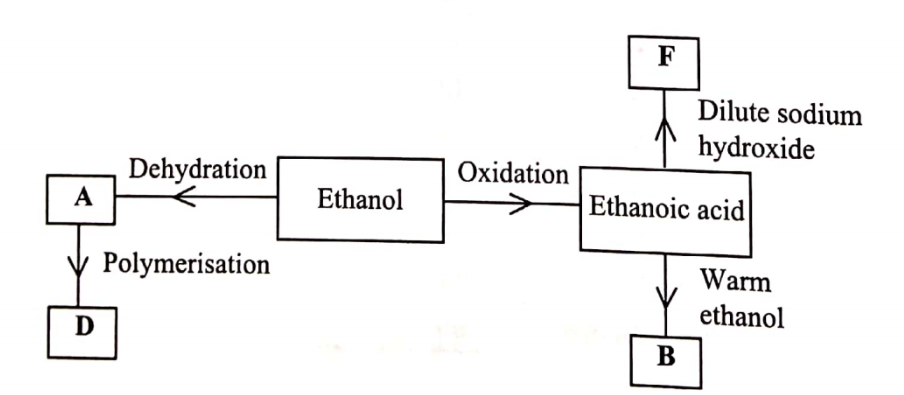
(c) Study the flow chart in Figure 1 and answer the questions that follow.

(i) Identify A. (1 marks)

(ii) State one physical property of B. (1 marks)

(iii) Draw the structure of D. (1 marks)

(iv) Give a reason why D pollutes the environment.(1 marks)

(v) Write an equation for the formation of F.(1 marks)

(d) Describe an experiment which can be used to distinguish butene from butanol. (2 marks)

2. (a) Zinc occurs mainly as zinc blende. Name one other ore from Which zinc can be extracted.(1 marks)

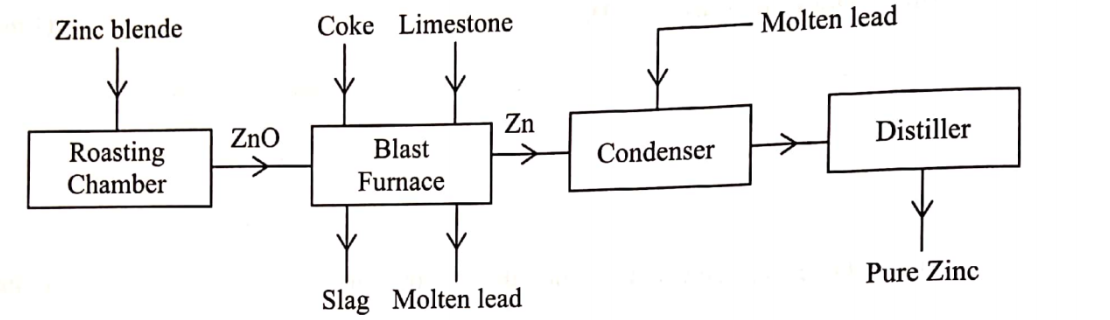
(b) The flow chart in Figure 2 shows the various stages in the extractİoil of zinc metal. Study it and answer the questions that follow.

(i) Write an equation for the reaction which occurs in the roasting chamber. (1 mark)

(ii) Describe the process that takes place in the blast furnace. (3 mark)

(iii) Explain why molten lead is added to the condenser. (1 mark)

(iV) State two uses of zinc.(1 mark)

(v) Give one reason why the extraction of zinc causes pollution to the environment.(1 mark)

(c) Explain the observations made when zinc metal is added to hot sodium hydroxide. (2 marks)

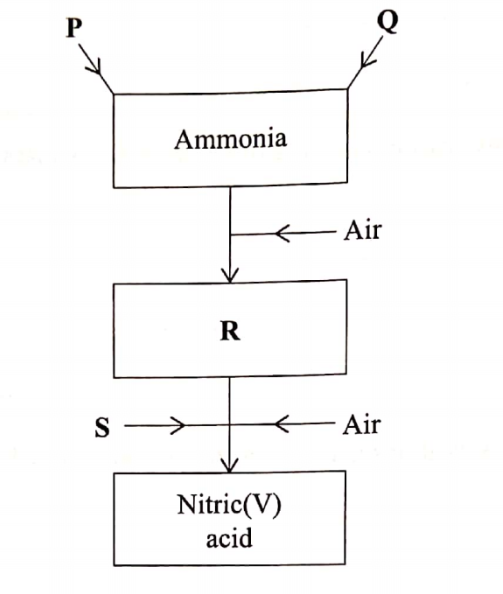
3. Figure 3 is a flow chart that shows the proccss that occurs in the manufacture of nitric(v)acid

(a) Name substance P, Q, R and S. P……………………… (1 marks)

Q………………………… (1 marks)

R…………………………..(1 marks)

S…………………………….(1 marks)

(b) To obtain substance R, ammonia is heated at 900 °C in the presence of air and a catalyst.The product is then cooled in air.

(i) Name the catalyst for the reaction. (1 marks)

(ii) Write the equations for the two reactions described in (b). (2 marks)

(iii) Other than nitric(V) acid, name another product that is formed. (1 mark)

(c) When ammonia is reacted with nitric(V) acid, it produces a nitrogenous fertiliser.

(i) Explain why fertilisers play a major role in food production. (2 marks)

(ii) State two problems associated with the use of nitrogenous fertilisers. (2 marks)

4. (a) Explain the following observations:

(i) The colour of aqueous copper(ii) sulphate fades when a piece of magnesium metal is droppcd into the solution. (2 marks)

(ii) A piece of iron bar is coated with a brown substance when left in the open on a rainy day. (2 marks)

(b) A sample of water is suspected to contain aluminium ions (AI3+) .

Describe a laboratory experiment that can be carried out to show that AI3+ ions are present in the water sample. (3 marks)

(c) In an experiment to determine the number of moles of water of crystallisation of a hydrated compound Na2SO4.XHsO,5g of the compound were heated strongly to a constant mass.

(i) Explain how a constant mass was obtained. (2 marks)

(ii) During the experiment, the mass of the residue was found to be 2.205 g.

Determine the number of moles of water of crystallisation in the compound. (Na = 23.0 ; O = 16.0 ; S = 32.0 ; H = 1.0) (3 marks)

5. (a) What is meant by a molar heat of neutralisation? (1 marks)

(b) In an experiment to determine the molar heat of neutralisation, 50 cm3 of IM hydrochloric acid was neutralised by adding 10 cm3 Onions Of dilute sodium hydroxide.

During the experiment, the data in Table 1 was obtained.

(i) Write the equation for the reaction in this experiment. (1 mark)

(ii) On the grid provided, plot a graph of temperature (Y-axis) against volume of sodium hydroxide (X-axis) added. (3 marks)

(iii) Determine from the graph the:

I. volume of sodium hydroxide which completely neutralises 50 cm3 of lM hydrochloric acid. (1 mark)

11. change in temperature, AT, when complete neutralisation occurred. (1 mark)

(IV) Calculate:

I. The heat change, dH when complete neutralisation occurred. (Specific heat capacity = 4.2 Jg-1 K-1 density of solution 1.0 gcm-3)(2 marks)

(v) How would the value of molar heat differ if 50 cm3 of lM ethanoic acid was used instead of IM hydrochloric acid? Give a reason. (2 marks)

6. (a) What is meant by standard electrode potential of an element (1 mark)

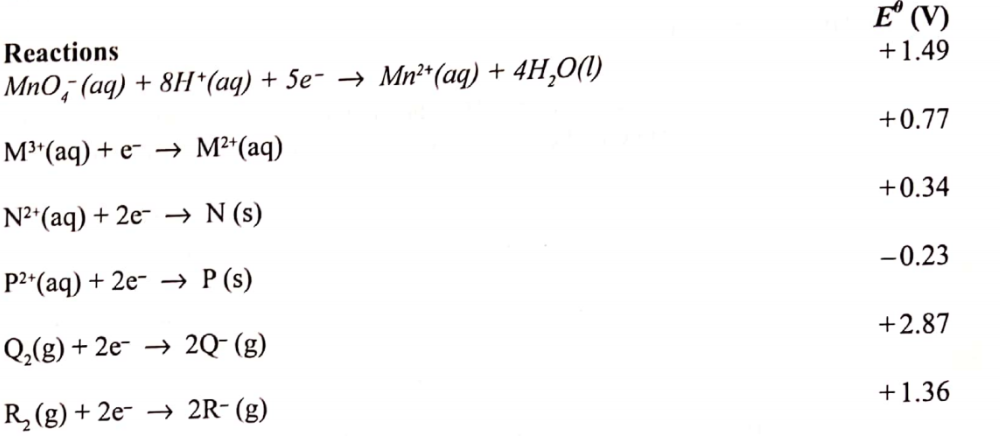
(b) Use the standard electrode potcntials given below to answer the questions that follow.

(i) State whether acidified MnO4 can oxidise M2+. Give a reason. (2 marks)

(ii) Select two half-cells which when combined will give the highest e.m.f. (1 mark)

(iii) Write the cell representation for the cell formed in b (ii). (1 mark)

(iv) Calculate the Eθ value for the cell formed in b (iii). (1 mark)

(c) A mass of 1.24g of a divalent metal was deposited when a current of 6A was passed through a solution of a metal sulphate for 12 minutes.Determine the relative atomic mass of the metal( Faraday = 96,500 C mol -1 (3 mark)

(d) State two application s of electrolysis. (I mark)

7. (a) What is meant by rate of reaction (1 mark)

(b) In the space provided, Sketch the diagram of a set-up that Can be used to determine the rate of reaction between manganese(IV) oxide and hydrogen peroxide. (3 marks)

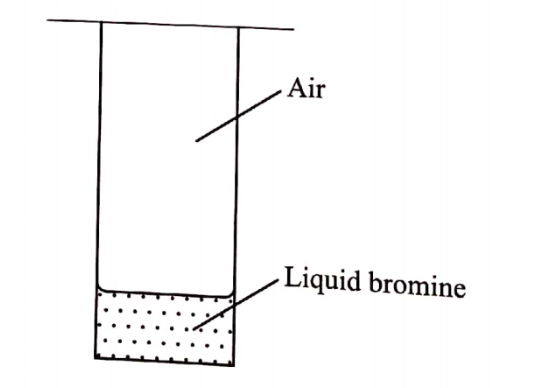
(c) A student placed a small amount of liquid bromine at the bottom of a sealed gas jar of air as shown in Figure 4.

(i) Describe what will be observed: (1 mark)

I. After two minutes………………………….

II. After 30 minutes ……………………..

(ii) Use the Kinetic theory to explain the observations: (2 marks)

I. After two minutes………………………….

II. After 30 minutes ……………………..

(d) Some plants have seeds that contain vegetable oil.

(i) Describe how the oil can be obtained from the seeds. (3 marks)

(ii) Explain how it could be confirmed that the liquid obtained from the seeds is oil. (1 mark)


2020 KCPE Predictions
2020 KCSE Chemistry Prediction Questions
2020 KCSE Leakage
2020 KCSE Predictions
2020 KCSE Time Table
Biology KCSE 2020
Chemistry KCSE 2020
Cre KCSE 2020
English KCSE 2020
Geography KCSE 2020
History KCSE 2020
KCPE 2020 Predictions
KCPE Prediction Questions
KCPE Predictions 2020
KCSE 2020
KCSE 2020 Exam Timetable
KCSE 2020 
KCSE 2020 Biology
KCSE 2020 Prediction

KCSE Past Papers 2019 Chemistry paper 1(233/1)

KCSE Past Papers 2019 Chemistry paper 1(233/1)

Kenya certificate of primary Education

2019 Chemistry paper 1

1. An atom of element A has mass number 39 and 19 protons.

(a) Write the electron arrangements of the atom (1 mark)

(b) State the pcriod and group to which elementt A belongs Group ………………………………….(½ mark)

Period …………………………………..(½ mark)

(c) State whether the element is a metal or a non-metal. (1 mark)

2. Describe how an increase in concentration increases the rate of a reaction. (2 mark)

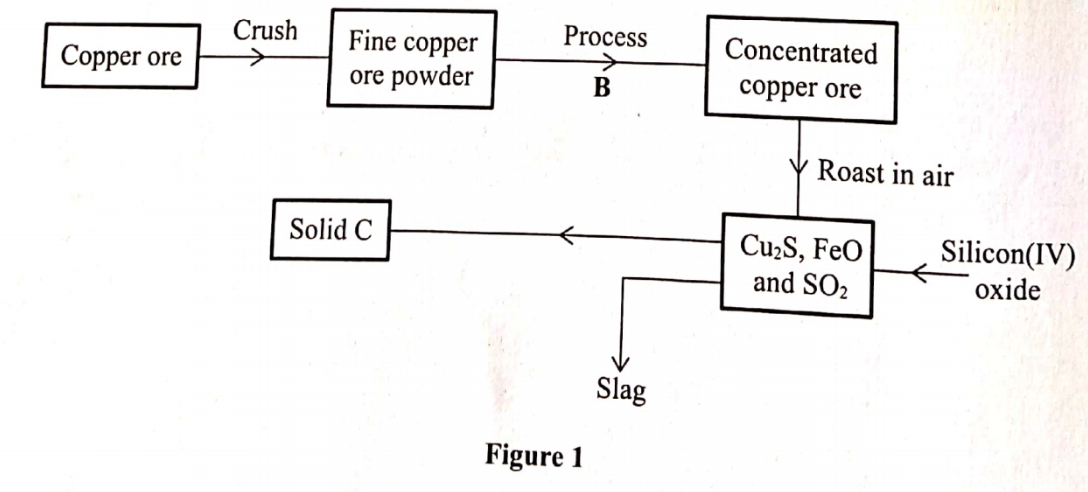
3. The flow chart in Figure 1 represents some stages in the extraction of copper metal. Study it and answer the questions that follow.

(a) Identify :

(i) The copper ore (1 mark)

(ii) Process B (½ mark)

(iii) Solid C (½ mark)

(b) Write an equation for the reaction that forms the slag. (1 mark)

4. A monomer has the following structure.

CH= CH2 ∣ C6H5

(a) Draw the structure of its polymer that contains three monomers.(1 mark)

(b) A sample of the polymer formed from the monomer has a molecular mass of 4992.

Determine the number of monomers that formed the polymer (C= 12; H= 1.0). (2 marks)

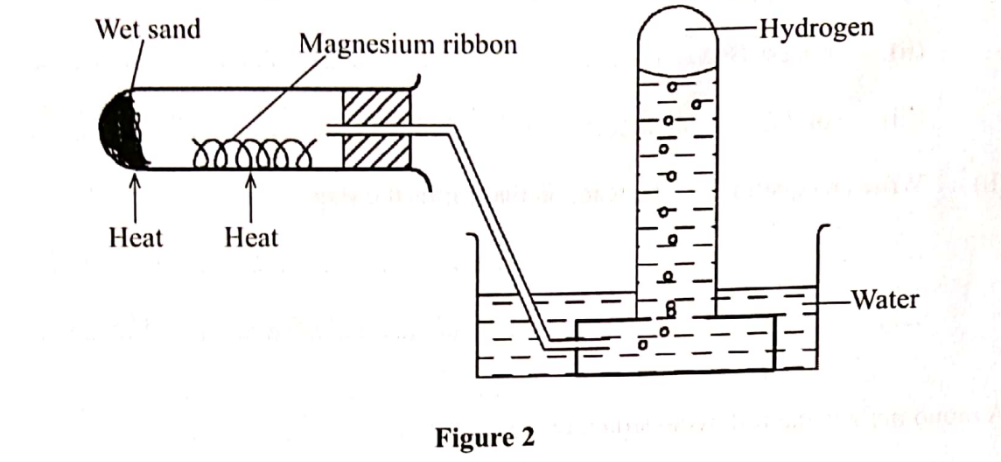
5. Hydrogcn has can be prepared by passing steam over heated magnesium ribbon as shown in the figure 2.

(a) Write an equation for the reaction that produces hydrogen gas. (I mark)

(b) Explain why the delivery tube must be removed from beneath the water before heating is stopped. (1 mark)

(c) Explain why sodium metal is not suitable for this experiment. (I mark)

6. A farmer intended to plant cabbages in his farm. He first tested the pH of the soil and found it to be 3.0.

If cabbages do well in alkaline soils, explain the advice that would be given to the farmer in order to realise a high yield.(2 marks)

7. A solution contains 40.3g of substance XOH per litre .250.0cm3of this solution required 30.0cm3 of 0.3M sulphuric(VI)acid for complete neutralisation. (a) Calculate the number of moles of XOH that reacted. (½ mark)

(b) Determine the relative atomic mass of X. (1½ mark)

8. Table 1 shows the properties of two chlorides, D and E.

Table 1

Chloride Melting Points(°C) Electrical Conductivity
(liquid)
      D            1074          Good
      E              203          Poor

(a) State the type of bond present in:

(i) D…………………..(1 mark)

(ii) E…………………..(1 mark)

(b) Explain in terms of structure and bonding, the difference in electrical activity of the chlorides D and E. (1 mark)

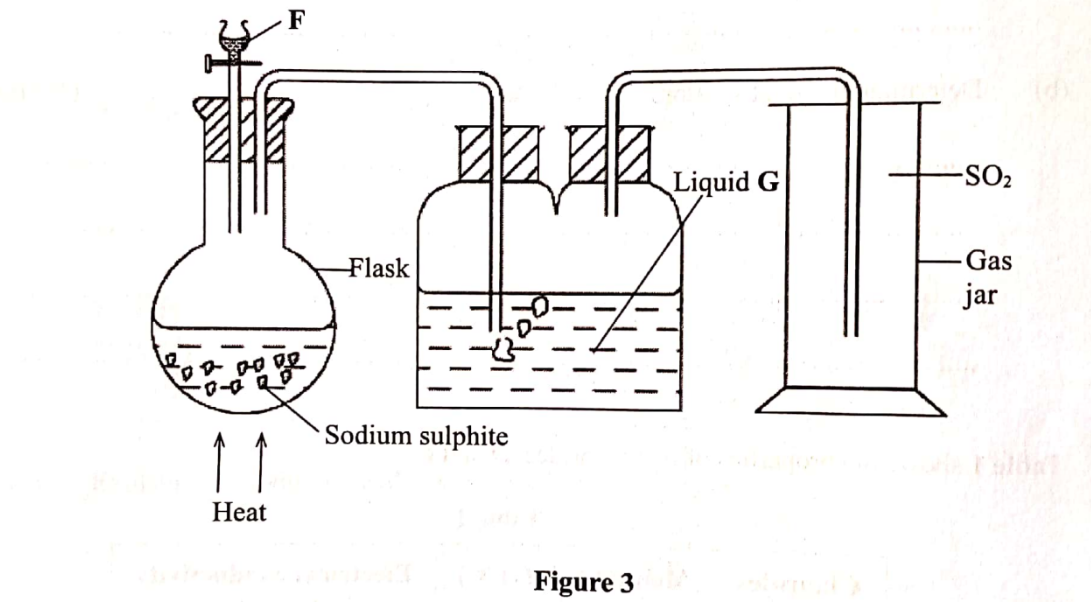
9. Sulphur(IV) oxide is prepared in the laboratory using the set-up in Figure 3.

Study it and answer the questions that follow.

(a) Identify substance F. (1 mark)

(b) Write an equation for the reaction that takes place in the flask. (1 mark)

(c) State the purpose of liquid G. (1 mark)

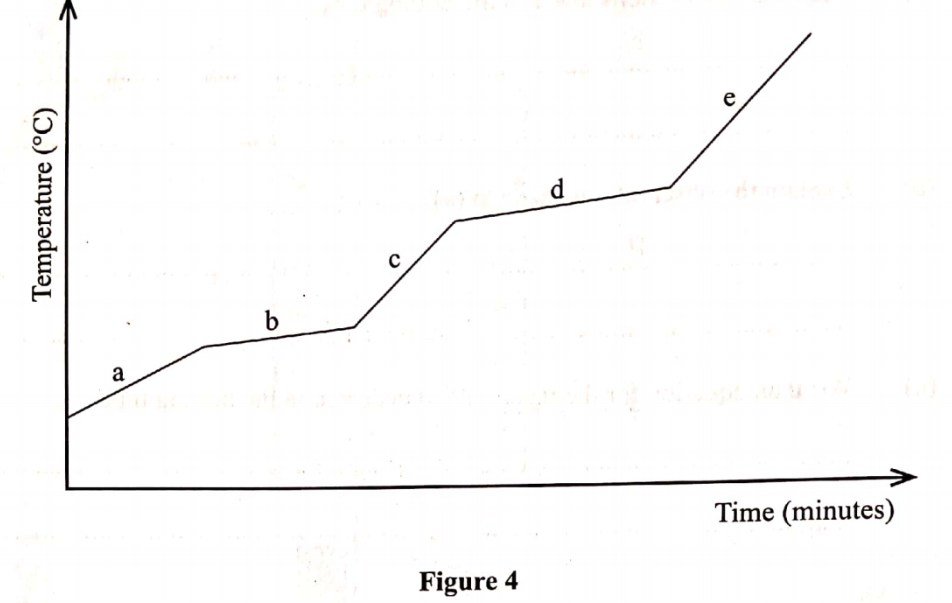
The graph in Figure 4 was obtained when a certain substance was heated and its temperature recorded at regular intervals.

(a) State the purity of the substance. (1 mark)

(b) Explain the answer in (a). (1 mark)

11. Ethene is prepared in the laboratory by dehydration of ethanol.

(a) Name a suitable dehydrating agent used in this process. (1 mark)

(b) State the condition necessary for the reaction to occur. (1 mark)

(C) Write an equation for the dehydration process. (1 mark)

112.A boiling yube filled with chlorine was inverted in a trough containing the same ssolution and the set-up left in sunlight for about 2 hours.

(a) State the observation made in the boiling tube ( 1 mark)

(b) Explain the observation made in (a) (1 mark)

(c) Write an equation for the reaction that occurred in the boiling tube (1 mark)

13. 5 g of calcium carbonate was strongly heated to a constant mass.

Calculate the mass of the solid residue formed (Ca = 40.0; C = 12.0; 0 = 16.0). (2 marks)

14. During laboratory preparation of oxygen, manganese(IV) oxide is added to reagent 11.

(a) Name reagent H. (1 mark)

(b) State the role of manganese(IV) oxide in this experiment. (1 mark)

(c) Write the equation for the reaction that takes place. ( I mark)

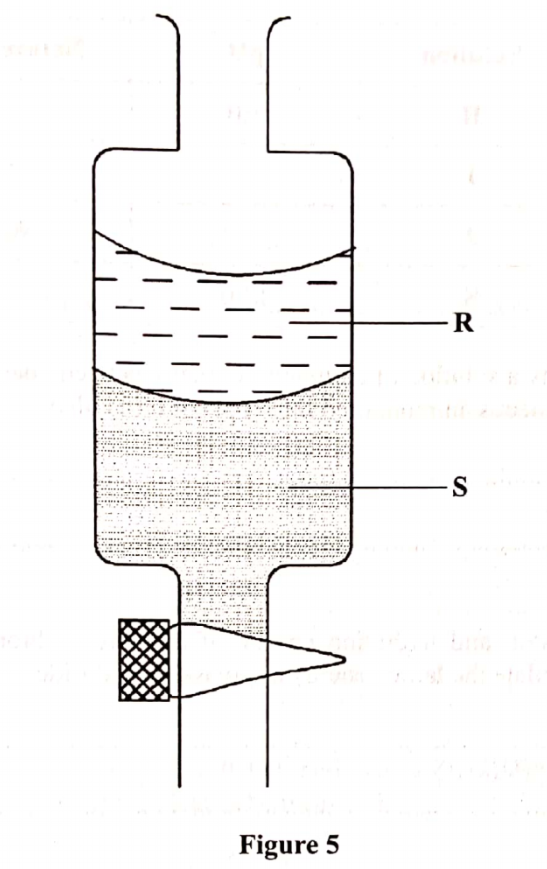
15. Figure 5 shows an apparatus used to seperate a mixture of water and hexene.

(a) Name the apparatus in Figure 5. (1 mark)

(b) State the principle by which the mixture of the two liquids is seperated (1 mark)

(c) Identify the liquids, R and S if the density of hexene is 0.66 g/cm3.

(i) R …………… (½ mark)

(ii) S …………………. (½ mark)

16.(a) Complete the following table.(2 mark)

Solution pH Nature of solution
   H 1.0
   I   Neutral
   J Weak acid
   K                13.0

(b) Explain why a solution of ammonia in methylbenzene has no effects on red litmus paper while in aqueous ammonia red litmus paper turns blue. (1 mark)

17. The heat of solution and hydration energy of potassium chloride is — 17.2 kJ and —689 kJ respectively.

Calculate the lattice energy of potassium chloride. (2 marks)

18. Use the information in Table 2 to answer the questions that follow.

Bond Bond energy(KJ mol(<sub>-1</sub>
C-H                412
  CI-CI               242
C-CI                338
H-C1               431

19. Given that the Eθ of CU(s),CU2+(aq)is + 0.34V and that 0f Zn(s)/Zn2+(aq)is- 0.76V,draw a labelled diagram of zinc and copper electrochemical cell. (3 marks)

20. During labomtory preparation of carbon(IV) oxide g tS. substance L in a conical flask.

(a) Identify substance L. (1 mark)

(b) Write an equation that produces carbon(IV) oxide. (1 mark)

(c) State the observations made when the gas produced WHS bubbled through calcium hydroxide solution for a long time. (1 mark)

21. Study the information in Table 3 and use it to answer the questions that follow. (I mark)

Elements Na Mg Al Si P S Cl
Atomic Numbers 11 12 13 14 15 16 17
Atomic radii(nm) 0.157 0.136 0.125 0.117 0.110 0.104 0.099

(a) Explain the trend in atomic radii from sodium to chlorine. (1 mark)

(b) Explain how the chloride of aluminium differs from those of other metals in the period.(2 marks)

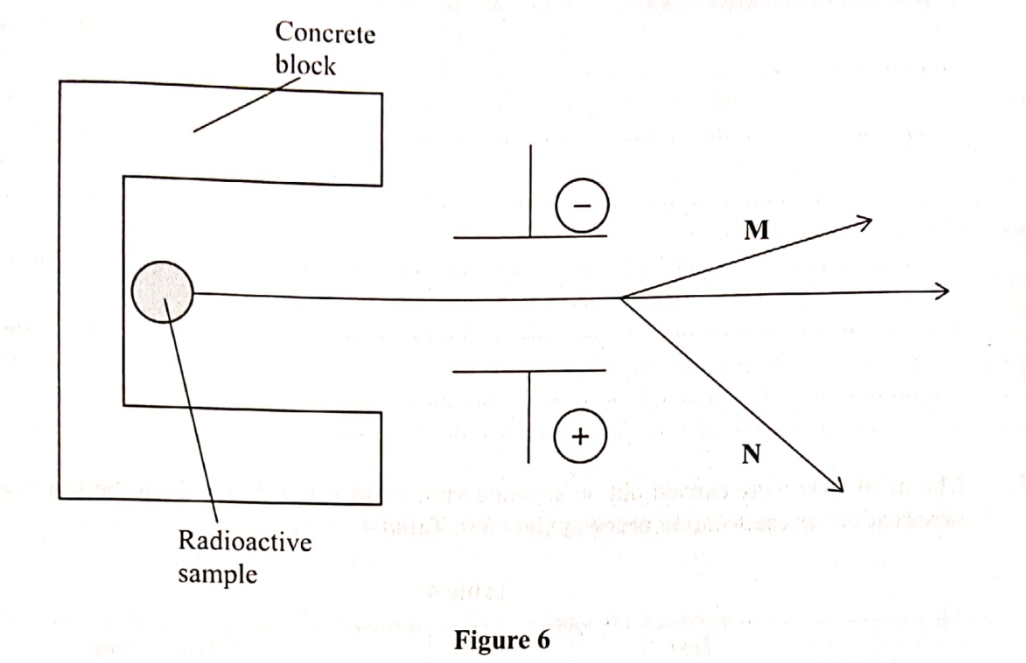
2. The diagram in figure 6 shows radiations emitted by a radioactive sample.

(a) Identify radiations:

(i) M ……………. (1 marks)

(ii) N ……………… (1 marks)

(b) Explain what would happen when a sheet of paper is placed in the path of the two radiations. (1 mark)

16/8 X 18/8 X are isotopes of element X.

They occur naturally in the ratio of 9:1 respectively.

Calculate the relative atomic mass of element X. (2 marks)

24. Starting with copper turnings, describe how a sample of copper (II) Sulphate crystals can be prepared in the laboratory. (2 marks)

25. Chemical tests were carried out on separate samples of water drawn from the same source. The observations made were recorded as shown in Table 4.

        Test Observation
(i) Addition of aqueous calcium chloride No white precipitate
(ii) Addition of dilute sulphuric(VI) acid No effervescence, colourless solution
(iii) Addition of a few drops of acidified
barium nitrate
No white precipitate
(iv) Addition of aqueous ammonia White precipitate dissolves

State the inferences made in reactions:

(i)……………………… (1 mark)

(ii)……………………….. (1 mark)

(iii)…………………………(1 mark)

26. 140cm3of nitrogen gas diffuses through a membranc in 70 seconds. How long will it take 200 cm3of carbon(iv) oxide gas to diffuse through the same membrane under the same conditions of temperature and presurre (3 marks)

27. When burning magnesium ribbon is introduced into a gas jar full of nitrogen, it continues to burn producing a greenish yellow powder.

(a) Write an equation for the reaction between nitrogen and magnesium. (I mark)

(b) Explain why magnesium continues to bum in nitrogen but sulphur does not. (2 marks)

(c) State one use of nitrogen. (I mark)

28. Draw in the space provided a labelled diagram of the set-up of the apparatus that can be used to electrolyse molten lead(II) bromide. (3 marks)

29. Name an appropriate apparatus that is used to prepare standard solutions in the laboratory.( I mark)

2020 KCPE Predictions
2020 KCSE Chemistry Prediction Questions
2020 KCSE Leakage
2020 KCSE Predictions
2020 KCSE Time Table
Biology KCSE 2020
Chemistry KCSE 2020
Cre KCSE 2020
English KCSE 2020
Geography KCSE 2020
History KCSE 2020
KCPE 2020 Predictions
KCPE Prediction Questions
KCPE Predictions 2020
KCSE 2020
KCSE 2020 Exam Timetable
KCSE 2020 
KCSE 2020 Biology
KCSE 2020 Prediction

KCSE Past Papers 2019 Computer Studies Paper 2 (451/2)

KCSE Past Papers 2019 Computer Studies Paper 2 (451/2)

Kenya Certificate of Secondary Education

2019 Computer Studies – Paper 2

1.Form 1 Class Teachers of Mwango secondary school intend to use a data base to manage students o Secondary School intend to use a database to manage students performance in three examinations: opener,mid term and endterm examination.

(n) Open a database program and create a database named analysis.

(1 mark)

(b) (i) Create three tables named Class, StudDetails and StudMarks in the database file created in (a) using the following details: (14 marks)

Class Table

Field Name Data Type and Properties
ClassID ClassID Text (size 2)
ClassName ClassID Text (size 25)
Teacher ClassID Text (size 25)

StudDetails Table

Field Name Data Type and Properties
   AdNo Number
StudName Text (size 25)
Gender Yes/No (yes for female)
ClassID Text (size = 2)
Look up values,IE,IN,IW

StudMarks Table

Field Name Data Type and Properties
AdNo Number
Opener Number
MidTerm Number
EndTerm Number

(ii) Create the relationships between the tables. (2marks)

(iii) Create a form for the Class table and add a subform for the StudDetails table using the format in £gure 1. Save the form as dataentry.

ClassID

ClassName

Teacher

AdNo StudName                    Gender ClassID

(iv) Enter the following data into their respective tables in the database (l2½ marks)

Class TabLe

ClassID ClassName Teacher
                IE Form One East   Elvis Barongo
                IN Form One North    Alice Nadiya
                IW Form One West Paul Mkacharo

StudDetails Table

    AdNo StudName Gender ClassID
7984 Mary Kikoti Female 1E
7460 Erica Kamburi Female 1E
7800 Axlam Khan Male       1E
       8083     Martin Mkanjala Male       1E
      8092     Esther Peresian         Female 1N
8490     Micah Lokiyoto         Male 1N
     8082     Mohamed Ayan Male 1N
    7896 Mark Kwalima         Male     1W
    7892     Morgan Lema        Male 1W
    8184     Emily Mawasi Female 1W
    8047     Edward Omogeni Male 1W
    AdNo Opener MidTerm EndTerm
7984       85 Female 82
7460 73 Female 79
7800        78 Male 86
       8083         81 Male 87
      8092 73         Female 83
8490 71         Male 87
     8082 81 Male 90
7896 88         Male 88
7892      85        Male 89
8184     85 Female 83
8047         90 Male 86

(c) Create a query to display the fields:

(i) AdNO, StlldName, ClassID, Opener, MidTerm and EndTer m for all students in Form One East. Save the query as FIE. (4½ marks)

(ii) AdNo, StudName, ClassID, Opener, MidTerm and EndTerm arld a Calculated field named meanscore to display the average in the three examinations.

Save the query as overall. (6 marks)

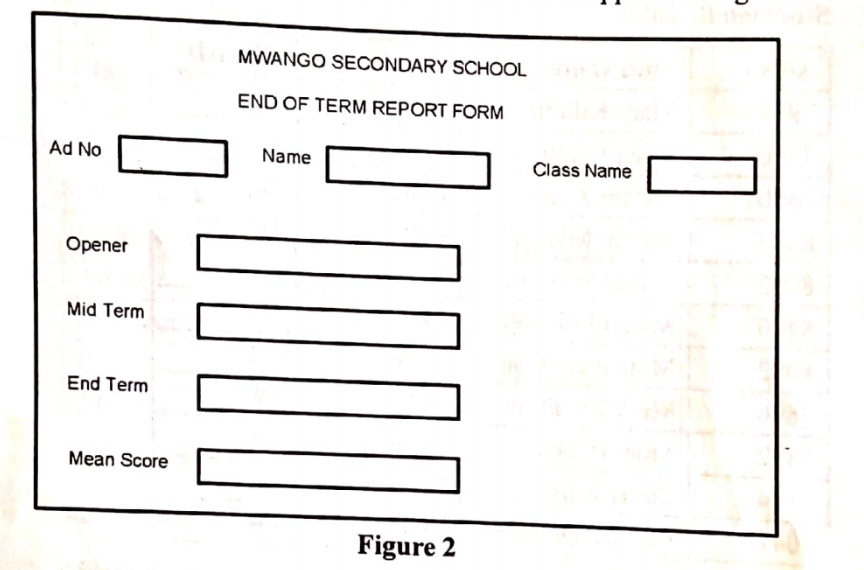
(d) Create a report to display details of each student as it appears in Figure 2 (2 ½ marks)

(e) Print out each of the following: (3 marks)

(i) the three tables

(ii) the two queries

(iii) report for the first two students

2. The Chief Printer of Zenith Printers Company would like to have business cards. As a Desktop Publishing (DTP) expert, you have been tasked to design the card for the officer.

(a) (i) Open a Desktop Publishing program and set the page layout as follows:

• Paper size: 8.5 cm width by 5.5 cm height

• Layout type: multiple pages per sheet

• Target paper size: A4

• Orientation: Portrait

• Margin: 0.75cm all round (5 marks)

(ii) Save the publication as business card. ( 1 mark)

(b) Design the card as it appears in Figure 3 ensuring that the card covers all the space in the page. (42 marks)

(c) Print out 10 copies of the card on a single A4 pnge.(2 mark)

2020 KCPE Predictions
2020 KCSE Chemistry Prediction Questions
2020 KCSE Leakage
2020 KCSE Predictions
2020 KCSE Time Table
Biology KCSE 2020
Chemistry KCSE 2020
Cre KCSE 2020
English KCSE 2020
Geography KCSE 2020
History KCSE 2020
KCPE 2020 Predictions
KCPE Prediction Questions
KCPE Predictions 2020
KCSE 2020
KCSE 2020 Exam Timetable
KCSE 2020 
KCSE 2020 Biology
KCSE 2020 Prediction

KCSE Past Papers 2019 Computer Studies Paper 1 (451/1)

KCSE Past Papers 2019 Computer Studies Paper 1

Kenya Certificate of Secondary Education

2019 Computer Studies – Paper 1

Section A

Answer all the questions in this section

State the hardware technological differences between the second generation and the third generation computers (2 marks)

2. State two ways of ensuring proper ventilation in a computer room. (2 marks)

3. Convert the decimal number 20.373 to its binary number system equivalent. (2 marks)

4. Peter has installed internet in his home computer in order to use it for browsing. State three ways in which he would prevent viruses from infecting his computer. (3 marks)

5. State three ways of transforming a picture embedded in a Desktop Publishing programme in order to fit in a designated space on a document. (3 marks)

6. Differentiate between a line printer and n page printer as used in computers.(2 marks)

7. Describe virtual realitly as used in computers. (2 marks)

8. State the function of cach of the following fetures of an email software:

(a) Inbox (1 marks)

(b) Draft (3 marks)

9. (a) Explain the term loggle key as used in computer keyboard. (2 marks)

(b) List examples of toggle keys on a computer keyboard. (2 marks)

10. State the type of error that would occur in data processing for each of the fol1owing cases:

(a) Entering the number 315 instead of 351. (3 marks)

(b) Entering the text “Kwys” instead of “Keys”. (3 marks)

11. State four factors to consider when selecting an input device for use in a computer room (4 marks)

12. State three functions 0f Un-interrupted power supply (UPS). (3 marks)

13. Distinguish between a page break and a column break as used in a word processor. (3 marks)

l4. State three factors to consider when selecting an operating system to instal in a computer (3 marks)

15. Differentiate between analogue data and digital daia as used in computers. (2 marks)

Section B

Answer question 16 and any other 3 questions from this section.

16. (a) Explain the term dry running as used in program development.(2 marks)

(b) Explain three properties of an algorithm. (6 marks)

(c) To qualify to get a driving license,an applicant must be 18 years or over.

Ten candida tes applied for a driving license test.

Draw a flow chart that would read the name and age of an applicant and display the names of those who qualify, (7 marks)

17.(a) State four outcomes that may result from using incorrect requirement specifications during system development (4 marks)

(b) A school opted to use direct change over approach when installing a new system.

Explain three challenges that die school may face as a result of this approach. (6 marks)

(c) State three reasons that may lead an organisation to instal an intranet.(3 marks)

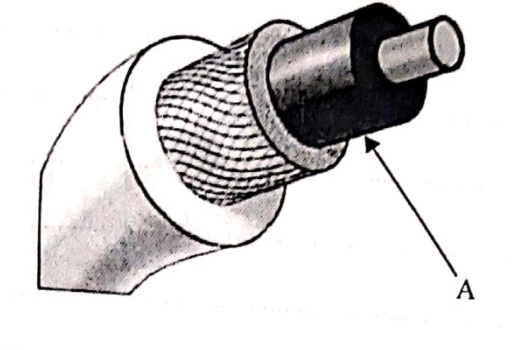
(d) The figure below shows a coaxial cable .State the function of the part labelled A. (2 marks)

18. (a) State three hardware devices that may be required to connect a computer to an existing local area network. (3 marks)

(b) A publisher intends to use a desktop publishing programme to create a publication which is to have many graphics.

State three ways in which the graphics may be acquired for this purpose. (3 marks)

(c) Interpret each of the following spread sheet formula :

(i) =countif(D2:D9,”>”$B4) (2 marks)

(ii) =sumif(B3:B11,”4M”,D3:D11)

(d) (i) The folloiviiig are llie fields of products fable in a database created to store records of products iiianufacturcd in a factory:

• product number

• product name

• price

• product description

1. State the appropriate data type for each field. (2 marks)

II. State three properties to be put in place during table design to ensure integrity of the data entered. (3 marks)

19. Explain three features of a graphical user interface as used in computers (6 marks)

(b) State the function of each of the following computer keyboard keys:

(i) Caps Lock (1 marks)

(ii) Shift (1 marks)

(iii) Home (1 marks)

(c) Using two’s complement notation,determine the value of the operation 2510-2910

(6 marks)

20. (a) Distinguish between computer Aided Instruction (CAI) and computer Aided Learning (4 marks)

(b) (i) State four activities that may be carried out when disposing off an old system in an organisation. (4 marks)

(c) State three benefits gained from the advancement in technology in the music industry (3 marks)

2020 KCPE Predictions
2020 KCSE Chemistry Prediction Questions
2020 KCSE Leakage
2020 KCSE Predictions
2020 KCSE Time Table
Biology KCSE 2020
Chemistry KCSE 2020
Cre KCSE 2020
English KCSE 2020
Geography KCSE 2020
History KCSE 2020
KCPE 2020 Predictions
KCPE Prediction Questions
KCPE Predictions 2020
KCSE 2020
KCSE 2020 Exam Timetable
KCSE 2020 
KCSE 2020 Biology
KCSE 2020 Prediction
KCSE 2020 Prediction Pdf
KCSE 2020 Prediction Questions
KCSE 2020 Predictions
KCSE 2020 Registration
KCSE 2020 Timetable

KCSE Past Papers 2019 Business Studies Paper 2 (565/2)

KCSE Past Papers 2019 Business Studies Paper 2

Kenya Certificate of Secondary Education

2019 Business Studies paper 2

1 (a) Explain five see ices that may be offered by wholesalers to the retailers. (10 marks)

(b) Explain five differences beuveen a sole proprietorshi p and a public limited company.(10 marks)

2 ta) Explain fire negative implications of a young population. (10 marks)

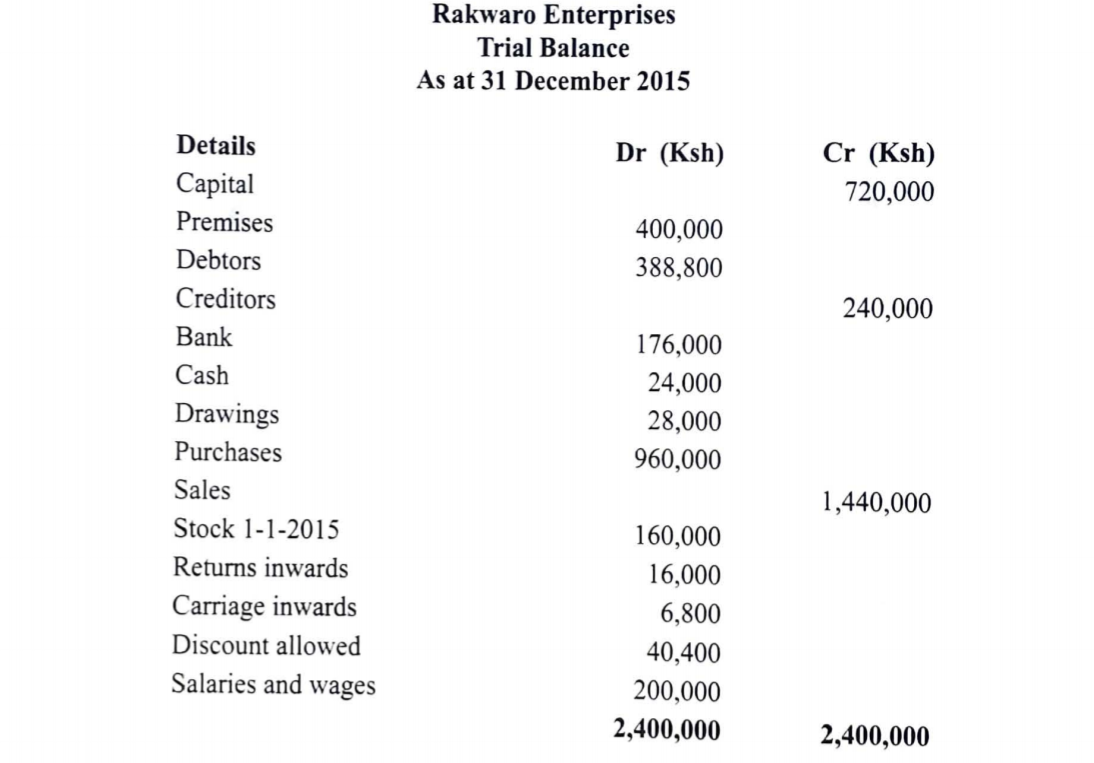
(b) The Trial Balance below was extracted from the books of Rakwaro Enterprises on 31st December 2015.

Stock on 31st December 2015 was valued at Ksh 280,400.

Required

(i) Prepare Rakwaro Enterprises Trading Profit and Loss Account for the period ending 31st December 2015 (7½ marks)

(ii) Determine Rake aro Enterprises initial capital.(2½ marks)

3. (a) Explain five demerits of pipeline as a means of transport. (10 marks)

(b) Explain five measures that may be taken to increase the volume of exports. (10 marks)

4.(a) The following information relates to Moyale Retailers for the month of July 2015:

Sales – Ksh 50,000

Cost of sales – Ksh 40.000

Average stock – ksh 20,000

Expenses were – 5% of sales

Calculate:

(i) Mark-up (2 marks)

(ii) Margin (2 marks)

(iii) Total expenses (2 marks)

(iii) Net profit (2 marks)

(iv) Rate of stock turnover (2 marks)

(b) Outline five benefits of a business to the society. (10 marks)

(a) Explain five advantages of locating firms in different parts of the country. (10 marks)

(b) Explain five government initiated methods of consumer protection. (10 marks)

6.(a) Dcscribe the precedure for obtaining an insurance policy. (10 marks)

(b) Outline five assumptions associated with the circular flow of income in a two sector economy (10 marks)

2020 KCPE Predictions
2020 KCSE Chemistry Prediction Questions
2020 KCSE Leakage
2020 KCSE Predictions
2020 KCSE Time Table
Biology KCSE 2020
Chemistry KCSE 2020
Cre KCSE 2020
English KCSE 2020
Geography KCSE 2020
History KCSE 2020
KCPE 2020 Predictions
KCPE Prediction Questions
KCPE Predictions 2020
KCSE 2020
KCSE 2020 Exam Timetable
KCSE 2020 
KCSE 2020 Biology
KCSE 2020 Prediction
KCSE 2020 Prediction Pdf
KCSE 2020 Prediction Questions
KCSE 2020 Predictions
KCSE 2020 Registration
KCSE 2020 Timetable

KCSE Past Papers 2019 Business Studies Paper 1

Business Studies

KCSE Past Papers 2019 Business Studies Paper 1

Paper 1

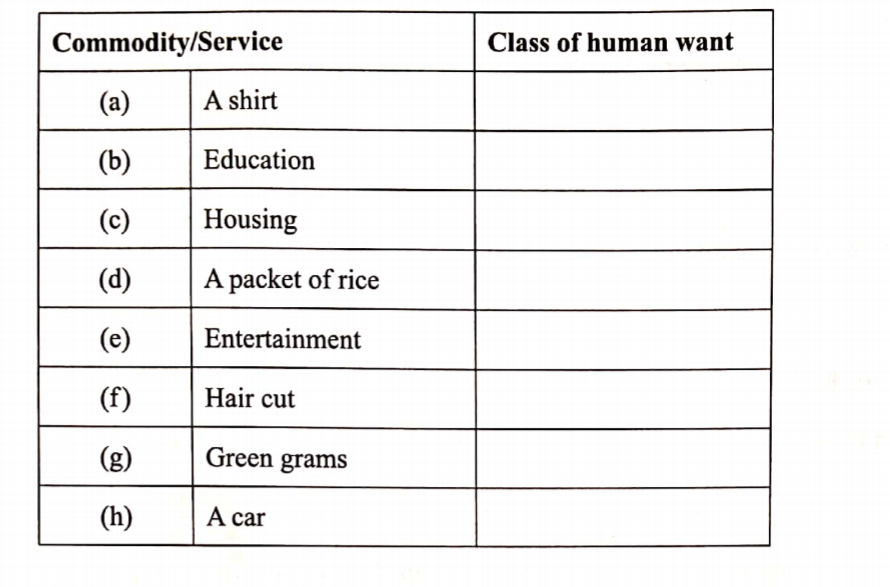
1. State whether the commodity or service given in the table below would satisfy a basic human want or a secondary human want.(4 marks)

2. Outline four factors that make office managers to communicate in writing to their staff.(4 marks)

3. The information given below was extracted from the books of Birika Traders on 31 December 2014: (4 marks)

DetailsFurniture and fittings Debtors Capital Commission earned Creditors Drawings 5 year Bank Loan Discount received

Amount (Ksh)234,000 67,500 157,900 13,200 34,750 21,800 114,450 3,000

Required: Prepare Birika Traders Trial Balance as at 31 December 2014.

4. Highlight four functions of an office in an organisation.(4 marks)

5. Outline four roles played by the Nairobi Securities Exchange in the Kenyan economy.(4 marks)

6. Name the basic concept in population described in the statements given below: (4 marks)

(a) Population size that is adequate for the full utilisation of available resources in country

(b) The average number of births per one thousand women in a year.

(e) When a country is experiencing higher death rates than birth rates.

(d) Where a bigger proportion of the population is comprised of people who are above 55 years old.

7. State the circumstance under which each of the following terms of trade would be applied in foreign trade. (4 marks)

(a) Franco ………………………………….

(c) In Bond …………………………….

(d) Free Alongside Ship …………………… …..

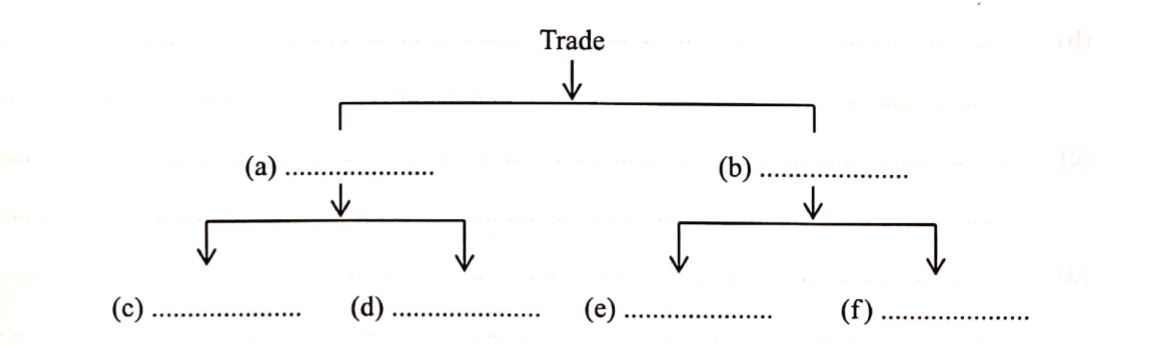
8. Complete the diagram below to illustrate the classification of trade. (3 marks)

9. Highlight four iricrits of using sales people to promote the Sales of a particular product. (4 marks)

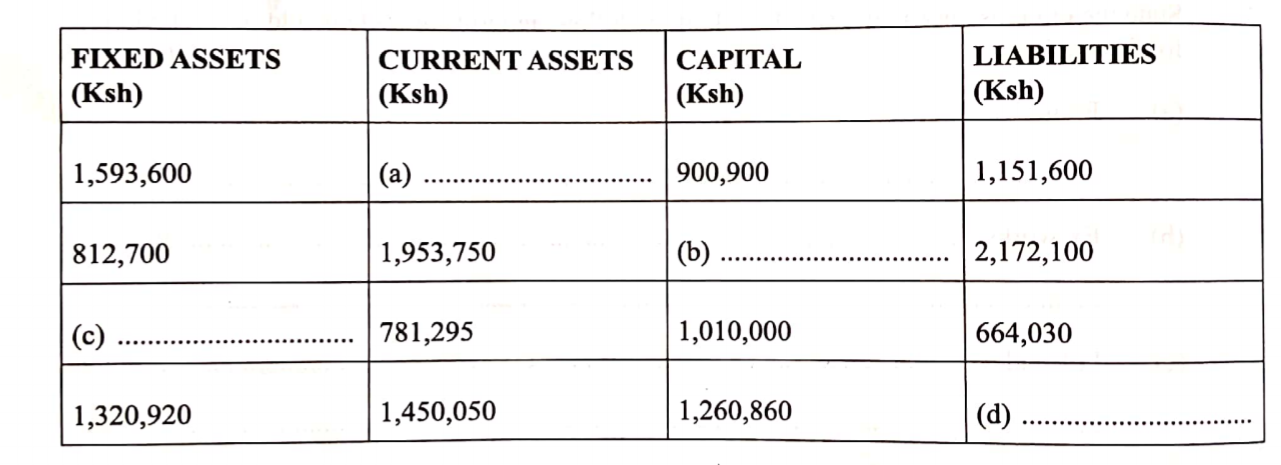
10. By use of the book keeping equation, determine the missing values in the table below: (4 marks)

11. Outline four features that may indicate a country’s state of underdevelopment. (4 marks)

12. List four types of small-scale rctail business that one can run without a shop. (4 marks)

13. Highlight four functions of the Department of External Trade in the Ministry of Industry, Trade and Cooperatives. (4 marks)

14. Outline four factors that Chemichemi Dairies would consider when selecting a channel to distribute their fresh milk.(4 marks)

15. State the relevant books of originel entry into which information is extracted from the source documents given below would be recordcd:

16. Outline four features of co-operative societies.(4 marks)

17. Highlight four factors which may lead to an increase in a country’s national income. (4 marks)

18.The following information was extracted from the books of Jabali Traders on 31 December 2015.

Details Ksh

Purchases – 84,375

Carriage out – 7,400

Stock on 1/1/2015 – 67,900

Carriage in – 9,170

Stock on 31/1/2015 – 17,970

Returns out – 15,520

(a) Determine net purchases.(3 marks)

(b) State two reasons for preparing the trading account.(2 marks)

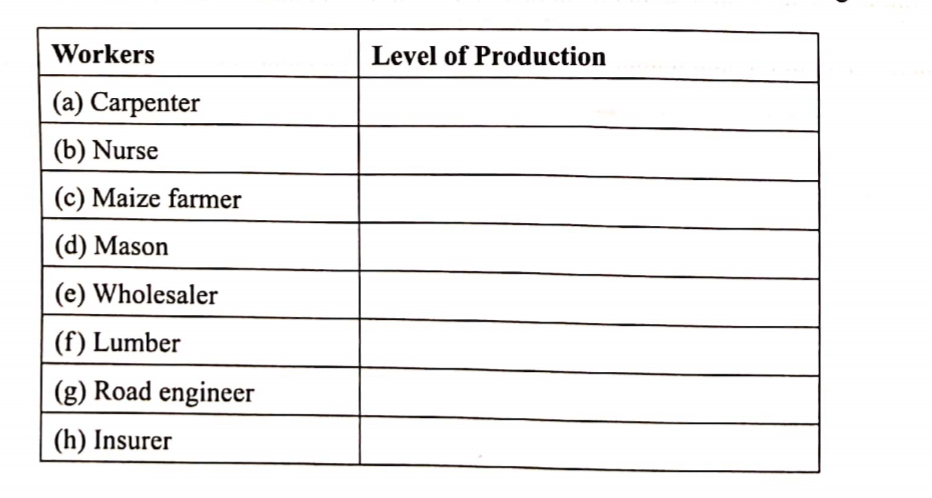
19. Identify the level of production into which the following workers belong:

20. Outline four characteristics of a good tax system.(4 marks)

21. Highlight four contributions of entrepreneurs to the growth of an economy.(4 marks)

22. Highlight four factors that may influence an individual’s demand for money in order to fulfil the transaction motive (4 marks)

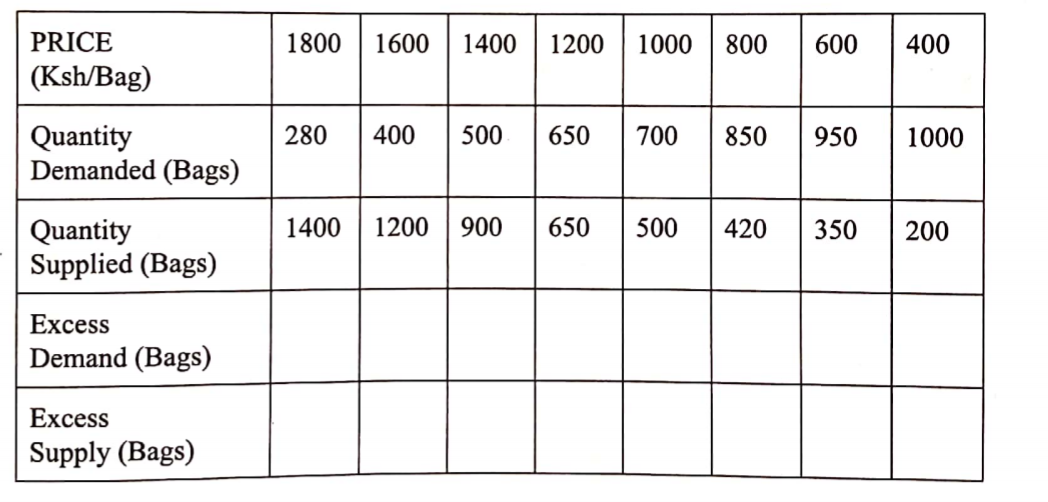
23. Determine the excess demand or excess supply from the combined demand and supply schedules of oranges given below:(4 marks)

24.Outline four benefits for a bonded warehouse to the importer (4 marks)

25.Apart kom trains and motor vehicles, state four other means of transporting goods and people on land. (4 marks)

2020 KCPE Predictions
2020 KCSE Chemistry Prediction Questions
2020 KCSE Leakage
2020 KCSE Predictions
2020 KCSE Time Table
Biology KCSE 2020
Chemistry KCSE 2020
Cre KCSE 2020
English KCSE 2020
Geography KCSE 2020
History KCSE 2020
KCPE 2020 Predictions
KCPE Prediction Questions
KCPE Predictions 2020
KCSE 2020
KCSE 2020 Exam Timetable
KCSE 2020 
KCSE 2020 Biology
KCSE 2020 Prediction
KCSE 2020 Prediction Pdf
KCSE 2020 Prediction Questions
KCSE 2020 Predictions
KCSE 2020 Registration
KCSE 2020 Timetable

KCSE Past Papers 2019 Biology Paper 3 (101/3)

KCSE Past Papers 2019 Biology Paper 3

Kenya Certificate of Secondary Education

2019

Biology Paper 3

BIOLOGY Questions and answers

1. You are provided with specimens F and G. obtained from different plant species.

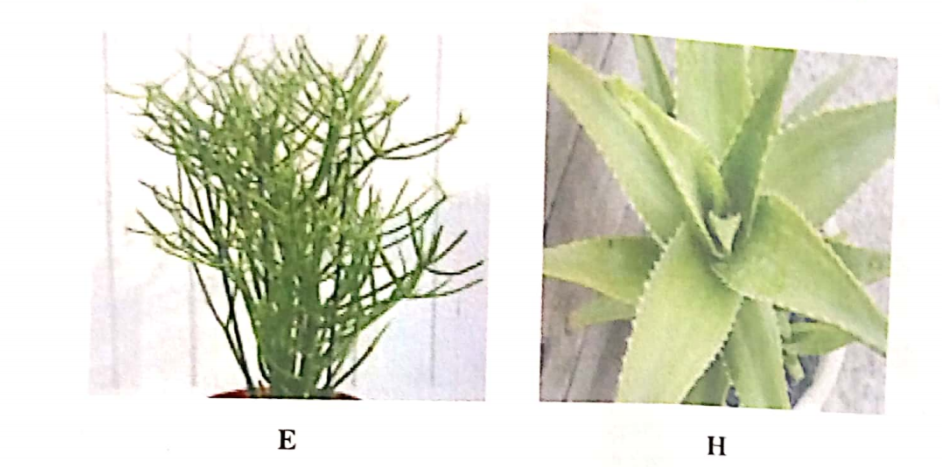
Observe them together with photographs E and H and answer the questions that follow.

Note: Do not destroy specimens F and G as you will need them for question 2.

(a) (i) State hoow plants represented by specimen F and photographs E and H protect themselves.

(ii) State the likely habitat of each of the plant in (a)(i),giving a reason in each case.

Specimen F (1 mark)

Habitat

——————————————-

Reason

——————————————–

Photograph E (1 mark)

Habitat

——————————————-

Reason

——————————————–

Photograph H (1 mark)

Habitat

——————————————-

Reason

——————————————–

(b) Examine the leaves of specimen G.

(i) Describe two observable features of thèse leaves that help the plant conserve water. (2 marks)

(ii) Besides leaf structure, explain two mechanisms that help the plant in (b) (i) above not to dry up during the dry season. (2 marks)

2.You are provided with specimens labelled J and K in addition to F and G and mid II (used in question I).

(a) Follow the dichotomous key below to identify E, F, G, H, J and K.

(a) Leaf margin smooth ……………………………. GO to 2

(b) Leaf margin serrated/rugged ……………………. GO to 3

2. (a) Leaf parallel-veined ……………………….. K

(b) Leaf net-veined or veins not showing …………….. Go to 4

3. (a) LeaF with thorny edges …………………………H

(b) Leaf edges not thorny ……………………………. Go to 5

4.(a) Leaf Large ……………………………………… G

(b) Leaf Tiny ……………………………………………. E

5. (a) Leaf thorny stern …………………………………. F

(b) Leaf not on stern ……………………………………. G

Fill the table below,indicating the steps used to identify the leaves of each specimen or photograph.

Leaf Steps followed

E ………………………………………….

F ………………………………………….

G …………………………………………..

H ……………………………………………

J ……………………………………………

K …………………………………………………

(b) (i) Besides leaf’features found in the dichotomous key above, state two other features that can be used to identify leaves. (2 marks)

State the complementary characteristics that define the leaf features stated in (b) (i). (2 marks)

(c) The habit of a plant in its environment is referred to as being a tree, shrub or herb, depending on its height.

Suggest the habits of the plants from which specimen F and photograph H were obtained. (2 marks)

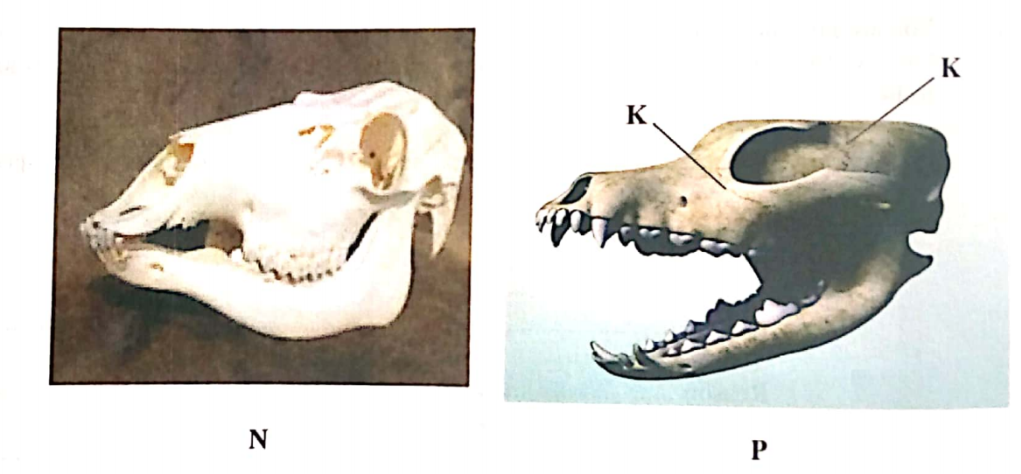
3. You are provided with specimens L and M which are types of teeth from the same mammal.

Observe these specimens together with photographs N and P and answer the questions that follow.

(a) (i) With a reason in each case, name the type of tooth represented by specimens L and M

Specimen L

Name ……………………………

Reason ………………………….

Specimen M

Name ……………………………

Reason ………………………….

(ii) Draw and label specimen L.(2 marks)

(lii) State two functional differences between specimens L and M (2 marks)

(b) State the diet of the mammals from which photographs N and P below wera obtained. giving a reason in each case.

(i) Photograph N (2 marks)

Diet ………………………………………

Reason ……………………………………

(i) Photograph P (2 marks)

Diet ………………………………………

Reason ……………………………………

Name the joint labelled K on photograph P. (1 mark)

(ii) Explain two features of the joint named in (c) (i) above that makes it adapt to its function. (2 marks)

2020 KCPE Predictions
2020 KCSE Chemistry Prediction Questions
2020 KCSE Leakage
2020 KCSE Predictions
2020 KCSE Time Table
Biology KCSE 2020
Chemistry KCSE 2020
Cre KCSE 2020
English KCSE 2020
Geography KCSE 2020
History KCSE 2020
KCPE 2020 Predictions
KCPE Prediction Questions
KCPE Predictions 2020
KCSE 2020
KCSE 2020 Exam Timetable
KCSE 2020 
KCSE 2020 Biology
KCSE 2020 Prediction
KCSE 2020 Prediction Pdf
KCSE 2020 Prediction Questions
KCSE 2020 Predictions
KCSE 2020 Registration
KCSE 2020 Timetable

KCSE Past Papers 2019 Biology Paper 2 (231/2)

KCSE Past Papers 2019 Biology Paper 2

Kenya Certificate of Secondary Education

2019 Biology Paper 2

Answer all the questions in the spaces provided.

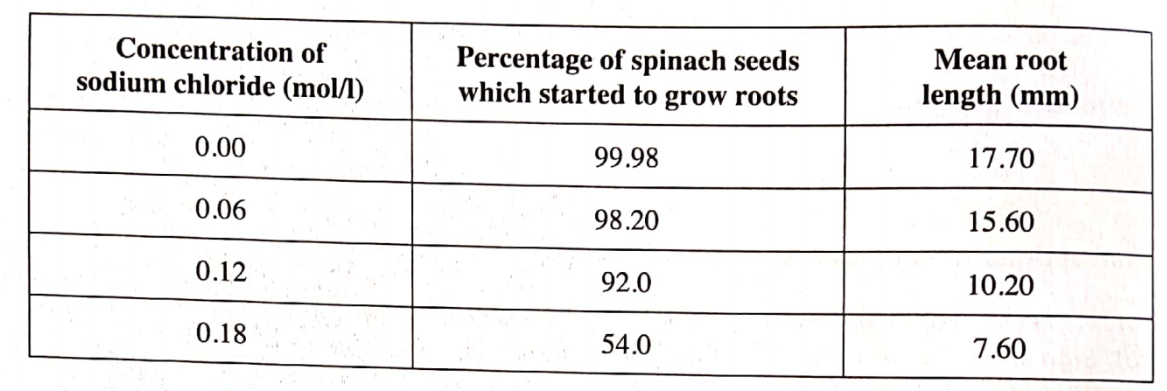
1. In an experiment to investigate the effect of Sodium chloride on the growth rate in a spinach seedling. seeds were treated with different concentrations of sodium chloride. The results are as recorded in the table below.

(a) From the results in the table above, explain the effect of increasing the concentration of sodium chloride. (3 marks)

(b) Apart from a ruler, state two other equipment one would need to determine the rate of growth in the roots. (2 marks)

(c) With a reason, state one other part of the seedling the students would focus on to determine the effect of sodium chloride on growth. (2 marks)

(d) State the likely effect on the seedling of increasing the seedling of increasing the conccntration of sodium chloride to 2.20 mol/I . (1 mark)

2. The table below shows results of blood cell counts per mm° of blood from a sample of people living at different altitudes.

(a) Explain the relationship between:

(i) Red blood cells count and the altitude;(3 mark)

(ii) White blood cells count and the altitude.(3 mark)

(b) Explain why chances of nose-bleeding increase with altitude in humans. (2 marks)

3. (a) State one importance of irritability to living organism. ( 1 mark)

(b) ln an experiment, students treated seedlings as illustrated below.

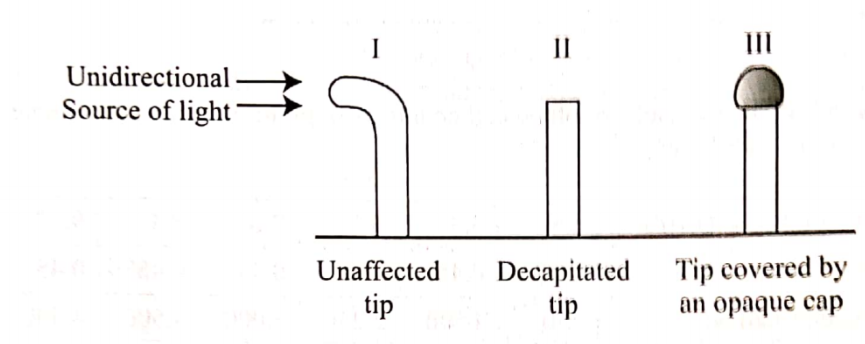
(i) Account for the observations made in seedling 1 (3 marks)

(ii) Explain the similarity in the end results made in seedlings II and II (2 marks)

(iii) State the likely treatment that would make seedlings II and III respond like seedling I. (2 marks)

4. In cats, the gene for fur colour is sex-linked. Letter G represents the gene for ginger fur colour while letter B represents the gene for black fur colour in a given cot species. These genes are codominant.

Heterozygous females have ginger and black patches of fur rind their phenotype is described as tortoise-shell.

(a) With reference to the information given above, what is meant by the term codominance? (1 mark)

(b) Explain why male cats with a tortoise-shell phenotype do not usually occur. (2 marks)

(c) A tortoise-shell female was crossed with a black male. Determine the genotypes and phenotypes of the offspring. (5 marks)

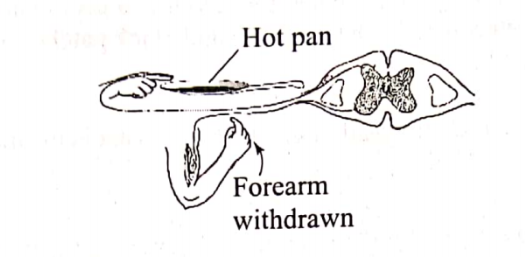
5. A person accidentally touches a hot pan and responds as illustrated in the diagram below.

(a) Explain how the response illustrated above occurs. (6 marks)

(b) Explain how auxins are utilised as selective weed killers in agriculture. (2 marks)

SECTION B (40 Marks)

Answer question 6 (compulsory) and either 7 or 8

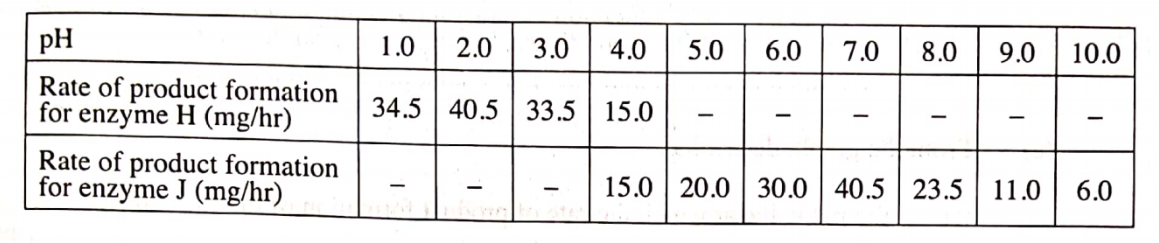
6. The table below shows the rate of product formation for two enzymes, H and J over a range of pH values.

(a) On the same axis, plot graphs of the rate of product formation against pH. (8 marks)

(b) Account for the rate of product formation for enzyme H between:

(i) pH 1.0 and 3.0 (3 marks)

(ii) pH 3.0 and 7.0. (3 marks)

(c) From the graph, determine:

(i) The pH value at which the rate of product formation of the two enzymes was the same (l mark)

(ii) The value of the rate of product formation for enzymes H and I at the pH value stated in (G)(i) above (1 mark)

(iii) The optimum pH value for enzyme J (l mark)

(d) State one variable that may lead to the change in the optimum rate of product-formation of the two enzymes. (l mark)

(e) Suggest with a reason, the likely part of the human alimentary canal where enzyme H would be found. (2 marks)

7.Giving examples,describe the following interactions among organism: (20 marks)

8. Explain the effects of increased physical activity on the following organ systems: (20 marks)

(a) Heart

(b) Lungs

(C) Kidneys

(d) Skin.


2020 KCPE Predictions
2020 KCSE Chemistry Prediction Questions
2020 KCSE Leakage
2020 KCSE Predictions
2020 KCSE Time Table
Biology KCSE 2020
Chemistry KCSE 2020
Cre KCSE 2020
English KCSE 2020
Geography KCSE 2020
History KCSE 2020
KCPE 2020 Predictions
KCPE Prediction Questions
KCPE Predictions 2020
KCSE 2020
KCSE 2020 Exam Timetable
KCSE 2020 
KCSE 2020 Biology
KCSE 2020 Prediction
KCSE 2020 Prediction Pdf
KCSE 2020 Prediction Questions
KCSE 2020 Predictions
KCSE 2020 Registration
KCSE 2020 Timetable

KCSE Past Papers Biology Paper 1 2019 (231/1)

KCSE Past Papers 2019 Biology Paper 1 (231/1)

KCSE Past Papers  Biology Paper 1 2019 (231/1)

Kenya Certificate of Secondary Education

2019 Biology Paper 1

Answer all the questions in the spaces provided.

1. Name the characteristic of living organisms illustrated by each of the activities described below: (a) Dressing heavily (1 mark)

(b) Bursting of the sporangium in the Rhizopus sp (1 mark)

2. (a) Besides venation, state two other external characteristics of leaves that can be used to classify plants.(2 mark)

(b) Explain why the bat is classified as a mammal yet it flies.(2 mark)

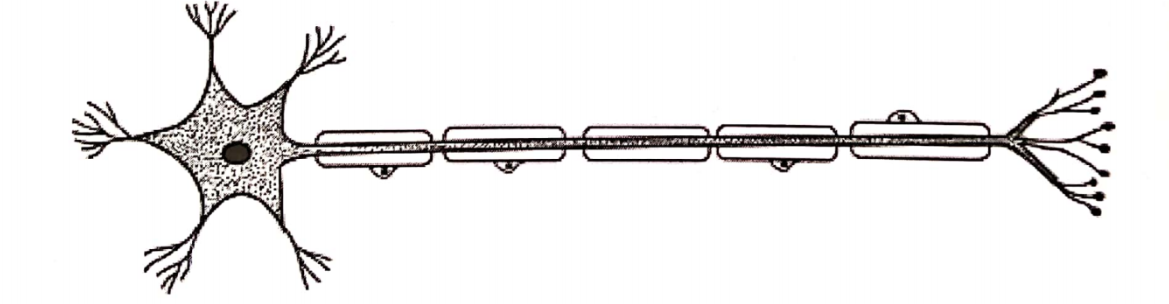
3. The diagram below illustrates a specialised cell obtained from a certain tissue.

(a) Name the cell.(2 mark)

(b) State two ways in which the cell is structurally adapted to its function. (2 marks)

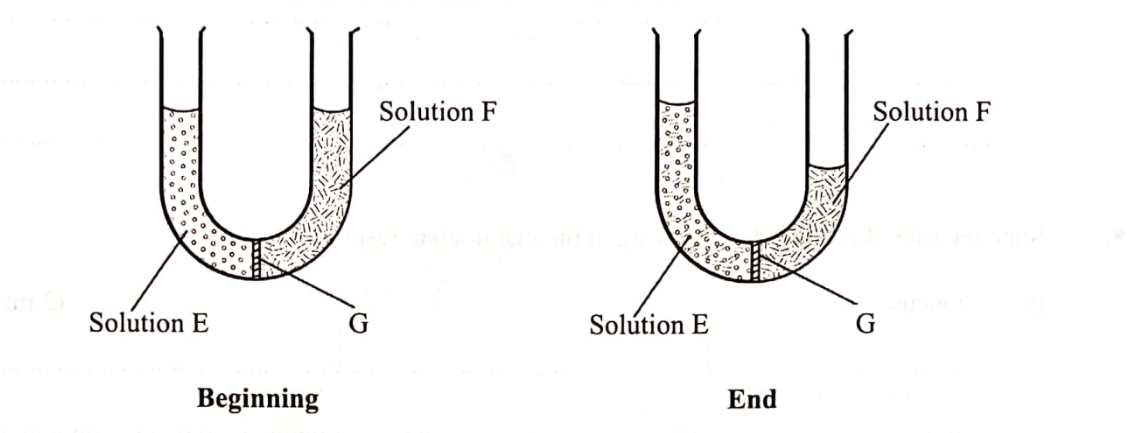
4. In investigating a certain pliysiological process, students set up the apparatus as shown below and made the observation after 30 minutes as illustrated.

(a) Name the physiological process being investigated.(1 mark)

………………………………

(b) Account for the observation made at the end of the experiment.(3 mark)

……………………………………………….. …

………………………..

(c) State the likely identity of G.(3 mark)

———————————————————

5. Explain why significantly increasing the blood pH slows down the rate of selective reabsorption of materials in the kidney tubules. (3 marks)

————————————————

————————————————–

6. (a) Name the respiratory structure in the amoeba.(1 mark)

——————————-

(b) Give a reason for your answer in (a) above.(1 mark)

….. …… ………………………

7. Distinguish between chemical and mechanical digestion.(1 mark)

———————————————-

——————————————-

g. State the role of each of the following in the mammalian respiratory system:

(a) mucus (2 mark)

——————————————————————————

————————————————————————

(b) cartilage rings (1 mark)

——————————————————————————

————————————————————————

(c) epiglottis (1 mark)

——————————————————————————

————————————————————————

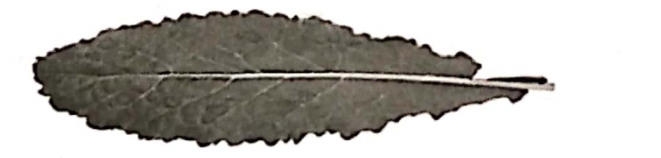
9. Below is a photograph of Brassica oleracea, Sukuma wiki leaf.

(a) State two observable features that adapt the leaf to gaseous exchange. (2 marks)

——————————————————————————–

———————————————————————————

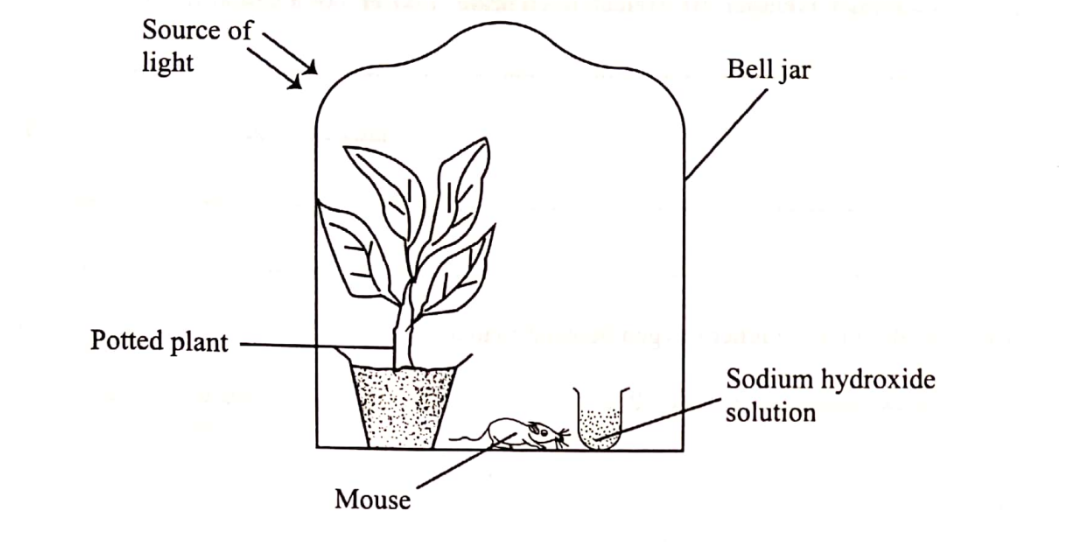
10. In an investigation, students set up the apparatus below in the laboratory and made observations after 72 hours.

(a) Explain how inclusion of the following components would affect the mouse in the experiment:

(i) light (2 marks)

———————————————————————-

——————————————————————-

(ii) sodium hydroxide solution (2 marks)

————————————————————————

—————————————————————————

11. Explain each of the following physiological observation :

(A) Sportsmen release little, concentratcd urine at the end Of a strenuous exercise (3 marks)

—————————————–

——————————————-

———————————————

(b) A rabbit has a higher oxygen demand than a camel (3 marks) ——————————————————————————

——————————————————————————

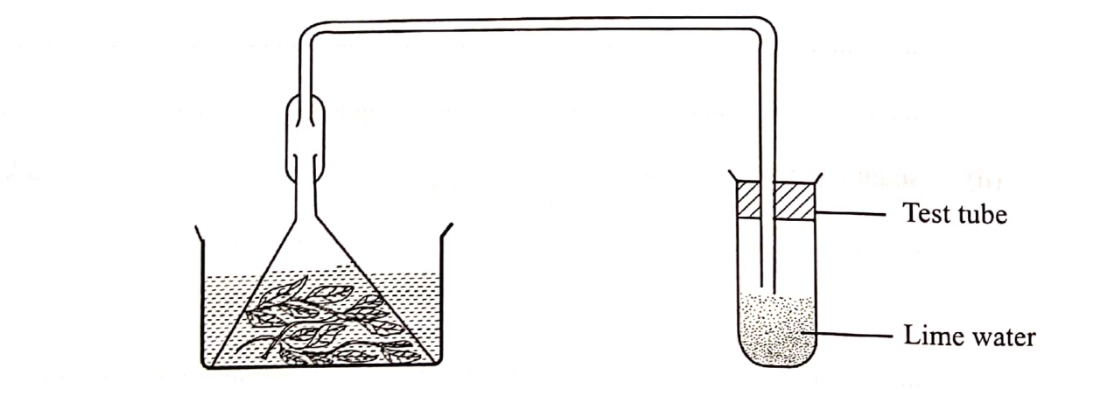
12. While investigating a certain metabolic process in plants, students set up the apparatus as shown below in a classroom and monitored it for 48 hours.

(a) Identify the metabolic process under investigation.(1 mark)

————————————————

(b) Account for the observations made in the test tube at the end of the investigation. (2 Marks)

————————————–

——————————————

13. A female human being was found to have an extra sex chromosome in her cells.

(a) Give the total number of chromosomes in the female individual’s cells.(1 Marks)

—————————

(b) Explain the possible cause of this condition.(2 Marks)

————————————-

——————————-

(c) State two physical characteristics observed in the female individual with such a condition. ———————————

14. (a) Explain why fossil records as evidence of organic evolution are usually incomplete.(3 marks) ———————————————-

—————————————————

(b) Name the evidence of organic evolution exhibited by occurrence of similar amino acid molecules in a range of organisms. (1 Marks)

—————————————

15. (a) Distinguish between guttation and transpiration.(1 Marks)

————————————

—————————

(b) State the significance of transpiration to a plant.(2 Marks)

—————————–

——————————-

16. State two benefits of mutation in living organisms. (2 Marks)

——————————————-

—————————————-

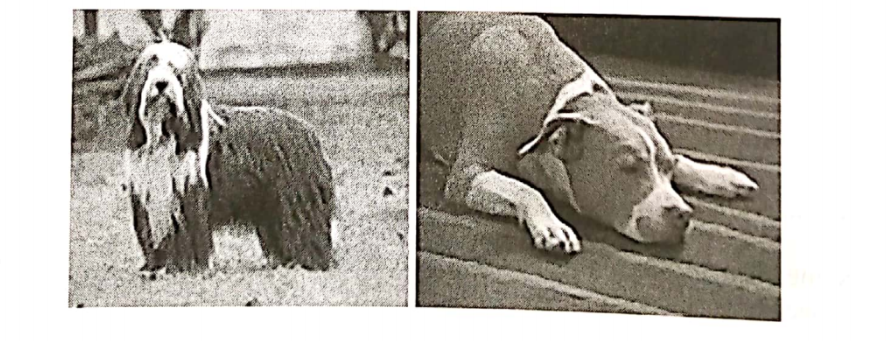
17. Below are photographs of two dogs.

Explain the possible reason for the difference in the length of their fur. (2 mark)

18. Name the type of t00th in carnivores mainly used for piercing and killing of preys. (1 mark)

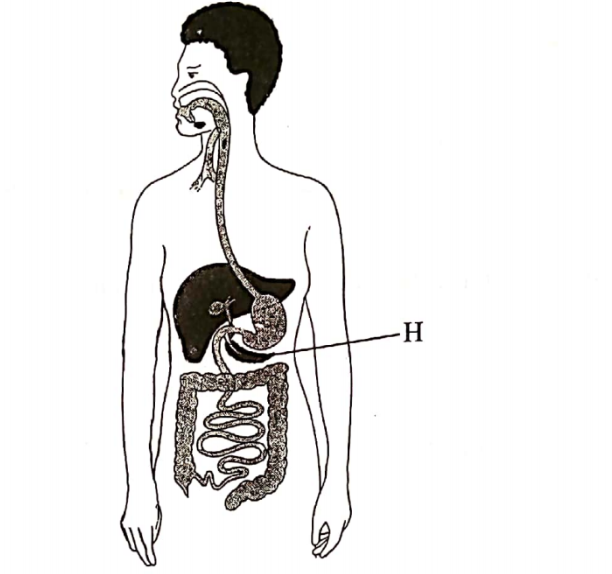
19. Below is a diagram of the human digestive system.

(a) Label with Y on the diagram where enzyme amylase is produced. (2 marks)

(b) Besides the digestive role, explain one other function of the part labelled H. (2 marks)

——————————–

…………………………….

20. State how each of the following features enhance efficient movement of fish in water.

(a) Scale (1 mark)

(b) body shape (1 mark)

21. Make a diagram of a simple, bilobed leaf with a serrated margin.(3 mark)

22. The chart below illustrates how respiratory gases are transported in the human blood.

(a) Identify gas Q. (I mark)

(b) Explain the advantage oxyhaemoglobin has over carboxyhaemoglobin.(2 mark)

23. State three homeostatic roles of the liver. (3 marks)

24. (a) Plasmodium vivax and P lasmodium ovale are transmitted by a mosquito. State with a reason whether the tWo organism s can interbreed. (2 marks)

(b) Explain the evolutionary basis for the ever changing drugs for malaria treatment. (2 marks)

25. State one characteristic of muscles responsible for each of the following:

(a) peristaltic movement (1 marks)

(b) movement of limbs (1 marks)


2020 KCPE Predictions
2020 KCSE Chemistry Prediction Questions
2020 KCSE Leakage
2020 KCSE Predictions
2020 KCSE Time Table
Biology KCSE 2020
Chemistry KCSE 2020
Cre KCSE 2020
English KCSE 2020
Geography KCSE 2020
History KCSE 2020
KCPE 2020 Predictions
KCPE Prediction Questions
KCPE Predictions 2020
KCSE 2020
KCSE 2020 Exam Timetable
KCSE 2020 
KCSE 2020 Biology
KCSE 2020 Prediction
KCSE 2020 Prediction Pdf
KCSE 2020 Prediction Questions
KCSE 2020 Predictions
KCSE 2020 Registration
KCSE 2020 Timetable
KCSE Prediction Questions