Category KCPE and KCSE Past Papers

KCSE Past Papers 2019 Kiswahili Karatasi ya 3 (102/3)

KCSE Past Papers 2019 Kiswahili Karatasi ya 3 (102/3)

Kenya Certificate of Secondary Education Kiswahili – Fasihi Karatasi ya 3

KCSE Past Papers 2019 Kiswahili Karatasi ya 3 (102/3)

SEHEMU A: RIWAYA

A. Matei: Chozi la Heri

1. Lazima

(a) “Sasa haya ameyapa kisogo … kufunguliwa kwa kituo hiki ni kama mana iliyomdondokea kinywani kutoka mbinguni.”

(i) Eleza muktadha wa dondoo hili. (alama 4)

(ii) Bainisha tamathali mbili za usemi ambazo zimetumiwa katika dondoo hili. (alama 2)

(iii) Fafanua umuhimu wa mhusika anayerejelewa katika dondoo hili katika kuijenga riwaya hii. (alama 6)

(b) Jadili mikakati mwafaka ambayo vijana wanatumia kukabiliana na hali yao ya maisha kwa kuwarejelea wahusika wafuatao:

(i) Chandachema (alama 4)

(ii) Dick (alama 4)

SEBEMU B: TAMTHILIA

P. Kea: Kigogo

Jibu swali la 2 au la 3

2. (a) Jadili mbinu kumi ambazo Wanasagamoyo wanatumia kupigana na utawala dhalimu. (alama 10)

(b) Eleza jinsi mbinu rejeshi ilivyotumiwa kukuza vipengele vifuatavyo katika tamthilia hii.

(i) Maudhui (alama 5)

(ii) Wahusika (alama 5)

3. (a) “Ushahidi utatoka wapi kama kipanga ndiye hakimu kwenye kesi ya kuku?”

(i) Eleza muktadha wa dondoo hili. (alama 4)

(ii) Fafanua dhima ya vipengele viwili vya kimtindo vinavyobainika katika dondoo hili. (alama 4)

(b) (i) Kwa kurejelea tamthilia jadili sifa sita za msemaji.(alama 6)

(ii) Eleza umuhimu wa mandhari katika tamthilia hii. (alama 6)

SEHEMU C: HADITHI FUPI

Jibu swali la 4 au la 5

A. Chokocho na D. Kayanda (Wah): Tumbo Lisiloshiha na Hadithi Nyingine

K. Walibora. “Nizikeni Papa Hapa”

4. (a) “Isije ikawa hapa habari ya kufuata asali ukafa mzingani.” “… Pana hasara gani nzi kufia kidondani?”

(i) Eleza muktadha wa dondoo hili. (alama 5)

(ii) Andika mbinu mbili za kimtindo zinazojitokeza katika dondoo hili. (alama 2)

(b) Hadithi, Nizikeni Papa Hapa inahimiza uwajibikaji. Jadili.(alama 5)

5. (a) Onyesha jinsi unafiki unavyoshughulikiwa katika hadithi, “Shogake Dada ana Ndevu.” (alama 8)

(b) Changanua mtindo katika dondoo lifuatalo: (alama 12)

“Bi. Hamida alitunga donge kifuani mwake. Na donge likaja juu. Likampanda na kumsakama kooni. Kweli? Uongo? Kweli au uongo yale maneno ya binti yake?

Labda kweli anamfıkiria mambo mabaya binti yake tu. Labda kweli dhana yake ni mbovu. Bi. Hamida alichanganyikiwa na mambo.

Alivutwa huku na huku na nafsi yake yenye chagizo. Upande mmoja sauti yake ya ndani ilikuwa inamtetea Safia, na upande wa pili wa nafsi yake ilikuwa ikimshuku Safia; na sauti zake zote mbili hizo zimo ndani ya kiwiliwili chake zinamvuta yeye mtu mmoja, Bi. Hamida. Hatimaye hakutambua afanye nini.”

SEHEMU D: USHAIRI

Jibu swali la 6 au la 7.

6.Soma shairi lifuatalo kisha ujibu maswali

Lilipo lile banda, lile pale,
Kuna tuja kakonda, kwa uwele,
Wala siye kupenda, hiyo ndwele,
Ndwele ya kutishwa!

Ni ndwele ya kutengwa, penye haki,
Uwele wa kusutwa, pasi haki,
Ugonjwa kupuuzwa, na miliki,
Ndwele ya kutwishwa!

Mwiliwe kawa sugu,
viwandani, Uso una kunyugu,
ziso fani, Ujira wake ndugu,
ni mapeni, Ndwele ya kutwishwa!
Na homa akipatwa, maishani,
Kwa tiba apuuzwa, kama nyani,
Hajulikani kuwa, yeye nani,
Ndwele ya kutwishwa!

Ana chawa nyweleni, ona dhiki,
Na kunguni nguoni, ahiliki,
Funza na miguuni, wamesaki,
Ndwele ya kutwishwa!

Bado yuasubiri, kisimati, Dhiki yake kutiri, ‘we tamati Ndipo iwe sururi, ya kidhati Nyota yake ni nyota ya huzuni.

(K.Wamitila)

(a) Fafanua kwa kutoa hoja sita kutoka kwenye shairi, jinsi nyota ya anayerejele wa ni ya huzuni. (alama 6)

(b) Eleza muundo wa shairi hili. (alama 6)

(c) Bainisha aina zifuatazo za uhuru wa kishairi katika shairi: (alama 6)

(i) inkisari

(ii) kujifanyanga sarufi

(d) Eleza tamthali tutu za usemi zilizotumiwa katika shairi hili. (alama 3)

(f) Eleza sifa mbili za anayelengwa katika shairi hili kwa kurejelea ubeti wa mwisho. (alama 2)

(g) Andika ubeti wa nne kwa lugha nathari. (alama 2)

7. Soma Shairi lifuatalo kisha ujibu maswali.

Kalma akili si mali, maskini na tajiri
Wangalimoja sampuli, asikuwepo fakiri
Na hangekuwa na mali, mwinyi bila kufikiri
Kama akİlİ si mali, usingeweza fikiri.

Ukeshapo kwa fikara, ni kwa wingi wa akili
Kuwaza kigaragara, una mengi si kalili
Na kuwa una tambara, metajirika kwa hili
Kama akili si mali, usingeweza fikiri.
Alokijenga kitanda, ana wingi wa akili
Hata asiwe na bunda, hamithili kwa akili
Hata naye paka nunda, pasipo akili hali
Kama akili si mali, usingeweza fikiri.

Akili kweli ni mali, kwa kuteua vya mwozo
Singetumia akili, ungevila vya angamizo
Afya ikawa thakili, na kuhiliki mawazo
Kama akili si mali, usingeweza fikiri.

Vipi gonjwa kikuganda, wawazia spitali?
Huachi ukawa ng’onda, ukanyauka muwili
Ugangani unakwenda, kutafuta afadhali,
Kama akili si mali, usingeweza fikiri.

Kama akili si mali, kusingekuwa na jela,
Kuwatenga kuwa mbali, wenye hiana na hila,
Kwa mbavu na ufidhuli, pamwe mbinu tolatola,
Kama akili si mali, usingeweza fikiri.

Tajiri na maskini wote wanayo akili,
Ni kuwa hayafanani, waliyonayo makali
Kabisa hawashibani, liwe lile au hili,
Kama akili si mali, usingeweza fikiri.

Kalma akili si mali, ‘singekuwa na hazina
Ya kudadisi mithali, na kumpinga yako mnna
Gani inadumu mali, kuliko huko kusana?
Kama akili si mali, usingeweza fikiri.

(T. Arege)

(a) “Ufanisi wa binadamu hutegemea akili.” Fafanua kwa kurejelea hoja sita kutoka kwenye shairi hili. (alama 6)

(b) Andika mifano ya vipengele vifuatavyo vya kimtindo katika shairi hili:(alama 4)

(i) sitiari

(ii) tanakuzi

(iii) Swali la balagha

(iv) kinaya

(c) Eleza mbinu nne ambazo mshairi ametumia kutosheleza mahitaji ya kiarudhi. (alama 4)

(d) Andika aina mbili za urudiaji zinazojitokeza katika shairi hili.(alama 2)

(e) Fafanua muundo wa shairi hili.(alama 4)

SEHEMU E: FASIHI SIMULIZI

8. Soma utungo ufuatao kisha ujibu maswali. Shangazi anambila
umewadia muda
wa kukiacha kiambo
cha Baba
Nende kujinasibisha
na ajinabi tusohusiana
kwa ngeu wala usaha
nache niwapendao
nache aila
nache matamanio
ya elimu kufuatiya.

Anambile shangazi
Hino ni neema
ela moyo wanirai
“Wajitia shemere”, nami nauambia,
“Najua si utashi wangu”
ila hiari sina

kwani lvii ni faradhi
mitamba mepokelewa
na ami kwa furaha
kilobaki ni kuvuka
kizingiti hiki.”
Kwaheri’i Mama, kwaheri wanuna.

(a) Ainisha wimbo huu kwa kuzingatia kipengele cha maudhui.(alama 2)

(b) Andika sifa mbili za jamii inayosawiriwa na wimbo huu. (alama 2)

(d) Unanuia kutumia mahojiano kukusanya habari kuhusu nyimbo za aina hii.

(i) Eleza manufaa matano ya kutumia mbinu hii.(alama 5)

(ii) Eleza changamoto tano za kutumia mbinu hii.(alama 5)

KCSE Past Papers 2019 Kiswahili Karatasi ya 3 (102/3)

KCSE Past Papers 2019 Kiswahili Karatasi ya 2 (102/2)

KCSE Past Papers 2019 Kiswahili Karatasi ya 2 (102/2)

KCSE Past Papers 2019 Kiswahili Karatasi ya 2 (102/2)

Kenya Certificate of Secondary Education Kiswahili Karatasi ya 2

UFAHAMU (Alama 15)

Soma kifungu kifuatacho kisha ujibu maswali.

Kijiji chetu kilikuwa kimeanza kuingiwa na wasiwasi. Katika kipindi cha miaka michache iliyopita tulikuwa tumewapoteza watu kadha na hakuna aliyeelewa kiini hasa cha majanga haya. WazeE walisikika wakisemezana kwa sauti za chini. Hatukujua hasa walichosema lakini ilikuwa bayana kuwa kijui chetu kilikuwa juu ya mchongoma. Ku umi kwetu kuna mambo yatokeayo yakaonekana miujiza.

Tunabaki kutapatapa kuelezea chanzo shake na wesemavyo, akili ni nywele kila mtu ana zake.

Ila zipo nywele za koto na za sings. Lakini kuna watu wenye kuandamwa na tata, mti wowote uliokuwa karibu ulishikiliwa kwa tumaini la kuleta nafuu.

Ndiyo, nafuu. Na ndivyo ilivyotokea kiasi cha kila mtu kuwa bingwa wa kufasiri asili ya janga na suluhu yake. Hali hii iliendelea mpaka walipofika wataalamu kuuini kwetu na kufanya utafiti wa kisayansi uliotufumbulia asili ya dhiki zetu.

Siku hiyo ya kutolewa matokeo ya utafiti, kuul kizima kilijumuika kwenye uwanja wa shule mapema.

Hakuna aliyeonyesha use wa furaha. Ilikuwa kama tuliokuwa mahakamani tunasubiri hukumu ya kesi ya jinai dhidi yetu. Siyakumbuki yote aliyosema yule mtaalamu lakini yapo yaliyotugusa sote.

“Najua mna hamu ya kujua tatizo liko wapi.

Kabla ya kulieleza tatizo lenyewe ningependa kusema poleni kwa misiba iliyowaandama.

Kuwapoteza wapendwa si pigo kwa familia tu, bali pia kwa kuui na taifa. Na kuanzia sasa ninawaomba tushirikiane kuibadilisha hali hii.

Hatuwezi kuendelea kuishi hivi,” alisema huku wanakuui wanamtazama kwa masikitiko makubwa. “Binadamu yumo katika awamu ya kujiangamiza”,aliendelea, “amefanya uvumbuzi wa teknolojia aali lakini ambayo sawa na mwaridi, ina miba.

Miba hii sasa inamchoma kila aitundaye teknolojia. Kwa sababu ya wingi wetu, sasa tunataka kuzalisha mazao yetu haraka.

Kwa sababu ya ongezeko kubwa la idadi ya watu walaji ni wengi lakini ardhi inazidi kujibana. Njia ya pekee ya kuongeza lishe ni kupitia uzalishaji zaidi wa vyakula. Katika ulimwengu ambapo vipando vile vile hurudiwa kupandwa kwenye ardhi ile ile, pato lake hupungua. Jibu la kuinua pato ni teknolojia.

Teknolojia hii imebuni uzalishaji wa mbolea ya kemikali ambazo huchochea rotuba kwenye ardhi. Urutubishaji wa ardhi yetu ndogo umetuwezesha lcuzalisha chai, kahawa, mahindi na mazao mengine kwa wingi ili kukidhi haja yetu ya chakula.

Zamani ardhi ilipokuwa kubwa na idadi ya watu ikawa ndogo, haja hii ya mbolea haikuwepo. Ardhi iliachwa kujirutubisha yenyewe. Madhara tuyaonayo sasa hayakuwepo wakati huo.” “Leo hii utashi wetu wa lcujitosheleza umetusukumizia ukingoni mwa maisha.

Vyakula vyetu sasa vina kemikali hatari kutokana na mizizi ya mimea kufyonza virutubisho vyenye nitrojeni.

Virutubisho hivi hustawisha mimea. Hata hivyo mimea hii tunayoila ina kemikali hatari kwa miili yetu. Kemikali hizi vilevile huingia kwenye nyasi ambazo huliwa na mifugo wetu. Mifugo hao hudhurika, nasi tunapofaidi bidhaa zao tunadhurika. Hata mito yetu na visima hupokea mikusanyiko ya kemikali hizi hatari, nasi tunazinywa kupitia kwa maji.

Kemikali hizi husababisha saratani, na hili ndilo tatizo la kuut hiki.” Kauli hii ya mwisho iliutikisa umati ule. Sauti za wanaktjui zilisikika zikinong’onezana.

Wengi wa wanakuut waliona kama kila kite pale kuutnt kilikuwa chanzo cha adhabu ya kifo kwao. Baada ya kule kutanabahishwa, ilisikika sauti ya mlevi mmoja aliyesema kwa sauti kubwa kabisa, “Ni hivi, ama tule hivyo vibaya tufe polepole au tuache kuvila tufe mara moja.” Tamko hili la mlevi liliwasisimua wote waliokuwa pale, wakapata walau sababu ya kucheka.

Kucheka huku kuliwatia watu matumaini, wakaanza kuuliza maswali. Kwa nini mbolea itengenezwe kutokana na kemikali hatari? Hivi dunia haijui kuwa ipo hatari kwenye mbolea hizo? Je, waache kunywa maji na kutupa vyakula walivyokuwa navyo? Waliuliza maswali haya na mengine mengi.

Yule mtaalamu hakuwa na mengi ya kusema kwa sababu alifahamu kuwa kila aina ya teknolojia ina faida na madhara yake. Kwa hivyo alieleza kwa ufupi.

“Kemikali hizo ndizo huchochea rutuba ya ardhi ambayo huiwezesha mimea kukua na kutupa mazao mcnbi.

Dunia inafahamu fika madhara ya kemikali zinazotumiwa kwenye mbolea lakini ifanyeje? Watu watakao kulishwa ni wengi.

Ardhi imepungua kwa sababu ya wingi wa watu. watu wanataka kula ilhali ardhi hiyo ndogo haina tena rutuba.

Hata maji hayo yaliyoathirika mtayanywa tu bado.

Mtaishije bila maji Mtapika vipi? Mtakunywa nini? Hali hii tunaweza kuiondoa polepole kwa kuwekeza kwsnye ufugaji wa kuku, ng’ornbe na mbuzi wengi ili tutumie mbolea yao kurutubisha ardhi yetu. Wanasayansi wanasema itachukua yapata miaka mitano kuirejesha ardhi katika hali yake asilia.”

Maelezo ya mtaalamu yule yalilta nafuu ya namna fulani kwa wanakijiji. Mzee mmoja alipewa nafasi kuzungumuza kabla ya kikao kufungwa.

Mkutano ulipomalizika kijiji kilijua tatizo lilipokuwa na kuumaliza uvumi uliokuwa unaoteshwa kila leo.

(a) Eleza sababu mbtli za wanakijiji kuuona ugonjwa uliozuka kuwa miujiza.(alama 2)

(b) Eleza madhara manne ya kemikali za mbolea kulingana na kifungu. (alama 4)

(c) Bainisha mambo matatu yanayochochea kubuniwa kwa teknolojia mpya kwa mujibu wa kifungu. (alama 3)

(d) Andika mambo mawili yanayoonyesha kuwa wazee wa jamii hii walikuwa na hadhi.(alama 2)

(e) Fafanua maana ya ‘nywele za koto’ na ‘nywele za singa’ kwa kurejelea kifungu hiki (alama 2)

(f) Kipe kifungu hiki anwani mwafaka (alama 2)

2. UFUPISHO (Alama 15)

Soma kifungu kifuatacho kisha ujibu maswali.

Denıokrasia ya uwakilishi huweza kujitokeza kwa namııa tofautitofauti kutegeıvca ır‹atakwa ya nchi mahususi. Demokrasia ya Urais ni aina mojawapo ya demoloasia ya uwakilishi. Aina hii ya demokrasia humpa rais mamlaka makuu jun ya serikali.

Rais huchaguliwa ama kwa njia ya rnojiı t.wa moja, au kwa kutumia wawakilishi. Yeye hawi tu kiongozi wa taifa, bali pia wa serikali kaına iliivyo Kenya, Marekani na Ajentina. Hali kadhalika, kuna Demokrasia ya Bunge.

Aina hii huipa bunge mamlaka makubwa.

Kitengo cha utekelezi cha serikali hupata mamlaka yake katika bungeni. Kiongozi wa taifa na kiongozi wa serikali huwa watu tofauti na wenye viwango tofauti vya mamlaka. Kwa kawaida, kiongozi wa serikali huwa na mamlaka makubwa zaidİ kama ilivyo Uingereza. Demokrasia ya kimabavu huelekea kupingana na dhana halisi ya deınokrasia.

Katikaa

demokrasia hii tabaka la juu pekee ndilo lenye haki ya kuchagua wawakilishİ Wa taifa. Umma lıauna lıaki hiyo. Mfano wa demokrasia hii ni Urusi.

Demokrasia ina manufaa mengi. Demokrasia hulinda masilahi ya wananchi wote; si walio wengi, si walio wachache, si wenye nguvu, si wanyonge…Demokrasia pia husaidia kugatua mamlaka, lıivyo kuzuia kundi dogo kuwa mamlakani daima.

Hili hufanikishwa na chaguzi za mara kwa mara. Kwa vile sheria haibagui, demokrasia basi hukuza usawa kwa wote. Wale wanaochaguliwa hujaribu kuweka sera mwafaka kwa kuwa hawadumu mamlakani. Kuhusishwa kwa umma katika kuamua watakaowatawala na kuwepo kwa kipındi mahususi cha kuhudumu hupunguza uwezekano wa kutokea kwa mapinduzi.

Hali kadhalika, demokrasia huchochea mabadiliko katıka nchi kwa kuwa kila utawala huwa na kipindi chake maalumu ambapo umma hupata nafasi ya kuubadilisha, na hivyo kubadili sera na rnwelekeo wa nchi.

Demokrasîa huipa umma nafasi ya kujifunza mambo mengi kuhusu siasa.

Wakati wa uchaguzi, wagombeaji hunadi sera na rawaza zao, na hivyo kuelimisha umma. Demokrasia pia huwafanya watawala kuwa na tahadhari na kuwajibika kwa kuwa umma ulioerevuka kisiasa unawatia kwenye mizani na huenda usiwachague tena.

Ni dhahiri kwamba demokrasia ina dhima kuu katika maendeleo ya nchi. Hivyo ipo haja ya kuthamini na kuendeleza mifumo ifaayo ya kidemokrasia ili kuhakikisha kwamba hak i ya ki la raia imelindwa.

(a) Fupisha ujumbe wa aya tano za kwanza kwa maneno 110. (alama 10; 1 ya mtiririko)

Matayarisho

————————————————————————— ————————————————————————— ————————————————————————— ————————————————————————— ————————————————————————— ————————————————————————— ————————————————————————— ————————————————————————— ————————————————————————— ————————————————————————— ————————————————————————— —————————————————————————

Nakala Safi

————————————————————————— ————————————————————————— ————————————————————————— ————————————————————————— ————————————————————————— ————————————————————————— ————————————————————————— —————————————————————————

(b) Kwa maneno 50, eleza masuala ambayo mwandishi anaibua katika aya tatu za mwisho. (alama 5; 1 ya mtiririko)

Matayarisho

————————————————————————— ————————————————————————— ————————————————————————— ————————————————————————— ————————————————————————— ————————————————————————— ————————————————————————— ————————————————————————— ————————————————————————— ————————————————————————— ————————————————————————— —————————————————————————

Nakala Safi

————————————————————————— ————————————————————————— ————————————————————————— ————————————————————————— ————————————————————————— ————————————————————————— ————————————————————————— —————————————————————————

3. Matumizi ya Lugha: (Alama 40)

(a) Andika maneno yenye miundo ifuatayo: (alama 2)

(i) irabu, konsoızanti, konsonartti irabu, konsonanti , irabu

(ii) konsonanti, konsonanti, irabtı, irabu

(b) Ainisha mofimu katika maneno yafuaatayo: (alama 2)

(i) asemavyo

(ii) mwangwi

(c) Onyesha aina za nomino katika sentensi ifuatayo.(alama 3)

Shule nzima ilifurahia ukarimu wa Shirika la Tugawane.

——————————————————

——————————————————

(d) Andika sentensi ifuatayo katika wingi (alama 1)

Seremala aliulainisha ubao huo ili kutengeneza kasha amuuzie mlinzi huyo.

————————————————————————-

(e) Tunga sentensi ukitumia vivumishi vinavyotoa maana zifuatazo:

(i) Nafasi katika orodha (alama 1)

———————————————

(ii) Kutobagua (alama 1)

———————————————–

(f) Andika sentensi ifuayavyo katika hali ya ukubwa (alama 1)

Mtu huyo alifuata njia iliyomwelekeza mjini

———————————————————————

(g) Andika upya sentensi zifuatazo kulingana na maagizo bila kupoteza maana.

(i) Mhadisi alikarabati mtambo.

Mtambo ulikuwa kiwandani.

(Unganisha kuwa sentensi moja bila kutumia kiunganishi.)(alama 1)

(ii) Kembo alishona fulana hiyo vizuri sana. (Tumia kielezi cha kiasi badala ya vile Yilivyopigiwa mstari.) (alama 1)

(h) Andika sentensi ifuatayo katika usemi halisi. (alama 2)

Mkurugenzi alisema kwamba wangetoa nyongeza ya mshahara mwaka ambao ungefuata.

(i) Geuza sentensi ifuatayo katika wakati uliopita hali timiIifu.(alama 1)

Ni wazi kwamba gharama ya maisha itapanda bei ya mafuta ikipanda.

(j) Andika sentensi ifuatayo katika hali yakinishi. (alama 1)

Badi huwa hapitii hapa, huenda usimpate.

(k) Zuri ni kwa baya, aminifu ni kwa ……………….. na vivu ni kwa …………..- (alama 2)

(l) Nomino zifuatazo ziko katika ngeli gani? (alama 2)

(i) sukari …………………………………………..

(ii) Teo ……………………………………………..

(m) Changanua sentensi ifuotayo kwa kielelezo Cha mistari (alama 2)

Mvua inseptısa na ıvatu wameanza kuondoka. ——————————————————————

——————————————————————–

(n) Vyakula viliandaliwa. Vyakula vilikuwa na viinilisha muhimu

(Unganisha kuunda sentensi changamano.)

(o) Bainisha yambwa na chagizo katika sentcnsi ifuatayo. (alama 3)

Zumari aliıntunzia Keto watoto hao kwa upendo. —————————————————————–

——————————————————————-

(p) Tunga sentensi mbili kuonyesha matumizi mnwili ya kiambishi ‘ku’.

(q) Ainisha vishazi katika sentensi ifuatayo.

Usalama ukiimarishwa watalii wengi watakuwa wanazuru humu.

(r) Unaporidhika na jambo unasema hewala, unaposhangilia timu yako kwa kupata ushindi unasema …………… na unapotaka usikivu unasema ……………….(alama 2)

(s) Jepesi ni kwa rahisi, ukuta ni kwa ………………….. na njia ni kwa ……… ………….. (alama 2)

(t) Tunga sentensi moja kutofautisha maana ya dua na tua.(alama 2)

(u) Mzee tuma ni mraibu wa vileo .Baada ya muda watoto wake wawili wanakuwa watumizi sugu wa vileo inayoweza kutumiwa kuelezea hali hii. (alama 1) ———————————————————————

(v) Tunga sentensi ukitumia kiunganishi cha uteuzi.(alama 2)

(d) ISIMUJAMII: (Alama 10)

Wewe ni nıhubiri katika Maabadi ya Shamu.

Umealikwa kuwahubiria wanafunzi wa Shule ya Upili ya Lulu. Fafanu a sifa kumi za lugha utakayotumia.

KCSE Past Papers 2019 Kiswahili Karatasi ya 1 (102/1)

KCSE Past Papers 2019 Kiswahili Karatasi ya 1

Kenya Certificate of Secondary Education

KCSE Past Papers 2019 Kiswahili Karatasi ya 1

Kiswahili Karatasi ya 1 – Insha

1. Lazima

Wewe ni Mkuu wa Elimu katika kaunti ndogo ya Tuangaze. Andika hotuba utakayowatolea Maafisa wa Elimu na Walimu Wakuu kuhusu umuhimu wa kustawisha vyuo vinavyotoa mafunzo ya kiufundi katika eneo lao.

2. “Usalama wa mwanafunzi unamtegemea yeye.” Jadili.

3. Andika insha itakayodhihirisha maana ya methali ifuatayo:

Mla nawe hafi nawe ila mzaliwa nawe.

4. Andika kisa kinachoanza kwa maneno yafuatayo:

Nilimtazama kwa muds.

Moyo wangu ulinituma kumuuliza kilichomfanya kuishi katika mazingira ya kudhalilisha kama hayo.

KCSE Past Papers 2019 History and Government paper 2

KCSE Past Papers 2019 History and Government

KCSE Past Papers 2019 History and Government

History and Government paper 2

SECTION A (25 marks)

Answer all questions in this section

1. Identify Evo theories which explain the origin of man. (2 marks)

2. State two ways in which the Agikuyu interacted with the Maasai during the pre-colonial period.(2 marks)

3. Name the original homeland of the River-Lake Nilotes of Kenya. (1 mark)

4. Identify the main economic activity of the Akamba during the pre-colonial period. (1 mark)

5. Give one advantage of dual citizenship to a Kenyan. (1 mark)

6. State two ways in which national integration has promoted economic development in Kenya. (2 marks)

7. Identify one minority group whose rights were protected by the Constitution of Kenya at independence.(1 mark)

8. Outline two advantages of indirect democracy as practised in Kenya. (2 marks)

Give the type of human right which is violated if a person is unlawfully detained. (1 mark)

10. State two demands of the African Elected Members’ Organization (AEMO) presented to the Colonial Secretary in 1957. (2 marks)

Give the main contribution made by Tom Mboya which improved the welfare of workers during the colonial period.(1 mark)

12. Outline two types of cases which are determined by the Kadhis courts in Kenya. (2 marks)

13.Give two reasons that may lead to the removal of a County Governor from office in Kenya. (2 marks)

14. Identify one National Security organ of the Republic of Kenya. (1 mark)

15. Give one classification of land ownership enshrined in the Constitution of Kenya. (1 mark)

16. State two roles played by Theatre in nation building. (2 marks)

17. Give the main reason why president Daniel Arap Moi banned ethnic organisations in 1979. (1 mark)

SECTION B (45 marks)

Answer any three questions from this section

18. (a) Outline three factors that enabled the early visitors to come to the East African Coast before 1500 AD. (3 marks)

(b) Explain six effects of the Indian Ocean Trade on the East African Coastal inhabitants before 1500 AD. (12 marks)

19. (a) Give three reasons why the British used direct rule in Kenya.(3 marks)

(b) Explain sia results of collaboration between Lenana and the British. (12 marks)

20. (a) Outline three reasons why African reserves were created in Kenya during the colonial period. (3 marks)

(b) Explain six ways in which the construction of the Uganda Railway promoted economic development in Kenya. (12 marks)

21. (a) Identify three political organisations that Ronald Ngala worked with in his political career. (3 marks)

(b) Discuss six contributions of Professor Wangari Maathai in the politics of Kenya. (12 marks)

SECTION C (30 marks) Answer any five questions from this section

22. (a) State five economic challenges which Kenya was experiencing at independenc e. (5 marks )

(b) Discuss five features of African Socialism which was adopted in Kenya after independence.(10 marks)

23. (a) Give five qualities of a good public servant in Kenya. (5 marks)

(b) Explain five functions of the civil service of the National Go vernment of Kenya. (10 marks)

24. (a) State five functions of the Controller of Budget of the Government of Kenya. (5 marks)

(b) Explain five ways in which the recurrent expenditure funds are used by the County governments in Kenya. (10 marks)

Questions and Answers

History and Government paper 1

1. Identify two theories which explain the origin of man.

(i) The Creation Theory

(ii) The Evolution Theory

(iii) The TraditionaÎ/mythica) Theory Any 2 x 1 = 2 marks.

2.State fwO ways in whirh the Agikuyu interacted with the Maasai during the pre-colonial period.

(i) They inter married.

(ii) Ney traded/exchanged goods.

(iii)They borrowed items from each other.

(iv)They raided each other/fought. Any 2 x 1 – 2 marks.

3. Name the original homeland of the River-Lake Nilotes of Kenya.

(i) O Bahr-el-Giiazal/Southern Sudan

4.Identify the main economic activity of the Akamba during the pre-colonial period.

(i) Livestock keeping

5.Give one advanfage of duaf citizeriship to a Kenyan.

(i) persoii can work in either of the countries.

(ii) One can choose to live in either ofthe countries.

(iii) One is entitled to the rights/frecdoiRs pfovided in the Constitution of Kenya.

6. Mate two ways in which national integration has promoted economic development in Kenya.

(i) It has enabled citizens to work/employcd in any part of Kenya.

(ii) It has enabled free movement of goods/services within the country.

(iii) It has enabled citizens to invest/establish businesses in any part of the country.

(iv) It has enabled people to buy property anywhere in the country. Any 2 x l = 2 marks.

7.Identify one minority group whose rights were protected by the Constitution independence.

(i) The Europeans

(ii) The Asians

(iii) Minority indigenous African communities>

8.Outline two advantages of indirect democracy as practised in Kenya.

(i) People exercise their democratic rights/elect leaders of their own choice

(ii) The leaders are accountable to the electorate.

(iii) The electorate/people can vote out/recall their elected leaders.

(iv) People’s views in decision making are taken into account.

9. Give the type of human right which is vîolatcd if a person is unlawfully detained.

The right of movement/freedom of movernent

10.State two demands of the African Elected Members Organization (AEMO) presented to the Colonial Secretary in 1957.

(i) The increase of African elected members in the Legislative Council

(ii) Registration of voters on a common vote

11.Give the main contribution made by Tom Mboya which improved the welfare of workers in Kenya during the colonial period.

– He formed Trade union/workers’ union 1×1=1 mark.

12. Outline two types of cases which are determined by the Kadhi’s courts in Kenya.

(i) Marriage cases.

(ii) Divorce cases.

(iii)Inheritance cases.

(iv)Personal status. Any 2 x 1= 2 marks.

13. Give two reasons that may lead to the removal of a County Governor from office in Kenya.

(i) If he/she violates the Constitution/any other law.

(ii) If he/she commits a crime under nationaUinternational law.

(iii) Due to abuse of office/gross misconduct.

(iv) Due to mental or physical incapacity to perform functions of the office. Any 2 x 1 = 2 marks.

14. Identify one National Security organ of the Republic of Kenya.

(i) Kenya Defence Forces.

(ii) National Intelligence Service.

(iii)National Police Service.

15.Give one classification of land ownership enshrined in the Constitution of Kenya.

(i) Public land.

(ii) Commnunity land.

(iii) Private iand.

16. State two roles playcd by Theatre in nation building.

(i) It educates people on differcnt cultural aspects.

(ii) It provides entertainment.

(iii) It creates employment

(iv) It helps in uniting people

17.Give the main reason why President Daniel Arap Moi banned ethnic organisations 1979

In order to promote national unity

18. (a) Outline three factors that enabled the early visitors to come to the East African Coast before 1500 AD.

(i) The accessibility of the East African Coast from the sea/ocean.

(ii)The development of marine technology/existence of marines./e kr/ I all]

(iii) The existence of monsoon winds.

(iv) The technology/knowledge of boat making.

(b) Explain six effects of the Indian Ocean trade on the East African Coastal inhabitants before 1500 AD.

(i) It led to the development/growth of the city states/towns along the coast like Mombasa which were nc

(ii) Many foreigners settled in the East African Coast thereby increasing the population in the region.

(iii) Islamic code of law/sharia was introduced which was used to govern the coastal city states/people.

(iv) Islamic religion widely spread in the region as many people were converted into it.

(v) Arabic/Persian architecture was introduced which was reflected in the designs of houses/mosques built in the region.

(vi) Islamic education was introduced where Islamic schools/madrassa were constructed.

(vii) There was intermarriage between the early visitors and the coastal inhabitaiis resulting with the new breed of people called Waswahili.

(viii) Kiswahili languange emerged, which was a combination of Bantu and Arabic languagcs.

(ix) There was introduction of new cropslike rice/cloves/millet/fruits which becomes staple foods for the coastal people.

19.Give 3 reasons why te British used direct rule in kenya

(I) Most of the- communistes were statelesss/did not bave elaborate traditional governments

(ii) They wanted to establish full control of the people.

(iii) lt had been used successfully elsewhere.

(iv) They had enough personnel/administmtors.

(v) Some communities were resisting.

(vl) Most of the commnunities hud been weakened by civil wars/famires.

b) Explain six results of the collaboration between Lenana and the British.

(i) The Maasai were evicted/displaced from some of their !ands which was given to the settlers.

(ii) The Maasai lost their independence, hence colonized by the British.

(iii) Lenana was given the position of Pammount Chief by the British in order to please him.

(iv) Maasai warriors wcre employcd as mercenaries and wcrc used to supprcssfbring other communities under colonial rule.

(v) The Maasai were rewarded with livestock which was confiscated from resisting communities

(vi) Lenana was helped to fight his brother Sendeyo whom he forccd together with his followers to move to nothern Tanzania.

(vii) .Through Maasai agreements of 1904 and 1911, they were divided into Laikipia and Ngong reserves.

(viii) The Uganda railway was constructed through Maasai land which enhanced colonial/British administration.

20.Outline three reasons why Africa resereves were created in kenya during the colonial period

(i) In order to check/control the movements of Africans

(ii) In order to control room/tand for settler farming

(iii) To crcate a pool of African labour force.

(iv) To check/ reduce/ curtail/ slow down the spread of nationalist ideas

(v) 1t was a divide and rule tactic

(vi) For easier provision of social amenities to the Africans. Any 3 x I – 3 marks.

(b) Explain sÎx ways in which the construction of the Uganda Railway promoted economic development in Kenya.

. (i) lt provided cheap/easy trnnsportation of goods and services io and from the market.

(ii) lt enhanced thc movement of.labour/workers. thereby enabling them to acce,ss their work places.

(iii) There was development of towns/trading centres/duka wallas developed along the ratlway whicb generated revenuc to the government.

(iv) It created ob opportunities to many people who were employed to man/maintain it.

(v) It opened up agricultural potential areas where both settler and Africans started farming activities.

(vi) Minerals were exploited as there was access to the mines and transport of the products.

(vii) culture-related industrics were established to mainly process agricultural raw materials.

(viii) It promoted local trade as goods could be transported to areas where there wns demand.

(ix) It generated revenue for thc government through charges levied on goods/peop1c transported.

21. Identify three political organizations that Ronald Ngala Worked with in his political career

(I) Coast African Association.

(ii) Kilifi African People’s Union.

(iii) Kenya African Democratic Union.

(iv) Mombasa African Democratic Union.

(v) Kenya African National Union

(b) Discuss six contributions of Prof. Wangari Maathai in the politics of Kenya.

(i) She founded the Green Belt Movement which advanced environmental and political activism in the country.

(ii) She served as the vice-chair and later as the chair of the National Council of Women of Kenya which encouraged the participation of women in political affairs.

(iii) Together with other pro-multiparty democracy activists, she campaigned for the need to have political pluralism in Kenya.

(iv) Together with other activists, she participated in hunger strike in Freedom Corncr/Uhuru Park to put pressure on the government to release political prisoners.

(v) She was an elected Member of Parliament for Tetu Constituency on a NARC ticket where she represented her people.

(vi) She was an assistant minister for Environment and Natural Resources under the NARC government, a forum she used to improve the country’s environment

(vii) She founded the Mazingira Green Party to allow the candidates to run on a platform for environmental conservation.

22. (a) State five economic challenges which Kenya was experiencing at independence.

(i) High poverty levels among the people.

(ii) Africanisation of jobs/economy.

(iii) Unfavourable balance of trade.

(iv) Low salaries/remunerations for Africans.

(v) High unemployment level.

(vi) Inadequate capital for development.

(vii) Redistribution of land/settling landless people.

b) Discuss five features of African Socialism which was adopted in Kenya after independence.

(i) Democracy was_embraced where Africans were encouraged to participate actively.

(ii) Mutualso_ciaLresponsibility, which emphasized the spirit of brotherhood in nation building.

(iii) Private and public ownership of the factors of production would develop hand in hand.

(iv) It emphasized equal job opportunities for all regardless of one’s tribe/religion/background.

(v) Narrowing the gap between the rich and the poor would be achieved through progressive taxation/mutual assistance.

(vi) To provide the needed social services such as education/health which were inadequate.

(vii) Mixed economy was emphasized in order to improve production/living standards of the people.

(viii) Progressive Africanisation of the economy would be achieved without harming/disrupting it.

23 (a) Give five qualities of a good public servant in Kenya.

(i) Efficiency/effectiveness.

(ii)Impartiality

(iii) Accountability/ transparency.

(iv) Integrity.

(v) Professionalism.

(vi) Responsiveness.

(vii) Self-driven/self-motivated.

(b) Explain five functions of the Civil Service of the National Government of Kenya.

(i) It provides services required by the people in various sectors of the economy.

(ii) It keeps government records/documents which ensures continuity in the provision of public service.

(iii) It explains government.policies_to the people in order to make them easily understood by the public

(iv) It maintains law and order/security through various security organs like the Kenya Police/ National Intelligence Services.

(v) It monitors the implcmenlation of government projccts/policics in order to ensure proper use of public resources.

(vi) ft defends the country from external aggression through the Kenya Defence Forces.

(vii) It liaises with other countries/international organizations which conduct business with government.

(viii) Through the Judiciary, it settles disputes which arise among the people.

24. (a) State five functions of the Controller of Budget of the Government of Kenyan

(i) He/She oversees implementation of the budget of the National/County Government.

(ii) He/She authorizes withdrawals of the public funds.

(iii) He ensures that the withdrawals are lawful.

(iv) He/She submits to parliament reports on implementation of budget.

(v) He/She checks. the use of government funds.

(vi) He/She advises the government on budgeting.

(b) Explain five ways in which the recurrent expenditure funds are used by the County governments in Kenya. (10 marks)

(i) They are used to pay salaries/wages to the county government workers who provide services within the county.

(ii) They are used to repair/maintain government facilities in order to keep them in good working conditions.

(iii) They are used to pay loans borrowed to finance operations/activities in the counties.

(iv) They are used in provision of bursaries/sponsor needy students for further studies.

(v) They are used in financing sporting/cultural activities which take place in the counties.

(vi) They are used to pay subscription fee to inter-county associations/programmes in order to sustain their operations.

(vii) They are used.to buy medicine supplies/medicine required in the county health facilities.

(viii) They are used to construct/maintain transport infrastructure in order to ease movement of people/goods in the county/ ease commercial activities.
KCSE Past Papers 2019 History and Government (311/1)

History and Government

History and Government paper 1

SECTION A (25 marks)

Answer all questions in this section

1. Identify Evo theories which explain the origin of man. (2 marks)

2. State two ways in which the Agikuyu interacted with the Maasai during the pre-colonial period.(2 marks)

3. Name the original homeland of the River-Lake Nilotes of Kenya. (1 mark)

4. Identify the main economic activity of the Akamba during the pre-colonial period. (1 mark)

5. Give one advantage of dual citizenship to a Kenyan. (1 mark)

6. State two ways in which national integration has promoted economic development in Kenya. (2 marks)

7. Identify one minority group whose rights were protected by the Constitution of Kenya at independence.(1 mark)

8. Outline two advantages of indirect democracy as practised in Kenya. (2 marks)

Give the type of human right which is violated if a person is unlawfully detained. (1 mark)

10. State two demands of the African Elected Members’ Organization (AEMO) presented to the Colonial Secretary in 1957. (2 marks)

Give the main contribution made by Tom Mboya which improved the welfare of workers during the colonial period.(1 mark)

12. Outline two types of cases which are determined by the Kadhis courts in Kenya. (2 marks)

13.Give two reasons that may lead to the removal of a County Governor from office in Kenya. (2 marks)

14. Identify one National Security organ of the Republic of Kenya. (1 mark)

15. Give one classification of land ownership enshrined in the Constitution of Kenya. (1 mark)

16. State two roles played by Theatre in nation building. (2 marks)

17. Give the main reason why president Daniel Arap Moi banned ethnic organisations in 1979. (1 mark)

SECTION B (45 marks)

Answer any three questions from this section

18. (a) Outline three factors that enabled the early visitors to come to the East African Coast before 1500 AD. (3 marks)

(b) Explain six effects of the Indian Ocean Trade on the East African Coastal inhabitants before 1500 AD. (12 marks)

19. (a) Give three reasons why the British used direct rule in Kenya.(3 marks)

(b) Explain sia results of collaboration between Lenana and the British. (12 marks)

20. (a) Outline three reasons why African reserves were created in Kenya during the colonial period. (3 marks)

(b) Explain six ways in which the construction of the Uganda Railway promoted economic development in Kenya. (12 marks)

21. (a) Identify three political organisations that Ronald Ngala worked with in his political career. (3 marks)

(b) Discuss six contributions of Professor Wangari Maathai in the politics of Kenya. (12 marks)

SECTION C (30 marks) Answer any five questions from this section

22. (a) State five economic challenges which Kenya was experiencing at independenc e. (5 marks )

(b) Discuss five features of African Socialism which was adopted in Kenya after independence.(10 marks)

23. (a) Give five qualities of a good public servant in Kenya. (5 marks)

(b) Explain five functions of the civil service of the National Go vernment of Kenya. (10 marks)

24. (a) State five functions of the Controller of Budget of the Government of Kenya. (5 marks)

(b) Explain five ways in which the recurrent expenditure funds are used by the County governments in Kenya. (10 marks)

Questions and Answers

History and Government paper 1

1. Identify two theories which explain the origin of man.

(i) The Creation Theory

(ii) The Evolution Theory

(iii) The TraditionaÎ/mythica) Theory Any 2 x 1 = 2 marks.

2.State fwO ways in whirh the Agikuyu interacted with the Maasai during the pre-colonial period.

(i) They inter married.

(ii) Ney traded/exchanged goods.

(iii)They borrowed items from each other.

(iv)They raided each other/fought. Any 2 x 1 – 2 marks.

3. Name the original homeland of the River-Lake Nilotes of Kenya.

(i) O Bahr-el-Giiazal/Southern Sudan

4.Identify the main economic activity of the Akamba during the pre-colonial period.

(i) Livestock keeping

5.Give one advanfage of duaf citizeriship to a Kenyan.

(i) persoii can work in either of the countries.

(ii) One can choose to live in either ofthe countries.

(iii) One is entitled to the rights/frecdoiRs pfovided in the Constitution of Kenya.

6. Mate two ways in which national integration has promoted economic development in Kenya.

(i) It has enabled citizens to work/employcd in any part of Kenya.

(ii) It has enabled free movement of goods/services within the country.

(iii) It has enabled citizens to invest/establish businesses in any part of the country.

(iv) It has enabled people to buy property anywhere in the country. Any 2 x l = 2 marks.

7.Identify one minority group whose rights were protected by the Constitution independence.

(i) The Europeans

(ii) The Asians

(iii) Minority indigenous African communities>

8.Outline two advantages of indirect democracy as practised in Kenya.

(i) People exercise their democratic rights/elect leaders of their own choice

(ii) The leaders are accountable to the electorate.

(iii) The electorate/people can vote out/recall their elected leaders.

(iv) People’s views in decision making are taken into account.

9. Give the type of human right which is vîolatcd if a person is unlawfully detained.

The right of movement/freedom of movernent

10.State two demands of the African Elected Members Organization (AEMO) presented to the Colonial Secretary in 1957.

(i) The increase of African elected members in the Legislative Council

(ii) Registration of voters on a common vote

11.Give the main contribution made by Tom Mboya which improved the welfare of workers in Kenya during the colonial period.

– He formed Trade union/workers’ union 1×1=1 mark.

12. Outline two types of cases which are determined by the Kadhi’s courts in Kenya.

(i) Marriage cases.

(ii) Divorce cases.

(iii)Inheritance cases.

(iv)Personal status. Any 2 x 1= 2 marks.

13. Give two reasons that may lead to the removal of a County Governor from office in Kenya.

(i) If he/she violates the Constitution/any other law.

(ii) If he/she commits a crime under nationaUinternational law.

(iii) Due to abuse of office/gross misconduct.

(iv) Due to mental or physical incapacity to perform functions of the office. Any 2 x 1 = 2 marks.

14. Identify one National Security organ of the Republic of Kenya.

(i) Kenya Defence Forces.

(ii) National Intelligence Service.

(iii)National Police Service.

15.Give one classification of land ownership enshrined in the Constitution of Kenya.

(i) Public land.

(ii) Commnunity land.

(iii) Private iand.

16. State two roles playcd by Theatre in nation building.

(i) It educates people on differcnt cultural aspects.

(ii) It provides entertainment.

(iii) It creates employment

(iv) It helps in uniting people

17.Give the main reason why President Daniel Arap Moi banned ethnic organisations 1979

In order to promote national unity

18. (a) Outline three factors that enabled the early visitors to come to the East African Coast before 1500 AD.

(i) The accessibility of the East African Coast from the sea/ocean.

(ii)The development of marine technology/existence of marines./e kr/ I all]

(iii) The existence of monsoon winds.

(iv) The technology/knowledge of boat making.

(b) Explain six effects of the Indian Ocean trade on the East African Coastal inhabitants before 1500 AD.

(i) It led to the development/growth of the city states/towns along the coast like Mombasa which were nc

(ii) Many foreigners settled in the East African Coast thereby increasing the population in the region.

(iii) Islamic code of law/sharia was introduced which was used to govern the coastal city states/people.

(iv) Islamic religion widely spread in the region as many people were converted into it.

(v) Arabic/Persian architecture was introduced which was reflected in the designs of houses/mosques built in the region.

(vi) Islamic education was introduced where Islamic schools/madrassa were constructed.

(vii) There was intermarriage between the early visitors and the coastal inhabitaiis resulting with the new breed of people called Waswahili.

(viii) Kiswahili languange emerged, which was a combination of Bantu and Arabic languagcs.

(ix) There was introduction of new cropslike rice/cloves/millet/fruits which becomes staple foods for the coastal people.

19.Give 3 reasons why te British used direct rule in kenya

(I) Most of the- communistes were statelesss/did not bave elaborate traditional governments

(ii) They wanted to establish full control of the people.

(iii) lt had been used successfully elsewhere.

(iv) They had enough personnel/administmtors.

(v) Some communities were resisting.

(vl) Most of the commnunities hud been weakened by civil wars/famires.

b) Explain six results of the collaboration between Lenana and the British.

(i) The Maasai were evicted/displaced from some of their !ands which was given to the settlers.

(ii) The Maasai lost their independence, hence colonized by the British.

(iii) Lenana was given the position of Pammount Chief by the British in order to please him.

(iv) Maasai warriors wcre employcd as mercenaries and wcrc used to supprcssfbring other communities under colonial rule.

(v) The Maasai were rewarded with livestock which was confiscated from resisting communities

(vi) Lenana was helped to fight his brother Sendeyo whom he forccd together with his followers to move to nothern Tanzania.

(vii) .Through Maasai agreements of 1904 and 1911, they were divided into Laikipia and Ngong reserves.

(viii) The Uganda railway was constructed through Maasai land which enhanced colonial/British administration.

20.Outline three reasons why Africa resereves were created in kenya during the colonial period

(i) In order to check/control the movements of Africans

(ii) In order to control room/tand for settler farming

(iii) To crcate a pool of African labour force.

(iv) To check/ reduce/ curtail/ slow down the spread of nationalist ideas

(v) 1t was a divide and rule tactic

(vi) For easier provision of social amenities to the Africans. Any 3 x I – 3 marks.

(b) Explain sÎx ways in which the construction of the Uganda Railway promoted economic development in Kenya.

. (i) lt provided cheap/easy trnnsportation of goods and services io and from the market.

(ii) lt enhanced thc movement of.labour/workers. thereby enabling them to acce,ss their work places.

(iii) There was development of towns/trading centres/duka wallas developed along the ratlway whicb generated revenuc to the government.

(iv) It created ob opportunities to many people who were employed to man/maintain it.

(v) It opened up agricultural potential areas where both settler and Africans started farming activities.

(vi) Minerals were exploited as there was access to the mines and transport of the products.

(vii) culture-related industrics were established to mainly process agricultural raw materials.

(viii) It promoted local trade as goods could be transported to areas where there wns demand.

(ix) It generated revenue for thc government through charges levied on goods/peop1c transported.

21. Identify three political organizations that Ronald Ngala Worked with in his political career

(I) Coast African Association.

(ii) Kilifi African People’s Union.

(iii) Kenya African Democratic Union.

(iv) Mombasa African Democratic Union.

(v) Kenya African National Union

(b) Discuss six contributions of Prof. Wangari Maathai in the politics of Kenya.

(i) She founded the Green Belt Movement which advanced environmental and political activism in the country.

(ii) She served as the vice-chair and later as the chair of the National Council of Women of Kenya which encouraged the participation of women in political affairs.

(iii) Together with other pro-multiparty democracy activists, she campaigned for the need to have political pluralism in Kenya.

(iv) Together with other activists, she participated in hunger strike in Freedom Corncr/Uhuru Park to put pressure on the government to release political prisoners.

(v) She was an elected Member of Parliament for Tetu Constituency on a NARC ticket where she represented her people.

(vi) She was an assistant minister for Environment and Natural Resources under the NARC government, a forum she used to improve the country’s environment

(vii) She founded the Mazingira Green Party to allow the candidates to run on a platform for environmental conservation.

22. (a) State five economic challenges which Kenya was experiencing at independence.

(i) High poverty levels among the people.

(ii) Africanisation of jobs/economy.

(iii) Unfavourable balance of trade.

(iv) Low salaries/remunerations for Africans.

(v) High unemployment level.

(vi) Inadequate capital for development.

(vii) Redistribution of land/settling landless people.

b) Discuss five features of African Socialism which was adopted in Kenya after independence.

(i) Democracy was_embraced where Africans were encouraged to participate actively.

(ii) Mutualso_ciaLresponsibility, which emphasized the spirit of brotherhood in nation building.

(iii) Private and public ownership of the factors of production would develop hand in hand.

(iv) It emphasized equal job opportunities for all regardless of one’s tribe/religion/background.

(v) Narrowing the gap between the rich and the poor would be achieved through progressive taxation/mutual assistance.

(vi) To provide the needed social services such as education/health which were inadequate.

(vii) Mixed economy was emphasized in order to improve production/living standards of the people.

(viii) Progressive Africanisation of the economy would be achieved without harming/disrupting it.

23 (a) Give five qualities of a good public servant in Kenya.

(i) Efficiency/effectiveness.

(ii)Impartiality

(iii) Accountability/ transparency.

(iv) Integrity.

(v) Professionalism.

(vi) Responsiveness.

(vii) Self-driven/self-motivated.

(b) Explain five functions of the Civil Service of the National Government of Kenya.

(i) It provides services required by the people in various sectors of the economy.

(ii) It keeps government records/documents which ensures continuity in the provision of public service.

(iii) It explains government.policies_to the people in order to make them easily understood by the public

(iv) It maintains law and order/security through various security organs like the Kenya Police/ National Intelligence Services.

(v) It monitors the implcmenlation of government projccts/policics in order to ensure proper use of public resources.

(vi) ft defends the country from external aggression through the Kenya Defence Forces.

(vii) It liaises with other countries/international organizations which conduct business with government.

(viii) Through the Judiciary, it settles disputes which arise among the people.

24. (a) State five functions of the Controller of Budget of the Government of Kenyan

(i) He/She oversees implementation of the budget of the National/County Government.

(ii) He/She authorizes withdrawals of the public funds.

(iii) He ensures that the withdrawals are lawful.

(iv) He/She submits to parliament reports on implementation of budget.

(v) He/She checks. the use of government funds.

(vi) He/She advises the government on budgeting.

(b) Explain five ways in which the recurrent expenditure funds are used by the County governments in Kenya. (10 marks)

(i) They are used to pay salaries/wages to the county government workers who provide services within the county.

(ii) They are used to repair/maintain government facilities in order to keep them in good working conditions.

(iii) They are used to pay loans borrowed to finance operations/activities in the counties.

(iv) They are used in provision of bursaries/sponsor needy students for further studies.

(v) They are used in financing sporting/cultural activities which take place in the counties.

(vi) They are used to pay subscription fee to inter-county associations/programmes in order to sustain their operations.

(vii) They are used.to buy medicine supplies/medicine required in the county health facilities.

(viii) They are used to construct/maintain transport infrastructure in order to ease movement of people/goods in the county/ ease commercial activities.
KCSE Past Papers 2019 Geography paper 1 (312/1)

KCSE Past Papers 2019 Geography paper 1 (312/1)

2019 Geography Paper 1

SECTION A

Answer all the questions in this section.

1. (a) Distinguish between Geography and Environment.(2 marks)

(b) Identify the two branches of Geography.(2 marks)

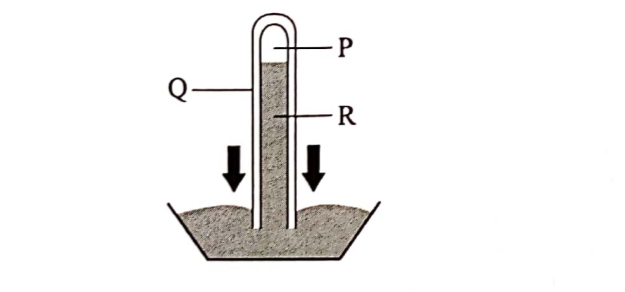
2. (a) The diagram below represents an instrument for measuring atmospheric pressure.

Name the parts marked P, Q and R.(3 marks)

(b) State three benefits of weather forecasting to human activities.(3 marks)

3. Give four proofs that support the theory of continental drift.(4 marks)

4. (a) Give three factors that influence the way a river transports its load.(3 marks)

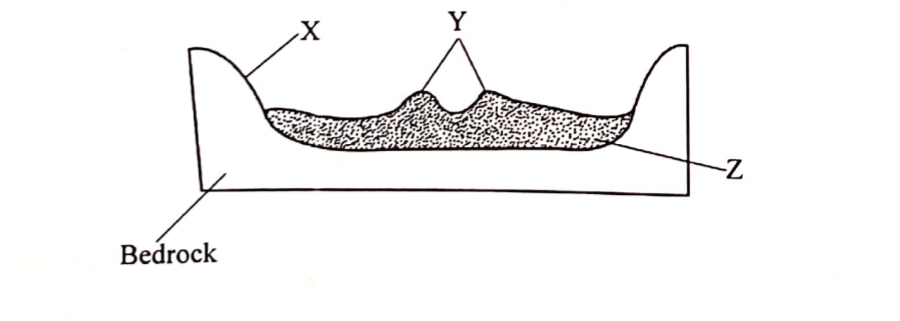
(b) The diagram below represents a cross-section of a flood plain. Name the features marked X, Y and Z. (3 marks)

5. (a) State the two causes of vertical movement of the ocean water.(2 marks)

(b) List three types of ocean tides.(3 marks)

SECTION B

Answer question 6 and any other two questions from fhis section.

6. Study the map of Yimbo 1: 50,000 (sheet l 15/1) provided and answer the following questions.

(â) (Î) What is the magnetic variation of the map?(2 marks)

(ii) Identify two natural features found at the grid square 3597.(2 marks)

(iii) Identify the two countries represented in the area covered by the map. (2 marks)

(b) (i) Give the direction of the trigonometrical station at the grid square 2789 from the air photo principal point at Nyagoma Mission School. (2 marks)

(ii) Measure the length of the provincial boundary to the North West of the area covered by the map. Give your answer in kilometres. (2 marks)

(c) (i) Give evidence that show the area covered by the map receives low rainfall. (3 marks)

(ii) Explain how each of the following factors have influenced the distribution of settlements in the area covered by the map:

I. Transport(2 marks)

II. Vegetation (2 marks)

III. Relief (2 marks)

(d) Describe the drainage of the area covered by the map.(6 marks)

7. (a) Using examples from East Africa, describe each of the following types of volcanoes:

(i) Active Volcano(3 marks)

(ii) Dormant Volcano(4 marks)

(b) Using a well labelled diagram, explain how each of the following features were formed:

(:) Composite Volcano (6 marks)

(ii) Volcanic plug (4 marks)

(c) Explain four negative effects of vulcanicity (8 marks)

8. (a) (i) Apart from inter tropical convergence zone (ITCZ), list four physical factors that influence climaie. (4 marks)

(ii) Give four charactcristics of inier tropical convergence zone (ITCZ). (4 marks)

(b) (i) Name the thrce equatorial climatic regions of Kenya. (3 marks)

(ii) Describe the tundra climate.(6 marks)

(c) Explain four human causes of desertification.(8 marks)

9. (a) (i) Define an ocean.(2 marks)

(ii) Explain the three causes of variation in the amount of salt in ocean water. * (6 marks)

(b) (i) Identify three processes involved in wave erosion. (3 marks)

(ii) With the aid of well labelled diagrams, describe the processes through which a wave cut platform is formed. (8 marks)

(c) You intend to carry out a field study on types of features resulting from wave deposition along the coast.

(i) Identify three methods you would use to record data. (3 marks)

(ii) Give three wave depositional features you are likely to observe during the field study.(3 marks)

10. (a) List three components of soil.(3 marks)

(b) Explain each of the following in relation to the classificati on of soil:

(i) Zonal(2 marks)

(ii) Intrazonal (2 marks)

(iii) Azonal (2 marks)

(c) Explain three causes of soil degeneration.(6 marks)

(d) Students from mwema school visited a nearby ranch to study types of soil.

(i) Explain why they carried the following tools:

i. Hoes (2 marks)

II. Polythene bags (2 marks)

(ii) Give three reasons why they would need to seek permission from relevant authorities. (3 marks)

(iii) List three types of soil erosion they are likely to observe. (3 marks)

Questions and Answers

2019 Geography Paper 1

SECTION A

Answer all the questions in this section.

1.Distinguish between Geography and Environment

Geography refers to the study of the distribution of natural and human features/phenomenon and their interrelationship on the earth surface while Environment refers to external conditions that surround an organism and has influence on its behaviour.

(b) Identify the two branches of Geography.(2 marks)

– Physical Geography

– Huma Geography

2. (a) The diagram below represents an instrument for measuring atmospheric pressure.

Name the parts marked P, Q and R.(3 marks)

P – Vacuum

Q – Glass tube

R – Mercury

(b) State three benefits of weather forecasting to human activities.(3 marks)

– It enables farmers to plan their farming activities.

– It helps in guiding tourist aGtlVities.

– It enables military personnel to plan their military activities.

– It enables people to choose suitable clothing.

– It guides people on sporting activities.

– It guides people on fishing activities.

– It helps to determine the times for air/sea.

3. Give four proofs that support the theory of continental drift.(4 marks)

4. (a) Give three factors that influence the way a river transports its load.(3 marks)

(b) The diagram below represents a cross-section of a flood plain. Name the features marked X, Y and Z. (3 marks)

5. (a) State the two causes of vertical movement of the ocean water.(2 marks)

(b) List three types of ocean tides.(3 marks)

SECTION B

Answer question 6 and any other two questions from fhis section.

6. Study the map of Yimbo 1: 50,000 (sheet l 15/1) provided and answer the following questions.

(â) (Î) What is the magnetic variation of the map?(2 marks)

(ii) Identify two natural features found at the grid square 3597.(2 marks)

(iii) Identify the two countries represented in the area covered by the map. (2 marks)

(b) (i) Give the direction of the trigonometrical station at the grid square 2789 from the air photo principal point at Nyagoma Mission School. (2 marks)

(ii) Measure the length of the provincial boundary to the North West of the area covered by the map. Give your answer in kilometres. (2 marks)

(c) (i) Give evidence that show the area covered by the map receives low rainfall. (3 marks)

(ii) Explain how each of the following factors have influenced the distribution of settlements in the area covered by the map:

I. Transport(2 marks)

II. Vegetation (2 marks)

III. Relief (2 marks)

(d) Describe the drainage of the area covered by the map.(6 marks)

7. (a) Using examples from East Africa, describe each of the following types of volcanoes:

(i) Active Volcano(3 marks)

(ii) Dormant Volcano(4 marks)

(b) Using a well labelled diagram, explain how each of the following features were formed:

(:) Composite Volcano (6 marks)

(ii) Volcanic plug (4 marks)

(c) Explain four negative effects of vulcanicity (8 marks)

8. (a) (i) Apart from inter tropical convergence zone (ITCZ), list four physical factors that influence climaie. (4 marks)

(ii) Give four charactcristics of inier tropical convergence zone (ITCZ). (4 marks)

(b) (i) Name the thrce equatorial climatic regions of Kenya. (3 marks)

(ii) Describe the tundra climate.(6 marks)

(c) Explain four human causes of desertification.(8 marks)

9. (a) (i) Define an ocean.(2 marks)

(ii) Explain the three causes of variation in the amount of salt in ocean water. * (6 marks)

(b) (i) Identify three processes involved in wave erosion. (3 marks)

(ii) With the aid of well labelled diagrams, describe the processes through which a wave cut platform is formed. (8 marks)

(c) You intend to carry out a field study on types of features resulting from wave deposition along the coast.

(i) Identify three methods you would use to record data. (3 marks)

(ii) Give three wave depositional features you are likely to observe during the field study.(3 marks)

10. (a) List three components of soil.(3 marks)

(b) Explain each of the following in relation to the classificati on of soil:

(i) Zonal(2 marks)

(ii) Intrazonal (2 marks)

(iii) Azonal (2 marks)

(c) Explain three causes of soil degeneration.(6 marks)

(d) Students from mwema school visited a nearby ranch to study types of soil.

(i) Explain why they carried the following tools:

i. Hoes (2 marks)

II. Polythene bags (2 marks)

(ii) Give three reasons why they would need to seek permission from relevant authorities. (3 marks)

(iii) List three types of soil erosion they are likely to observe. (3 marks)

KCSE Past Papers 2019 English Paper 3 (101/3)

KCSE Past Papers 2019 English Paper 3 (101/3)

2019 English Paper 3

Answer three questions only.

1. Imaginative Composition (Compulsory)(20 marks)

Either

(a) Write a story beginning with the following sentence :

I was mistaken to have thought that the night would be like other peaceful nights.

Or

(b) Write a composition on the advantages and disadvantages of the internet.

2. Compulsory Set Text(20 marks)

H.R. Ole Kulet, Blossoms of the Savannah Irresponsible decisions can lead to serious consequences. Referring closely to H.R. Ole Kulet in Blossoms of the Savannah, write an essay in support of this statement.

3. The Optional Set Texts(20 marks)

Answer any one of the following three questions.

Either

(a) A Short Story

Moran (Ed.), Memories We Lost and Other Stories

Write a composition on the evils of war, using illustrations from “The President” by Mariatu Kamara.

Or

b) Drama

David Mulwa, Inheritance

Ill-gotten wealth can never bring true happiness. Write a composition in support of this statement, drawing examples from Lucuna Kasoo’s life.

Or

(c)The Novel

John Steinbeck, The Pearl

Desire without limits can be a source of agony both to ourselves and our family members, Using illustrations from The Pearl, write an essay in support of this statement.

KCSE Past Papers 2019 English Paper 2 (101/2)

ur suffices for people eating cooked food.

The advent of cooking enabled humans to eat more kinds of food, to devote less time to eating and to make do with smaller teeth and shorter intestines.

Some scholars believe there is a direct link between the advent of cooking, the shortening of the human intestinal track, and the growth of the human brain.

Since long intestines and large brains are both massive energy consumers, it’s hard to have both.

By shortening the intestines and decreasing their energy consumption, cooking inadvertently opened the way to the jumbo brains of Neanderthals and Sapiens. The domestication of fire was, therefore, a sign of things to come.

(Adapted from Sapiens: A brief History of Humankind by Yuval Noah Harari: London: Vintaee Books, 2011.)

(a) According to the author when did humans invent fire? ( 2 marks)

(b) In about 55 words,summarise what early humans used fire for before they cooked with it (5 marks)

Rough copy

————————————————————— ————————————————————— ————————————————————— ————————————————————— ————————————————————— ————————————————————— ————————————————————— ————————————————————— ————————————————————— ————————————————————— ————————————————————— ————————————————————— ————————————————————— ————————————————————— ————————————————————— ————————————————————— —————————————————————

Fair copy

————————————————————— ————————————————————— ————————————————————— ————————————————————— ————————————————————— ————————————————————— ————————————————————— ————————————————————— ————————————————————— ————————————————————— ————————————————————— ————————————————————— ————————————————————— ————————————————————— ————————————————————— ————————————————————— —————————————————————

(c) Identify four advantages of cooked food. ( 4 marks)

(d) Explain the link that the author sees between eating cooked food and the deveopment of the human brain ( 3 marks)

(e) What is the main point of this passage? ( 2 marks)

(f) Explain the meaning of each of the following words as used in the passage: (4 marks)

(i) Dependables ……………………………….

(ii) Enterprenures ……………………………….

(iii) Advent ……………………………………….

(iv) Inadvertently ……………………………………

Henrik Ibsen.A Doll’s house

2.Read the excerpt below and then answer the questions that follows (25 marks)

Children : On the doorway on the lc/t) Mother, the stranger man has gone out through the gate.

Nora : Yes, dears, I know. But, don’t tell anyone about the stranger man. Do you hear? Not even papa.

Children : No, mother; but will you come and play again?

Nora : No, no, — not now.

Children : But, mother, you promised us.

Nora : Yes, but I can’t now. Run away in; I have such a lot to do. Run away in, my sweet little darlings.

(She gels them into the room by degrees and shuts the door on them; then sits down on the sofa, takes up a piece of needlework and sews a few stitches, but soon stops.)

No! (throws down the work, gets up, goes to the hall door and calls out) Helen! bring the Tree in. (goes to the table on the left, opens a drawer; and stops again) No, no! it is quite impossible!

Maid : (coming in with the Tree) Where shall I put it, ma’am?

Nora : Here, in the middle of the floor.

Maid : Shall I get you anything else?

Nora : No thank you I have everything i want {EXIT Maid}.

Nora : (begins dressing the tree) A candle here — and flowers here — The horrible man! It’s all nonsense — there’s nothing wrong.

The tree shall be splendid! I will do everything I can think of to please you, Torvald! — I will sing for you, dance for you — (HELMER comes in with sonte papers under lits arm.) Oh! are you back already?

Helmer : Yes. Has anyone been here?

Nora : Here? No.

Helmer : That is strange. I saw Krogstad going out of the gate.

Nora : Did you? Oh yes, I forgot, Krogstad was here for a moment.

Helmer : Nora, 1 can see from your manner that he has been here begging you to say a good word for him.

Nora : Yes.

Helmer : And you were to appear to do it of your own accord .You were to conceal from me the fact of his having been here; didn’t he beg that of you too.

Nora : Yes, Torvald, but.

Helmer : Nora, Nora, and you would be a party a man like that, and give him any sort bargain?

Nora : : A lie — ?

Helmer : Didn’t you tell me no one had been hure? {shcike!1 hl,s,finge bird must never do that again. A songbird must have a clean beak to chirp with – no false notes! (puts his arm round her waist) That is so isn’t it? Yes l am sure it is.{Lets her go.) We will say no more about it, (sits down by the stove) How warm and the snug it is here! {turns over his papers)

(a) Place the excerpt in its immediate context. (4 marks)

(b) The Christmas tree is mentioned many times in the play. What does it stand for’? (3 marks)

(c) Describe the character of Helmer as brought out in the excerpt. ( 4 marks)

(d) What is the role of the children in the play. (2 marks)

(e) Identify and illustrate two stylistic devices used in the excerpt (4 marks)

(f) Identify and illustrate two themes brought out in the play (4 marks)

(g) Don’t tell anyone about the stranger man. (Rewrite beginning: Under……) (1 mark)

(h) Describe the tone Of this passage.(3 marks)

3. Read the Story below and then answer the questions that follows.

Once upon a time a father sent for his three sons and gave to the eldest a cock, to the second a scythe, and the third a cat.

“I am now old ,” said he, “my end is approaching, and I would fain provide for you before I die. Money I have none, and what 1 now give you seems of little worth; yet it rests with yourselves alone to turn my gins to good account.

Only seek out for a land where what you have is as yet unknown, and your fortune is made. After the death of the father, the eldest set out with his cock: but wherever he went, in every town, he saw from a far off a cock sitting upon the church steeple, and turning round with the wind.

In the villages he always heard plenty of them crowing, and his bird was therefore nothing new; so there did not seem much chance of his making his fortune.

At length it happened that he came to an island where the people who lived there had never heard of a cock and knew not even how to reckon the time.

They knew indeed if it were morning or evening; but at night if they lay awake, they had no means of knowing how time went.

“Behold,” said he to them, “what a noble animal this is! He carries a bright red crest upon his head, and spurs upon his heels; he crows three times every night at stated hours, and at the third time the sun is about to rise.

But this is not all; sometimes he screams in broad daylight, and then you must take warning, for the weather is surely about to change.” This pleased the natives mightily; they kept awake one whole night, and heard, to their great joy, how gloriously the cock called the hour, at two, four and six o’clock. Then they asked him whether the bird was to be sold, and how much he would sell it for.

“About as much as an ass can carry,” said he.

“A very fair price for such an animal,” cried they with one voice; and agreed to give him what he asked. When he returned home with his wealth, his brothers wondered greatly; and the second said, “ I will now set forth likewise, and see if he can turn my scythe to as good an account.”

There did not seem, however, much likelihood of this; for go where he would, he was met by peasants who had as good a scythe on their shoulders as he had. But at last, as good luck would have it, he came to an island where the people had never heard of a scythe; there, as soon as the com was ripe, they went into the fields and pulled it up; but this was very hard work and a great deal of it was lost.

The man then set to work with his scythe; and moived down their whole crop so quickly, that the people stood staring open-mouthed with wonder.

They were willing to give him what he asked for such a marvelous thing; but he only took a horse laden with as much gold as it could carry.

Now the third brother had a great longing, to go and see what he could make of his cat. So he set out; arid at first it happened to him as it had to the others, so long as he kept upon the main land, he met with no success; there were plenty of cats eve vhere, indeed too many, so that the young ones were for the most part, as soon as they came into the world, drowned in the water.

At last he passed over to an island where, as it chanced most luckily for him, nobody had ever seen a cat; and they were ovemin With mice to such a degree, that the little ivretches danced upon the tables and chairs, whether the master of the house were at home or not.

The people complained loudly of this grievance; the King himself knew not how to Find him self of them in his palace; in every conner mice were squeaking, and they gnawed everything that their teeth could lay hold of.

Here was a fine field for Puss — she soon began her chase and had cleared two rooms in the twinkling 01 an eye; when the people besought their King to buy the wonderful animal, for the good of the public, at any price.

The King willingly gave what was asked – a mule laden with gold and jewels; and thus the third brother returned home with a richer prize than either of the others. Meanwhile the cat feasted away upon the mice in the royal palace, and devoured so many that they were no longer in any great numbers.

At length, quite spent and tired with her work she became extremely thirsty; so she stood still, drew up her head, and cried, “Miau, Miau!” When the people heard this cry, they ran shrieking in great fright.

The King and his council decided to send a herald to the cat to warn her to leave the castle forthwith, or that force would be used to remove her. “We would far more willingly put up with the mice (since we are used to that evil), than get rid of them at the risk of our lives. ”

A page accordingly went and asked the cat whether she was willing to quit the castle. But Puss, whose thirst became every moment more and more pressing answered `Miau! Miau!” which the page interpreted to mean, “No! No!” and therefore carried this answer to the King. “Then we must try what force will do,” the King said.

So the guns were planted, and the palace was fired upon from all sides.

When the fire reached the room where the cat was, she sprang out of the window and ran away; but the besiegers did not see her, and went on firing until the whole palace was burnt to the ground.

(Adapted from Grimm’s Fairy Tales by Jacob and Wilhelm Grimm)

(a) How does the father prepare his sons for a life without him? (2 marks)

(b) Why was the first son at first almost despairing? (2 marks)

(c) How would you describe the first son from what he says? (2 marks)

(d) What is implied about the islanders who mught the cock? Illustrate your answer. (3 marks)

(e) How do we know that the islanders were convinced that the cock was very precious? (3 marks)

(f) What was the effect of the first son’s success on his siblings? (2 marks)

(g) Explain the meaning of the following metaphor: “Here was a fine field for Puss.” (2 marks)

(h) What two lessons do we learn from this story? (4 marks)

4 (a) Rewrite the following to remove ambiquity(3 marks)

(i) Juma told Ali that he lacked self-confidence.

(ii) I saw a monkey with a telescope.

(iii) Look at that cow with one eye.

(b) Choose the correct option from those given in brackets. (3 marks)

(I) My sister has five children and now she wants to …………………..,. a sixth one. [adapt/adopt]

(ii) The ………………………… of the neighbouring secondary school will be the guest of honour. [Principle/Principal]

(ln) My father was sitting in the room when the guest arrived. [leasing, living]

(c) Complete the following using an appropriate preposition. (3 marks)

(i) There is no exception…………..this rule.

(ii) My friends congratulated me………… my recent achievement.

(iii) Kola has a special liking…………Mathematics.

(d) Choose the best connector from those given in brackets.

(i) She is a new employee;…………, she has done very well. [although/even as/ nevertheless]

(ii) My brother is very committed to his work;…….., he has earned frequent promotions. [nonetheless/notwithstanding/consequently]

(iii) Jason seems to be quite intelligent;………………, he often gets poor grades. similarly/however/otherwise]

(e) Complete the following sentences by supplying the correct form of the verb given in brackets (3 marks)

(i) If they had not ………………………. him money, he would not have gone for the trip [send/sent]

(ii) We are going to ………………….. a house for our mother. [build/built]

(iii) Let’s ………………………. our clothes here. [hang/hung]


KCSE Past Papers 2019 English Paper 1 (101/1)

KCSE Past Papers 2019 English Paper 1 (101/1)

2019 English Paper 1

1. Imagine you have recently transferred to another school. Write a letter to your best friend in your former school persuading him or her to transfer to your new school.

In your letter, give at least three reasons why this school is better than your former school. (20 marks)

2. Read the passage below and fill in each blank space with the most appropriate word. (10 marks)

Regardless your intelligence and the way you learn, knowing how to concentrate is critical to a student’s success. Concentration is a (a)………… that is developed through self-discipline and (b)………………. It is a habit that (c)…………….. time and effort to develop for consistent success. Athletes have it. Surgeons have it; and successful students (d)…………. have it. Concentration can be defined as the process of paying attention or (e)………… full attention on the task (f)……………. hand. The mark of a genius is the (g) to concentrate on one thing at a time. This is (h)…………… if the task is fun and exciting. (i)…………. it becomes more difficult when one is required to read (j)………….. that is boring or complicated.

(Adapted from: Bridging the Gap by Brenda D. Smith, Pearson Education Inc. 2008)

3. (a) Study the poem below,and then answer the questions that follows.

A stooped old man and a young man Chanced to meet one day.

The young one said io the elder ln his usual braggart way,

“Why don’t you walk up straight like me?

That’s no way to grow old;

lt’s all a form of habit;

At least that’s what I’m told.”

The old man gave him a knowing look, And said,

“My dear young friend,

Have you ever examined your wheat field,

And noticed the heads that bend?

If not, just look them over As harvest time draws nigh;

You’ll find that the heads that are empty Are standing tall and high,

But the heads that count in the harvest Are filled and bending low,

Awaiting the reaper’s sickle;

Their time is short, they know.”

And as the young man passed on by,

He slowly bowed his head,

No doubt he pondered many a day

On the things that the old man said.

From How to Teach Poetry by Amy Z. Davis and Florence Stratton.

Heinemann Edu Books, 1984

(i) Identify two features of oral songs in this poem. (4 marks)

(ii) Identify any two words that yo would stress in the second line of the last stanza. Explain your answer.(3 marks)

(iiì) How would you perfome the fifth line of the first stanza? ( 2 marks)

(b) Identify the intonation in thc following sentences: ( 2 marks)

(¡) Did you do your home work? …………………

(ii) What a beautiful gírl!……………………..

(iii) Get out of sight now………………………

(c) For each of the following words, provide another that is pronounced in the same way. (6 marks)

(i) whale ……………………………..

(ii) Need ……………………………

(iii) Seem ………………………………

(iv) Queue ………………………………

(v) Rain ………………………………..

(vi) Pair ………………………………..

(d) Assume that you attended a youth conference on drug abuse.

Your principal has asked you to give an oral report during an assembly.

How would you use your voice effectively? ( 6 marks)

(e) For each of the situations below write what you would say.

(i) Would you like to join us for tea? ( 1 mark)

(ii) Thank you for the wonderful gift. (1 mark)

You walt to seek Clarification. (2 marks)

(iv) You did not complete your homework because you were not feeling well last night.

You go to your class teacher to explain (2 marks)

KCSE Past Papers 2019 CRE Paper 2 (313/2)

KCSE Past Papers 2019 CRE Paper 2 (313/2)

2019 Christian religious Education (CRE) Paper 2

1. (a) List five titles that Prophet Isaiah used to refer to the futtirl Messiah. (5 marks)

(b) Describe the annunciation of the birth of John the Baptist by Angel Gabriel. (Luke l:5-25) (8 marks)

(c) State seven ways in which a Christian couple should respond to the challenge of being childless. (7 marks)

2. (a) State five reasons why Jesus used parables in his teaching. (5 marks)

(b) Describe the parable of the good samaritan. (Luke 10:29-37). (7 marks)

(c) Give seven reasons why some Christians find it difficult to help the needy. (7 marks)

3. (a) State the teaching of Jesus on how a Christian should approach God in prayer. (7 marks)

(b) Describe the incident in which Jesus healed ten lepers. (Luke 17:11-19). (6 marks)

(c) Identify seven ways in which Christians demonstrate their faith in God. (7 marks)

4. (a) State the teaching of Saint Paul on the proper use of the gifts of the Holy Spirit in the church. (7 marks)

(b) Explain how the unity of believers is expressed in the image of the bride. (5 marks)

(c) Outline the role of the Holy Spirit in the Church today. (8 marks)

5. (a) Outline six roles of a professional code in a work place. (6 marks)

(b) State seven similarities in the traditional African and Christian view on work. (7 marks)

(c) Give seven reasons why Christians condemn idleness in the society today. (7 marks)

6. (a) Outline eight traditional African practices that promote order and justice in the society. (8 marks)

(b) State six reasons why Christians in Kenya should vote during the national general elections. (6 marks)

(c) Give six ways through which Christians can reduce tribalism in Kenya today. (6 marks