Category Teacher’s Resources

Free KCSE Past Papers Agriculture 2018 (443/2)

KCSE Past Papers Agriculture 2018

Questions and Answers

2018 Agriculture Paper 2

SECTION A (30 marks)

1. State six characteristics of a good breeding stock.(3 marks)


  • Young;
  • Healthy;
  • Prolific;
  • High performer/yielder;
  • Free from physical deformities;
  • Fertile;
  • Proper body conformation;
  • Adapted to local conditions;
  • Good mothering ability;2. State four reasons for maintaining farm tools and equipment.(2 marks)
  • Ensure efficiency;
  • Make them durable;
  • Reduce replacement costs;
  • Avoid injury to the user;3. State four reasons why a calf should be fed on colostrum.(2 marks)
  • Highly digestible;
  • Highly nutritious;
  • Contains antibodies which boost immunity; Has laxative effect;
  • Highly palatable;4. Give two reasons for growing grass around a fish pond.(1 marks)
  • Stabilize the banks;
  • Attract insects which lay eggs that hatch into larvae for fish food;5. Name four systems of poultry rearing. (2 marks)
  • Free range;
  • Deep litter;
  • Fold;
  • Battery cage;6. State three advantages of conterriporary comparison method of selecting breeding stock.(1½ marks)
  • It is possible to compare animals of different age groups;
  • Eliminates differences due to environmental factors;
  • It is possible to compare bulls of different artificial insemination centres; It is accurate;7. Give the meaning of the following terms as used in livestock breeding:(a) close breeding (½ mark)
  • Close breeding:- Breeding of closely related animals;(b) line breeding (½ mark)
  • Line breeding:- Mating of distantly related animals that share a common ancestry;(c) out crossing (½ mark)
  • (c) Out crossing:- Mating of unrelated animals within the same breed;(d) cross breeding (½ mark)
  • Cross breeding:- Mating of two animals of different breeds;8. State four livestock rearing practices undertaken in a crush to control parasites and diseases.(2 marks)
  • Vaccination;
  • Deworming;
  • Hoof trimming;
  • Spraying;
  • Dehorning;
  • Treatment/injection;9. Name the dairy cattle breed that(a) produces the highest milk yield in kilograms (½ mark)

    (a) – Friesian;

    (b) is fawn/brown coloured with white colour on the face, legs below knees and hocks, tail switch and flanks (½ mark)

  • – Guernsey;(c) is most suitable for marginal areas with poor pastures. (½ mark)
  • Jersey;10. Distinguish between each of the following breeding practices:(a) clutching and ringing (1 mark)

    (a) Crutching:- Cutting of wool around the external reproductive organ of a female sheep to facilitate mating while

    Ringing:- Trimming of wool around the sheath of the penis in rams to facilitate mating;

    (b) tupping and serving (1 mark)

    (b) Tapping:- Act of mating in goats and sheep;

    Serving:- Act of mating in cattle and pigs;

    11. What is a predisposing factor of a disease?(1 mark)

    Conditions which lead to the animal contracting a disease

    12. State four candling qualities of good eggs for incubation. (2 marks)

  • Fertile (has germinal disk; black spot);
  • Free from blood spots; Large air space;
  • Free of hair cracks;
  • Free of excessively porous shell; Free of broken shells;13. Apart from the roof, name four other parts of a building that can be constructed using wood. (2 marks)
  • Floor;
  • Ceiling;
  • Door;
  • Windows14. State four symptoms of internal parasite infestation in livestock. (2 mark)
  • Starring coat;
  • Eggs and parasites seen in faeces;
  • General emaciation; Diarrhoea;
  • Pot-bellies; Anaemia; Anorexia;
  • Dehydration/pale mucosa15. State the functional difference between the following:(a) cross-cut saw and rip saw (1 mark)
  • Rip saw: – cuts along the grain of wood.
  • Cross-cut saw — cuts across the grain of wood;(b) wood chisel and cold chisel (1 marks)
  • Wood chisel — cutting grooves/chopping rough wood surface;
  • Cold chisel — cutting thick sheets of metal.16. Give the meaning of the following terms as used in livestock health:(a) predisposing factor (1 mark)
  • Conditions inside or outside the animal body which make it to contract a disease;(b) incubation period (1 mark)
  • Is the duration between the time of infection and the time the first symptoms show up;SECTION B (20 marks)Answer all the questions in this section in the spaces provided.

    17. The diagram below shows a livestock parasite.
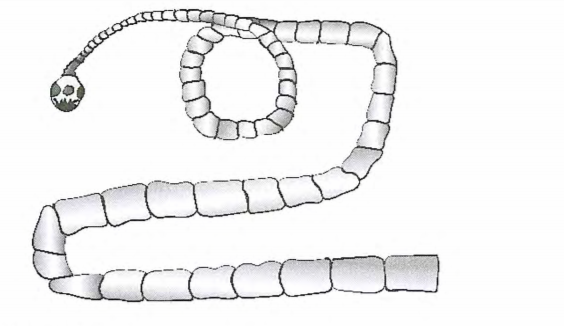
    (a) Identify the parasite.(1 mark)

  • Tapeworm(b) Explain how the parasite is passed from(i) livestock to human beings(1 mark)
  • Ingestion of bladder worm;(ii) human beings to livestock(1 mark)
  • Ingestion of eggs (proglottids) passed in human faeces during grazing/feeding;(c) Explain two control measures for the parasite in a zero grazing unit.(2 mark)
  • Use of antihelmintics/deworming to kill endo-parasites;
  • Proper hygiene in the unit;
  • Proper use of latrines to prevent contamination by infected faeces;
  • Proper cooking of meat to destroy bladder worms;
  • Use of clean feed, feeders, water and watchers to prevent contamination;18. The diagram below illustrates a tractor drawn implement.
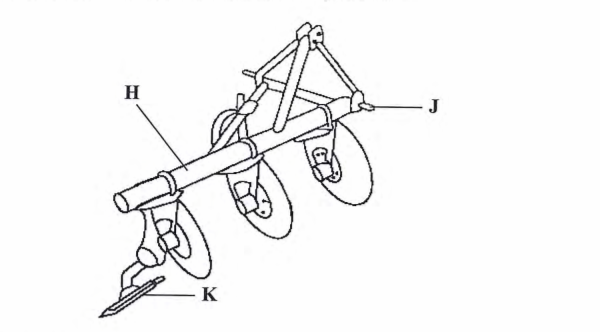
    (a) Identify the implement (1 mark)

  • Disc plough(b) Name the part labelled H and I(1 mark)H – Beam;

    I – Lower link attachment point;

    (c) State one function of the part labelled K(1 mark)

    Counteracts the thrust by the discs to balance the plough;/helps to adjust the depth of ploughing;

    (d) Explain why the implement is suitable for ploughing areas with hidden stones. (1 mark)

    The discs are able to roll over obstacles;

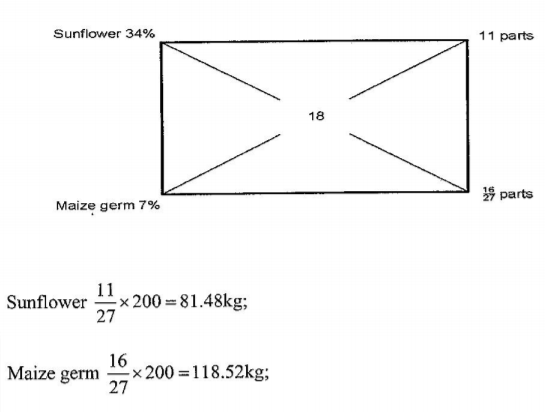
    19. A farmer is required to prepare 200 kg of dairy meal containing 18% digestible crude protein (DCP).

    Using the Pearson’s Square Method, calculate the quantity of sunflower seed cake (34% DCP) and maize germ (7% DCP) the farmer requires for the dairy meal. (5 marks)
    20. The diagram below represents a practice of identifying livestock on a farm.
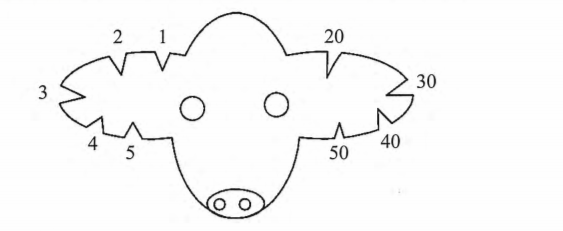
    (a) ldentify the practice(1 mark)Ear notching;

    (b) Determine the number that identifies the animal represented by the illustration (1 mark)

    155

    (c) Draw a diagram of the animal identified by the number 148 on the farm. (1 mark)
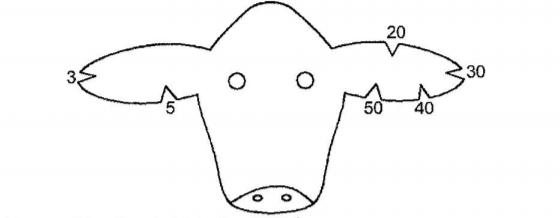
    (d) Give two reasons why this method of identification is discouraged in livestock rearing. (2 marks)

  • The notching is painful to the animal;
  • Notched wounds cause secondary infections;SECTION C (40 marks)Answer any two questions from this section in the spaces provided after question 23.

    21. (a) Describe how natural incubation is set up and managed.(8 mark)

  • Provide the broody hen with a nesting box which should be spacious to allow movement of the hen;
  • Provide nesting material in the nesting box to maintain warmth;
  • Provide the broody hen with 10 — 15 eggs; Keep the nest in a dry; and well-ventilated area;
  • Provide the hen with balanced feed and water;
  • Dust the hen with appropriate insecticides to control external parasites;
  • Allow the hen to go out at least once to exercise and feed;
  • Do not disturb the hen when the eggs start hatching;(b) Describe the management of growers in poultry rearing.(5 mark)
  • Provide adequate floor space, feeders, and waterers;
  • Provide litter on the floor up to 15cm deep; Provide growers mash adlib;
  • Provide plenty fresh water;
  • Dust the birds with appropriate insecticides to control external parasites; Keep the litter dry to avoid dampness;
  • Provide grit or oyster shells towards the end of growers stage/at 12 weeks;
  • Gradually introduce layers’ mash from the 16th week until it completely replaces growers’ mash at 18th — 19th week.(c) Describe seven possible sources of power on a farm.(7 mark)
  • Human power:- Working directly or utilizing their capacity of organization;
  • Animal power e.g. donkeys, oxen camels for cultivation and transportation;
  • Wind power e.g. for winnowing, pumping water and turning turbines; Water power e.g. driving turbines to produce HEP driving maize grinding mills and pumping water; Biomass e.g. Biogas, wood or charcoal;
  • Solar radiation in photosynthesis, drying crops, generate electricity, etc; Electric power from geothermal, hydropower and nuclear stations, battery;
  • Fossil fuel:- petroleum, coal, natural gas, etc;
  • Tractor:- Bums petrol or diesel to produce power which is transmitted and used in different ways;22. (a) Describe pneumonia disease under the following sub-headings:(i) causal organism(1 mark)

    Bacteria/virus/HycopIasma mycoides,

    Dust and worms in the lungs;

    (ii) animals affected(2 mark)

  • Calves;
  • kids;
  • lambs;
  • piglets;
  • poultry;(iii) predisposing factors(2 mark)
  • Poor ventilation;
  • Overcrowding;
  • Age
  • young animals;
  • Diarrhoea and other illnesses;(iv) symptoms(5 mark)Dullness;
  • Loss of appetite;
  • Starring coat;
  • Emaciation;
  • Rapid breathing;
  • Fluctuating body temperature; Nasal mucous discharge;
  • If chest is pressed, animal starts coughing(v) control measures.(3 mark)
  • Keep young animals in warm houses;
  • Proper sanitation;
  • Isolation;
  • Treatment using antibiotics;(b) Explain seven housing requirements for a calf.(7 mark)
  • Concrete/slatted floor to facilitate cleaning;
  • Spacious to allow exercise, feeding and watering;
  • Single housing to prevent licking of one another/ skin infections and spread of worms;
  • Well lit to facilitate synthesis of vitamin D;
  • Well drained to prevent dampness which predisposes the calf to infections;
  • Free from draughts: Solid on the wind ward side to prevent entry of cold winds;
  • Leak proof to avoid dampness/wetness which encourages infections;23. (a) State five signs of heat in cattle.(5 mark)
  • Restlessness;
  • Mounting others and stands still when mounted;
  • Slight rise in temperature; Slight drop in milk yield;
  • Vulva swells and becomes reddish;
  • Clear or slimy mucus discharge from vagina; Frequent mowing;(b) State five advantages a spray race has over a plunge dip.(5 mark)
  • Suitable for pregnant and sick animals;
  • Animals do not swallow the acaricide wash; Spraying is faster;
  • It is less laborious;
  • Acaricide wash is not wasted as it is recycled(c) Give five reasons for maintaining livestock healthy.(5 mark)
  • Healthy animals grow fast and mature early;
  • Animals give a longer productive life;
  • Produce good quality products;
  • Give maximum production/performance; Prevent spread of diseases;
  • Healthy animals are economical to keep; (d) Explain five factors that determine the amount of food eaten by a livestock animal. (5 marks)
  • Body size or weight of the animal; large animals eat more food;
  • Environmental conditions where the animals is; animals in cold areas require more food;
  • Physiological condition of the animal; lactating animals require more food;
  • Level of production:- High producers also require more food;
  • Purpose for which the animal is kept; animal kept as a pet requires less food than the one kept for production or performance;

kcse exam 2020
kcse 2020 English
kcse 2020 prediction
kcse 2020 mathematics prediction
kcse 2020 biology prediction
kcse 2020 biology paper 1
kcse 2020 timetable
kcse computer project 2020 question paper
kcse past papers
kcse past papers 2018
kcse past papers 2018 pdf download
FREE KCSE 2017 PAST PAPERS (QUESTIONS, MARKING SCHEMES AND REPORTS)
KCSE 2016 PAST PAPERS (QUESTIONS, MARKING SCHEMES AND REPORTS)
KCSE 2015 PAST PAPERS (QUESTIONS, MARKING SCHEMES AND REPORTS)
KCSE 2014 PAST PAPERS (QUESTIONS, MARKING SCHEMES AND REPORTS

 

KCSE Past Papers Agriculture 2018 (443/1)

KCSE Past Papers Agriculture 2018

Kenya certificate of primary Education

2018 Agriculture Paper 1

SECTION A (30 marks)

Answer all the questions in this section in the spaces provided.

1.Name four categories of livestock farming.(2 marks)

2.State four farming practices that ensure minimum tillage.(2 marks)

3.State four factors that determine the choice of water pipes used on the farm.(2 marks)

4.Name two sources of underground water.(1 marks)

5.Give four reasons why green manure is not commonly used in farming.(2 marks)

6.(a) Name two types of inventory records kept on the farm.(1 mark)

(b) State two uses of inventory records on a farm. (1 mark)

7.(a) Name three vegetative planting materials used for propagating pineapples. (1½ marks)

(b) State three qualities of certified seeds. (1½ marks)

8. State four advantages of using polythene sleeves to propagate stem cuttings.(2 mark)

9. State four disadvantages of concession land tenure system.(2 mark)

10. Name four insect pests of beans in the field.(2 marks)

11. (a) Name three legume pastures grown in high altitude areas. (l½ marks)

(b) State four management practices undertaken to improve natural pastures. (2 marks)

12. (a) Name two subsidiary books of the journal.(1 mark)

(b) State four item details contained in a sales receipt.(2 mark)

13. State four roles of Young Farmers Clubs in Kenya.(2 mark)

14. (a) What is meant by the term agroforestry? (½ mark)

(b) Name two agroforestry practices.(2 mark)

SECTION B (20 marks)

Answer all the questions in this section in the spaces provided.

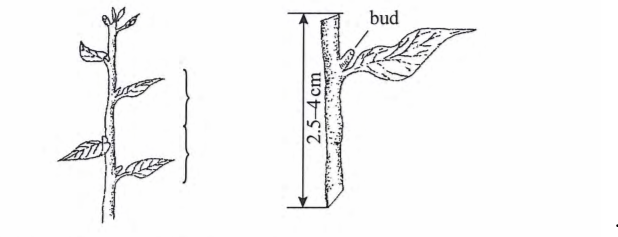
15. The diagram below shows a section of a plant from which the planting material illustrated was obtained.

(a) Identify the planting material illustrated. (1 mark)

(b) Give two reasons why only the middle part of the plant was used to prepare the planting material. (2 marks)

(c) Apart from using the middle part of the plant, explain two precautions that should be observed when preparing the illustrated planting material. (2 marks)

16. An experiment was carried out to investigate soil constituents as described below:

Step I — An empty evaporating dish was weighed and its mass was 10 gms.

Step II — Fresh garden soil was put on the evaporating dish and weighed. The mass was 40 gms.

Step III — The evaporating dish containing fresh soil was put in an oven and heated at a temperature of 105 °C for 30 minutes, cooled and then weighed.

The mass was 35 gms.

Step IV — The dish containing soil was then strongly heated on a Bunsen burner for two hours while stirring. It was then cooled and weighed. The new mass was 32 gms.

(a) Give a reason why the soil was heated

(i) at 105 °C

(ii) strongly for two hours

(b) Calculate the percentage content of the soil constituents investigated in the experiment. (3 marks)

17. The diagram below illustrates a nursery practice.

(a) Name the practice

(b) Give a reason why the tool labelled E is important in the practice illustrated. (1 mark)

(c) What is the appropriate stage of growth for carrying out the illustrated practice in agroforestry? (1 mark)

(d) Explain two activities that ensure that the illustrated practice is carried out successfully.(2 marks)

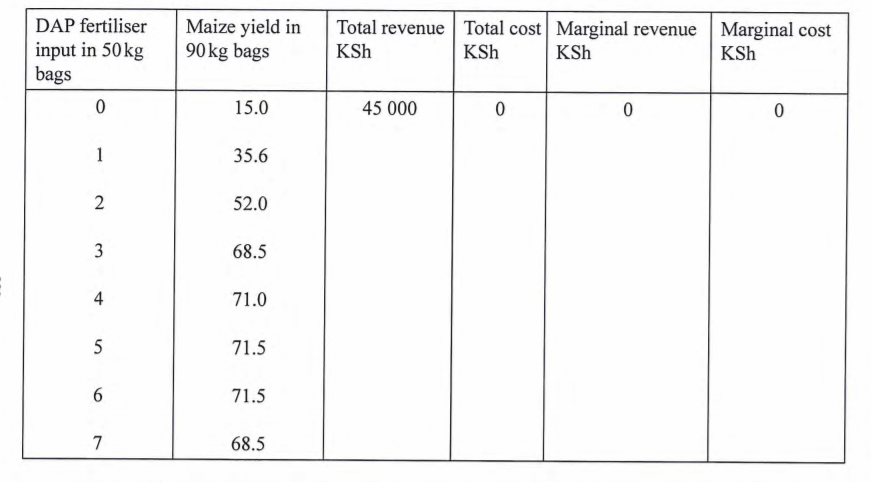
18. In a maize production enterprise carried out over a period of eight years, a farmer used one hectare of land each time and applied different quantities of DAP fertiliser.

DAP fertiliser costs KSh 2 500 per 50kg bag and the harvested maize is sold at KSh 3 000 per 90kg bag. The quantities of DAP fertiliser applied and maize harvested are as shown in this table below.

(a) Complete the table by determining the values of total revenue, total cost, marginal revenue and marginal cost. (2 marks)

(b) From the information in your table, how can the farmer determine the level of production at which profit is maximum? (1 mark)

(c) At the production level that yielded maximum profit, what was the value of each of the following?

(i) DAP fertiliser input(1 marks)

(ii) Marginal revenue(1 marks)

SECTION C (40 marks)

Answer any tiro questions from this section in the spaces provided after question 21.

19. (a) Explain six farming practices that destroy soil structure. (6 marks)

(b) (i) State four functions of calcium in plant growth. (4 marks)

(ii) State four disadvantages of using inorganic fertilisers in crop production. (4 marks)

(c) Describe six categories of pesticides based on mode of action.(6 marks)

20. (a) Explain six cultural methods of soil and water conservation.(6 marks)

(b) Explain four environmental factors that influence effectiveness of herbicides.(8 marks)

(c) Describe six post-harvest practices for dry beans.(6 marks)

21. (a) (i) Describe the harvesting and marketing of bulb onions.(6 marks)

(ii) State the precautions that should be observed when harvesting cotton.(4 marks)

(b) Explain five problems associated with agricultural credit.(5 marks)

(c) Explain five principles that govern the formation and functioning of farmer’s co-operatives.(5 marks)

kcse exam 2020
kcse 2020 leakage
kcse 2020 prediction
kcse 2020 mathematics prediction
kcse 2020 biology prediction
kcse 2020 biology paper 1
kcse 2020 timetable
kcse computer project 2020 question paper
kcse past papers
kcse past papers 2018
kcse past papers 2018 pdf download

FREE KCSE 2017 PAST PAPERS (QUESTIONS, MARKING SCHEMES AND REPORTS)
KCSE 2016 PAST PAPERS (QUESTIONS, MARKING SCHEMES AND REPORTS)
KCSE 2015 PAST PAPERS (QUESTIONS, MARKING SCHEMES AND REPORTS)
KCSE 2014 PAST PAPERS (QUESTIONS, MARKING SCHEMES AND REPORTS
KCSE Past Papers 2019 Physics paper 3 (232/3)

KCSE Past Papers 2019 Physics paper 3 (232/3)

 KCSE Past Papers 2019 Physics paper 3 (232/3)

Physics – Paper 3 – November 2019 – 2.30 Hours

Practical

2019 Physics paper 3

Question 1

You are provided with the following:


  • A stirrer
  • A stond, a boss rind a clump
  • A themionieter
  • An aninieter
  • A voltmeter
  • A beaker
  • A source of boiling water
  • Two dry cells in a cell holder
  • A switch
  • Seven connecting wires
  • A component labelled XProceed as follows:

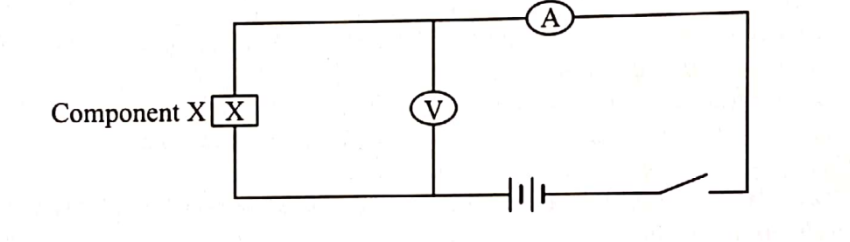
    (a) Set up the circuit as shown in figure 1.

    Close the switch, read and record the current I through component X and the potential difference V across it. (l mark)I =……………………..

    V =……………………….

    Open the switch.

    Determine the resistance R of component X given that: R = V/I

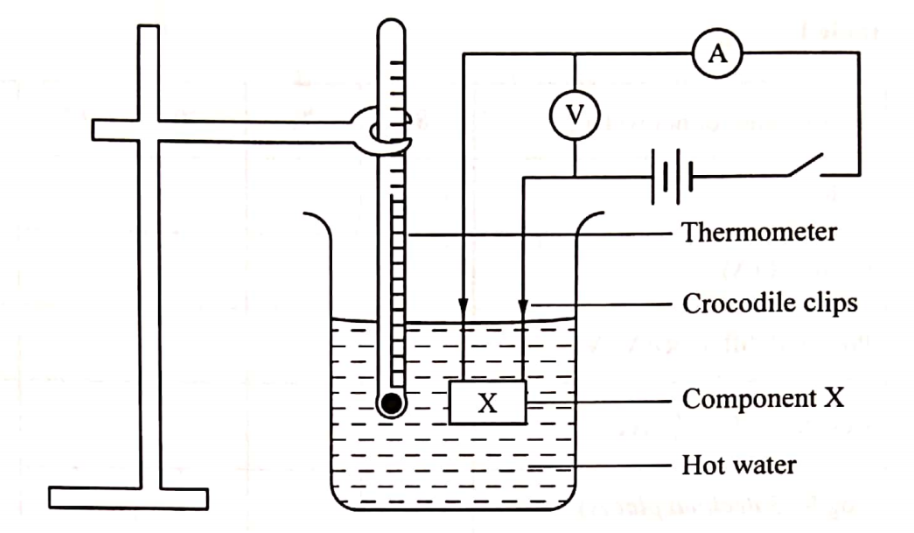
    (b) Pour hot water into the beaker and set up the apparatus as in figure 2, so that component X afid the llieriiioirieter bulb are fully immersed.

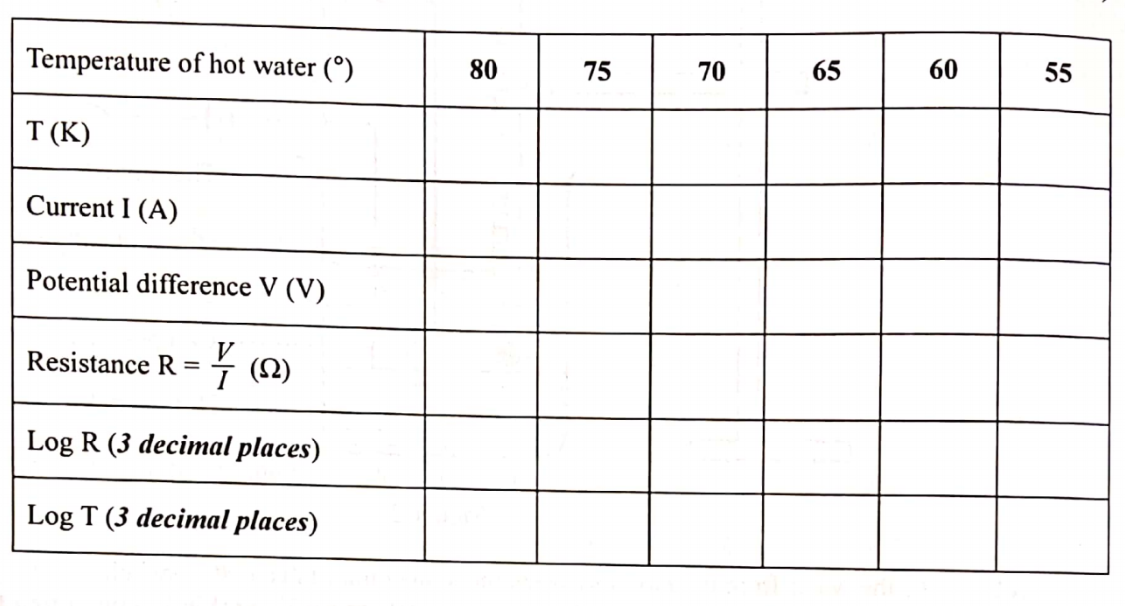
    (c) Stir the water from time to time, when the temperature falls to 80°, switch on the circuit, read and record the current I and the potential difference V in table 1. Then open the switch.(d) Repeat (c) as the temperature falls to the oÎher values shown in table 1. Complete the table. Table 1 (8 marks)

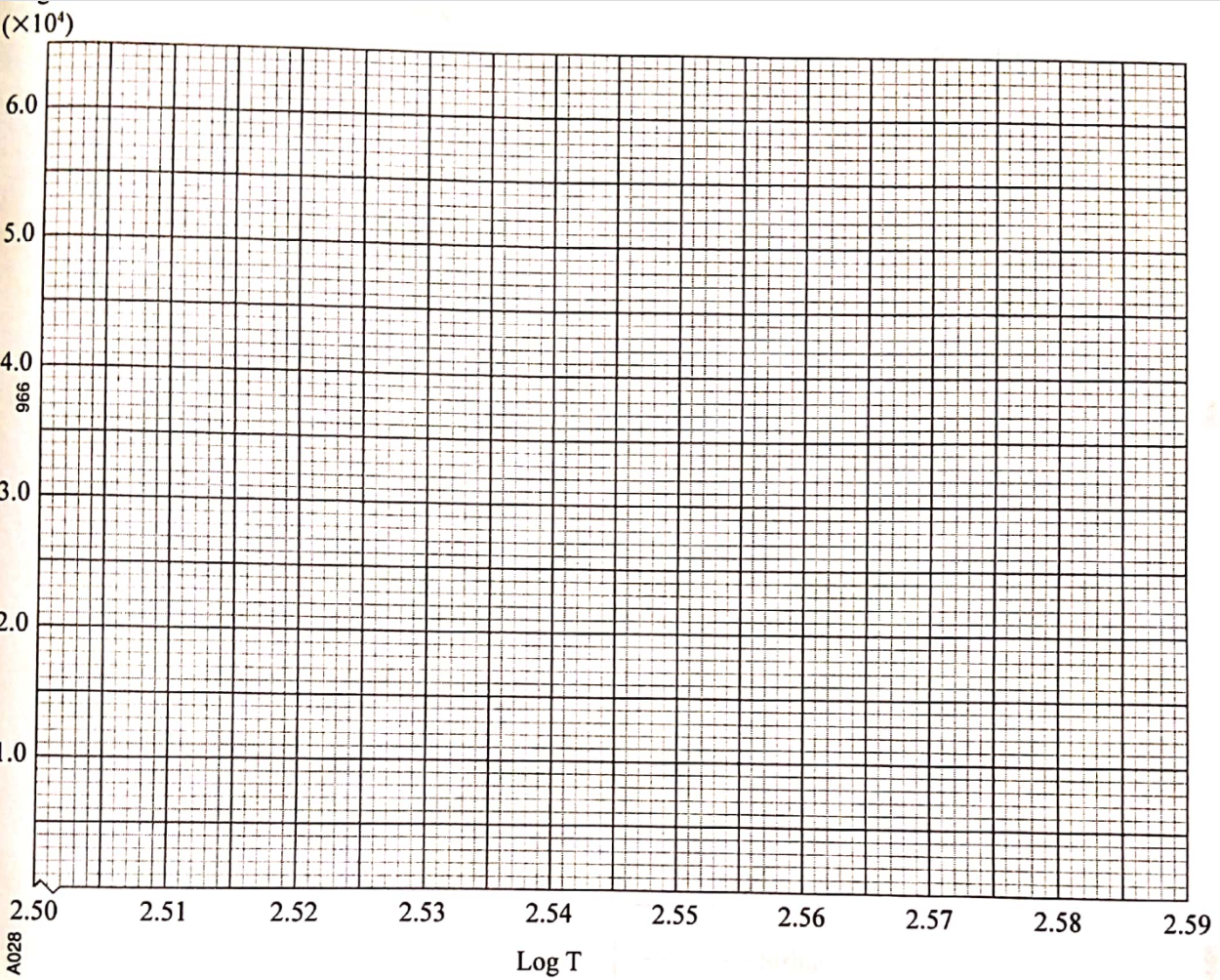
    (e) ( i) On the axis provided, plot a graph of Log R against log T. (4 marks)

    (ii) Determine the slope S of the graph. (3 marks)(ii) Given that R and T are related by the equation Log R = Log K + n Log T (4 marks)
    (i) n…………………………..(1 marks)

    (ii) k…………………………..(2 marks)

    Question 2

    You are provided with the following:

  • A metre rule
  • A stand, boss and clamp A piece of string
  • A 20 g mass
  • A 50 g mass
  • A measuring cylinder containing water
  • A concave mirror
  • A screen
  • A candle
  • Pieces of sewing threads
  • A mirror holder (Lens holder)Proceed as follows:

    PART A

    (a) Using a string, suspend the metre rule on the stand so that it balances horizontally at its center of gravity.

    Record the centimetre mark at which the metre rule balances.

    Centimetre mark =………………….cm (1 mark)

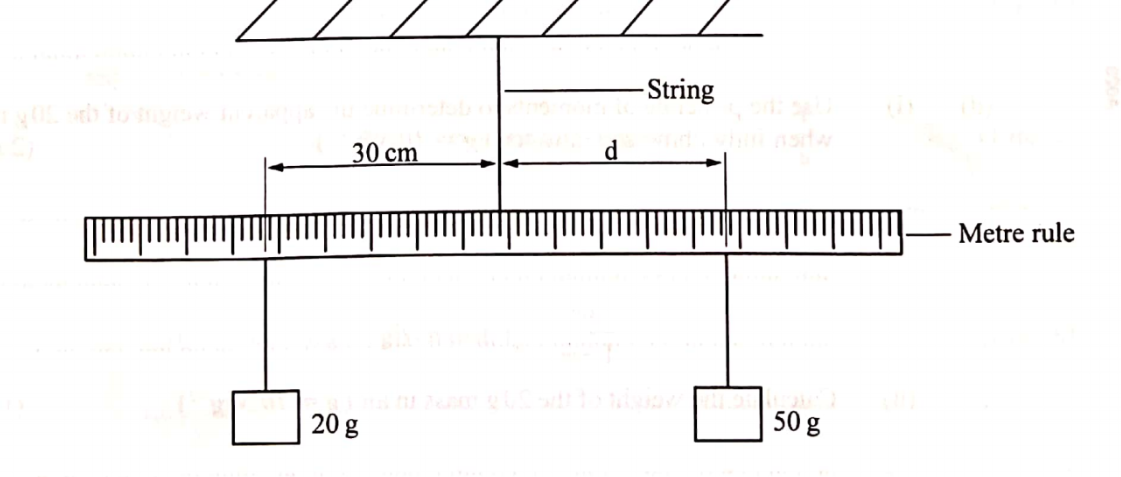
    (b) With the metre rule balanced at its centre of gravity, suspend a 20 g mass at a distance of 30 cm from the centre of gravity.

    Suspend the 50 g mass on the other side of the centre of gravity and adjust its position until the rule is balanced. See figure 3.

    Record the distance d of the 50 g ninss from the centre of gravity.d = ……………………….

    d = ……………………… (1 mark)

    Record the volume of the water in the measuring cylinder provided.

    V=……………………………….(1 mark)

    (ii) Immerse the 20 g mass fully into the water and adjust the position of the 50 g mass so that the rule balances horizontally.

    Record the volume V1 of the water plus 20 g mass and the distance d1 of the 50 g mass from the centre of gravity.

    (iii) (I) Determine the volume of the water displaced (1 mark)

    (II) Determine the weight of the water displaced. (density of water — I gcm(-3) (3 marks)

    (d) (i) Use the principle of moments to determine the apparent weight of the 20 g mass when fully immersed in water. g — 10 Nkg-1 (2 marks)

    (ii) Calculate the weight of the 20 g mass in air (g = 10 Nkg-1)

    (iii) Determine the apparent loss in weight of the 20 g mass. (l mark)

    PART B

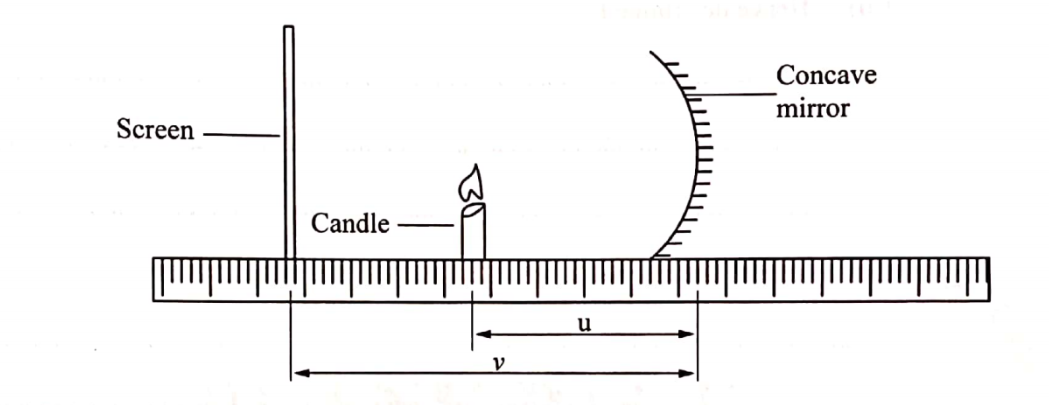
    (e) Light the candle and place it at distance u = 20 cm in front of the concave mirror. Adjust the position of the screen until a sharp image of the candle flame is obtained. See figure 4.

    (i) Read and record the distance v between the screen and the mirror.v=………………………………(1 mark)

    (ii) Determine:

    I. The magnification m of the mirror given that: m = v/u (1 mark)

    II. the value f1 given that: f1 = mu/m+1

    (f) Repeat part (e) for distance u1 = 18 cm.

    (i) Read and record the distance v1 between the screen and the mirror. (ii) Determine the magnification m1 of the mirror. (1 mark )

    (iii) Hence determine f2.

    (g) Determine the average value of f. 1


KCSE Past Papers 2019 Physics paper 2 (232/2)

KCSE Past Papers 2019 Physics paper 2 (232/2)

 KCSE Past Papers 2019 Physics paper 2 (232/2)

Physics – Paper 2 – November 2019 – 2 Hours

Kenya certificate of primary Education

2019 Physics paper 2

SECTION A (25 marks)

Answer all the questions in this section in the splices provided.

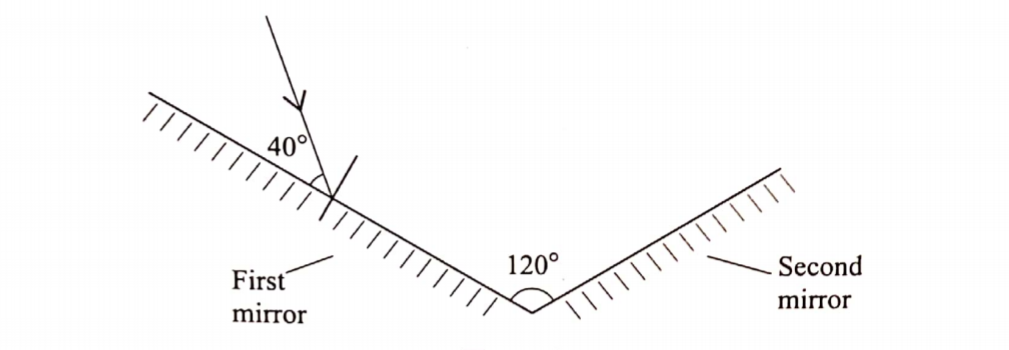
1. Figure 1 shows two plane mirrors inclined at an angle of 120° to cach other.

A ray of light makes an angle or 40° with the first mirror.

By completing the ray diagram determine the angle of reflection on the second mirror. (2 marks)

2. State the reason why an increase in leaf divergence is the only sure way of determining whether an object is negatively charged using a negatively charged electroscope. (l mark)

3. State two properties of magnetic field lines around a bar magnet. (2 marks)

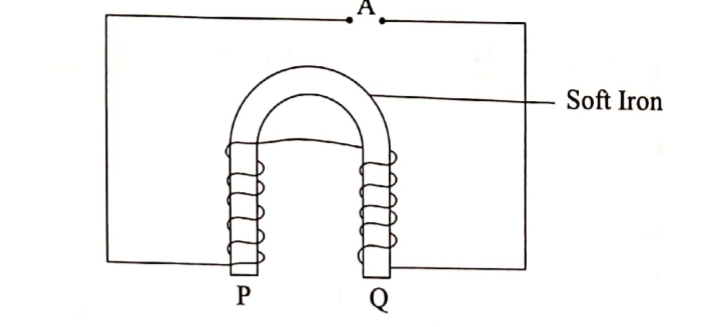
4. Figure 2 shows an incomplete circuit for an electromagnet.

(a) Complete the diagram to show how a battery should be connected at A so that the polarities at P and Q are South and North respectively. (1 mark)

(b) State two ways in which the strength of the electromagnet in (a) can be increased. (2 marks)

5. In a siren, sound is produced when a jet of air is directed perpendicular to a ring of holes on a rotating wheel.

Explain the effect on the pitch of sound produced when the speed of rotation of the wheel is increased. (2 marks)

6. State the reason why the current produced by a simple cell falls rapidly when the cell is being used. (1 mark)

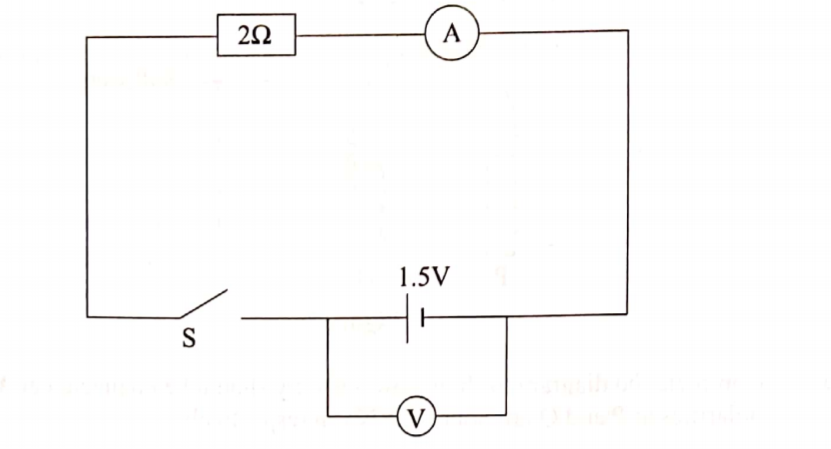
7. Figure 3 shows a cell connected in series with an ammeter, a 2 resistor and a switch.

A volumeter is connected across the cell

With the switch open, the voltmeter reads 1.5 V. Given that the internal resistance of the cell is 0.5 II, determine the ammeter reading when the switch is closed. (3 marks)

8. State two uses of gamma rays in medicine. (2 marks)

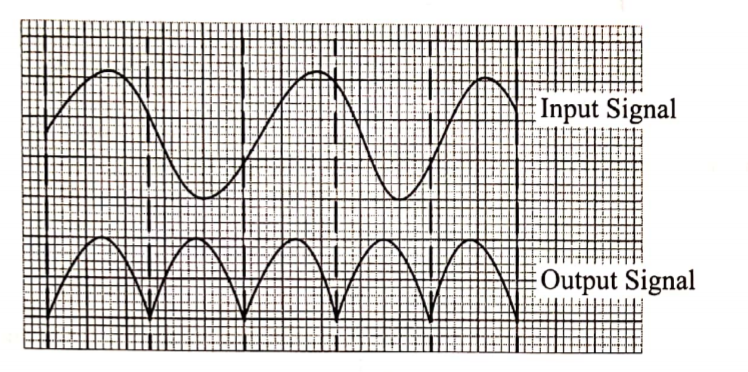
9. Figure 4 shows the input and output signals on a CRO screen when two diodes are used during a full wave rectification.

Explain how the two diodes rectify the input signal. (3 marks)

10. State how the intensity of X-rays in an X-ray tube can be increased. (3 marks)

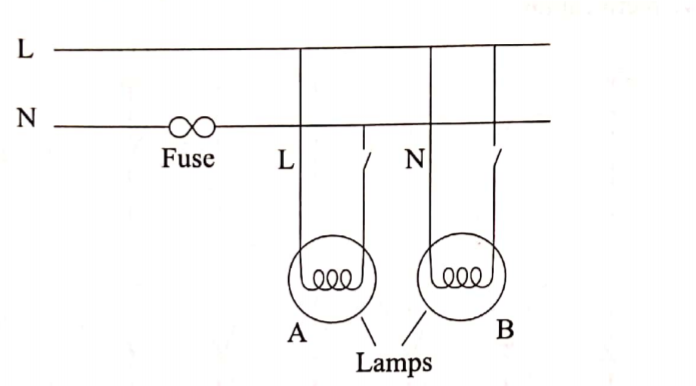
11. Figure 5 shows part of the lighting circuit in a house.

State two errors in the wiring circuit. (2 marks)

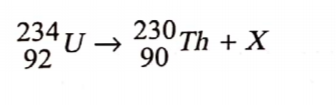
12. Uranium decays as shown below.

Name the particle X that is emitted during this decay. (1 mark)

13. State the disadvantage of rising a convex mirror as a driving mirror. (1 mark)

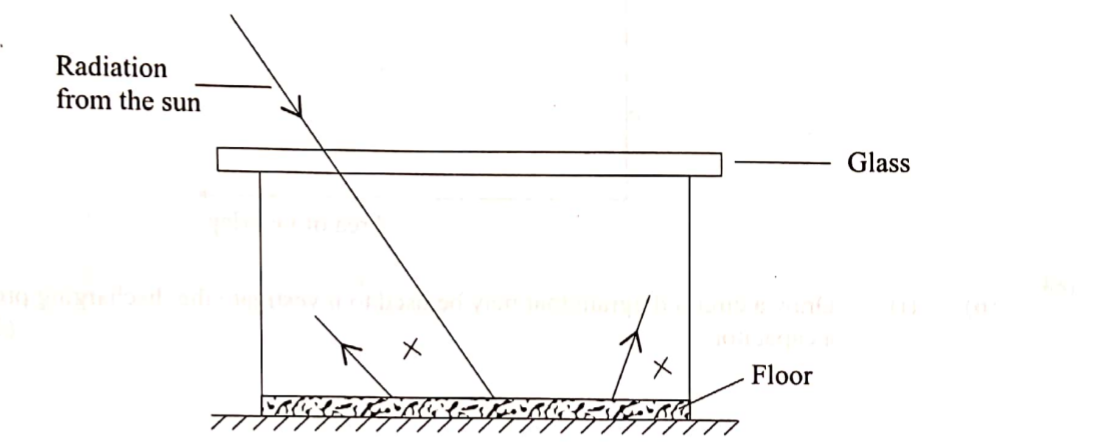
14. Figure 6 shows radiation from thc sun passing through glass in a grecnhouse onto the floor. The floor then emits radiation.

State the name of the radiation emitted by the floor. (1 mark)

SECTION b (55 marks)

Answwr all the questions in this section

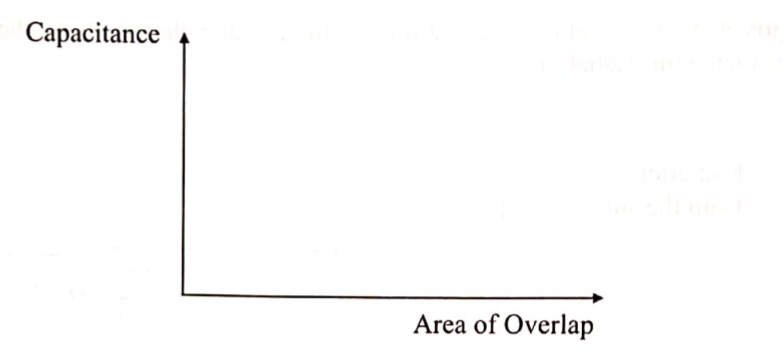
15. (a) On the axes provided, sketch a graph of Capacitance against the area of overlap of the plates of a parallel -plate capacitor.(1 mark)

(b) (i) Draw a circuit diagram that may be used to investigate the discharging proccss of a capacitor. (2 marks)

(ii) On the axes provided sketch the graph of potential difference between the plates against time for the discharging process. (1 mark)

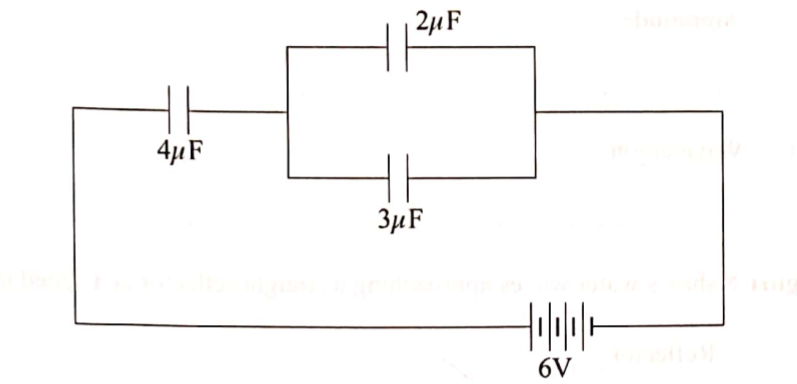
(c) Figure 7 shows the capacitors connected to a 6V battery.

Determine the:

(i) effective capacitance (3 marks)

(ii) total charge stored (2 marks)

(iii) potential difference across the 4uF capacitor (2 marks)

16. (o) Define the following terms as used in waves (i) Amplitude (1 mark)

(ii) Waves length (1 mark)

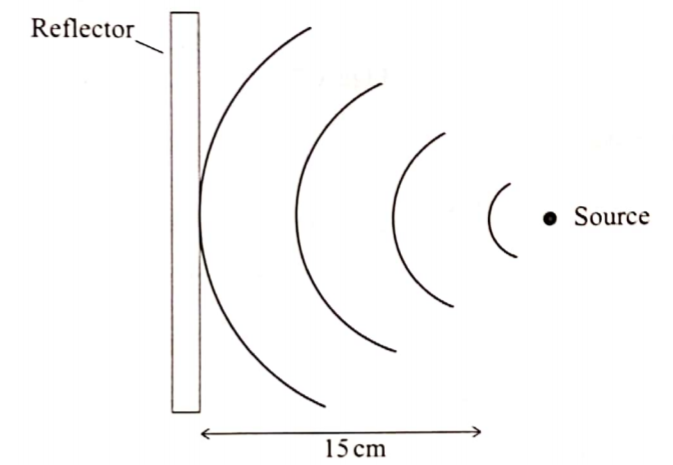
(b) Figure 8 shows water waves approaching a straight reflector at a speed of 40cm’.

(i) Draw on the diagram the reflected waves. (2 marks)

(ii) Given that the distance benveen the source and the reflector is 15 cm determine: (i). The wavelength of the waves (2 marks)

(ii). The frequency of the waves (2 marks)

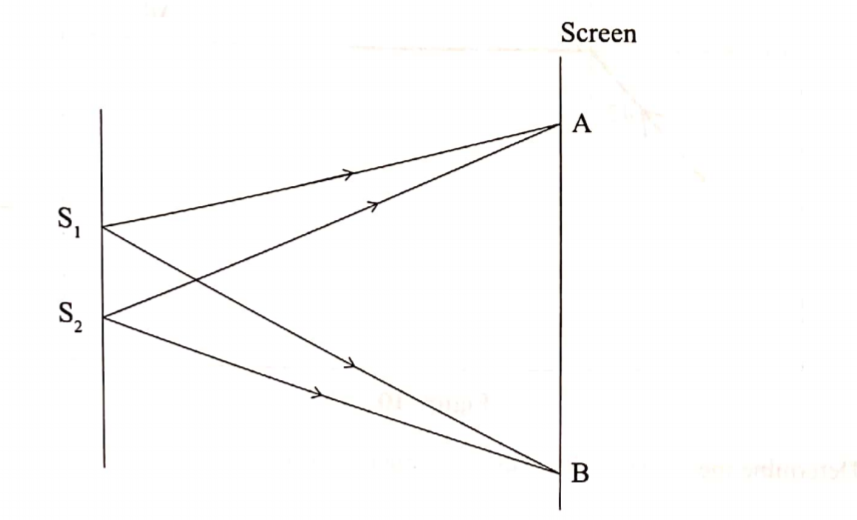
(c) Figure 9 sows light rays from two coherent sources S1 and S2 falling on a screen.

Dark and brighi fringe s are observed between A and B.

(i) State how:

I. bright fringes are formed (1 mark)

II. dark fringes are formed (1 mark)

(ii) State what is observed when light of a higher frequency is used. (1 mark)

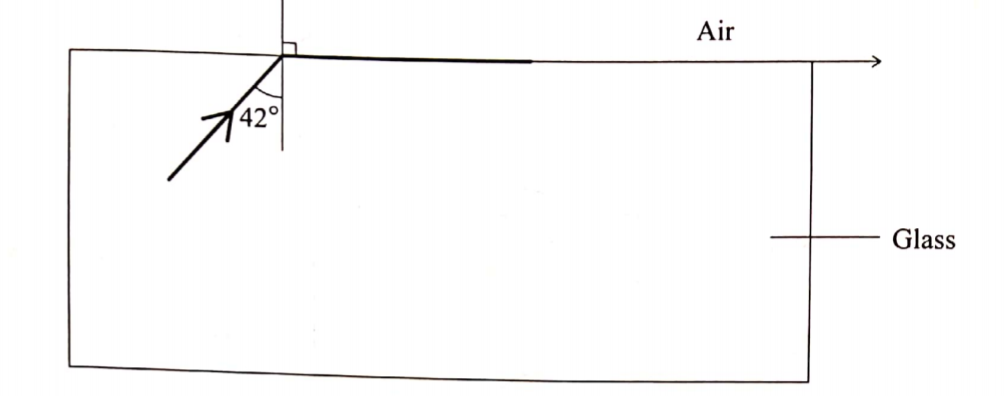
17. (a) Figure 10 shows a ray of light travelling from glass to air.

Determine the:

(i) Critical angle of the glass — air interface ( 1 mark)

(ii) Refractive index of glass (1 mark)

(b) A piece of metal is embedded at the centre of an ice block 15 cm from the surface of the ice.

Given that the refractive index of ice is 1.32, determine how far from the surface of the ice block the metal appears to be. (3 marks)

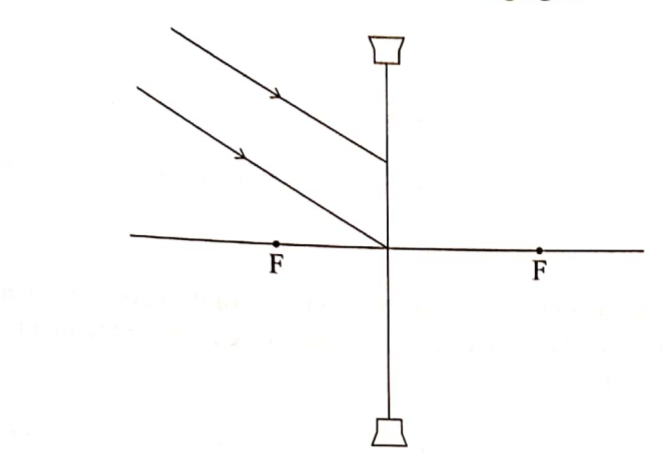
Complete the ray diagram to show the path of the rays after passing through the lens. (2 marks)

(d) (i) State two differences between the human eye and a camera lens. (2 marks)

(ii) State the name of the part of the eye that enable the lens to focus images of objects at different distances. (I mark)

18. (a) Describe how a magnet can be demagnetised using the electrical method. (2 marks)

(b) You are provided with two iron bars P and Q .One of the bars is magnetised while the other is not.

Explain how the magnetised bar can be identified without using a magnet or magnetic material. (2 marks)

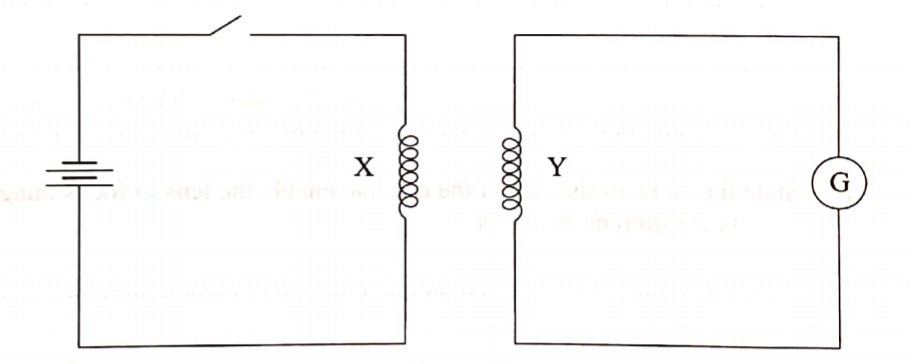
(c) Figure 12 shows two identical copper coils X and Y placed close to each other.

Coil X is connected to a DC power supply while coil Y is connected to a galvanometer.

(i) Explain what is observed on the galvanometer when the switch is closed. (4 marks)

(ii) State what is observed on the galvanometer when the switch is opened. (1 mark)

(iii) State what Would be observed if the number of turns in coil Y is doubled. (1 mark)

l9. (a) Define half life as used in radioactivity. (1 mark)

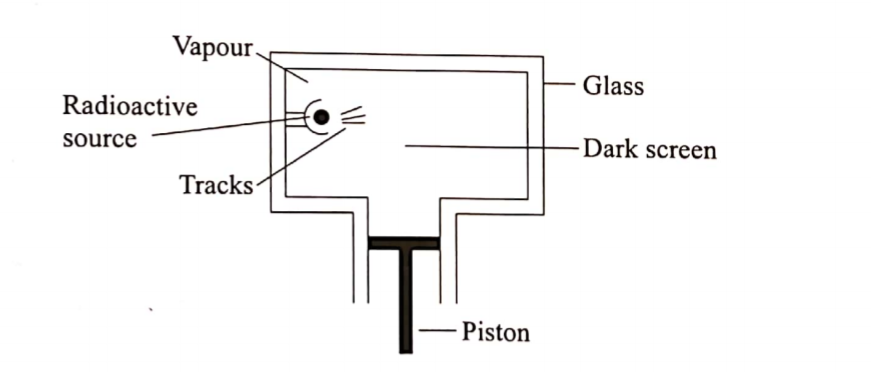
(b) Figure 13 Shows a device used to detect radioactivity by forming tracks when air is ionised.

(i) State the name of the device shown. (1 mark)

(ii) State how air in the device gets ionised. (1 mark) (c) (i) State two Factors that determine the speed of the photoelectrons emitted from a metal surface. (2 marks)

The energy of a photon of light is 2.21 eV .(electronic charge is 1.6 x 10⁻¹⁹C and planks constant h is 6.63 x 10⁻³⁴Js).

I. Express this energy in joules. (l mark)

II. Determine the frequency of the light that produces the photon. (2 marks)

KCSE Past Papers 2019 Physics paper 1 (232/1)

KCSE Past Papers 2019 Physics paper 1 (232/1)

KCSE Past Papers 2019 Physics paper 1 (232/1)

Physics – Paper 1 – November 2019 – 2 Hours

SECTION A: (25 marks)

1. A micrometer screw gauge has a —0.03 mm error. State the reading that is observed on the instrument s’hen used to measure the diameter of a wire whose actual diameter is 0.38 mm. (1 mark)

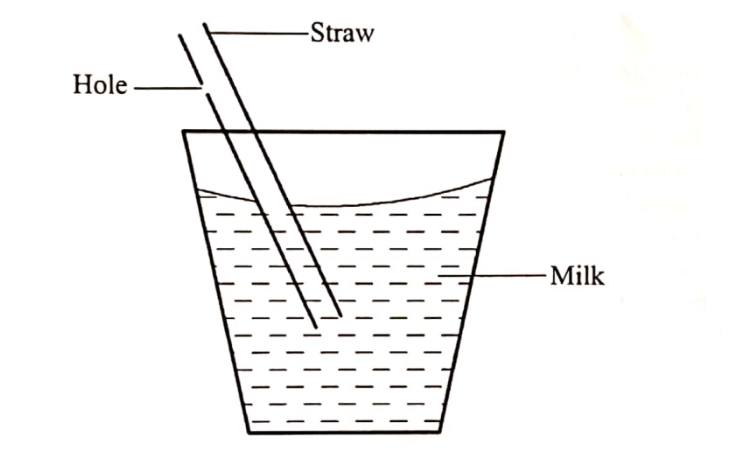
It was observed that upon sucking the straw, milk did not rise up the straw. Explain this observation. (2 marks)

3. State two ways of reducing surface tension of a liquid. (2 marks)

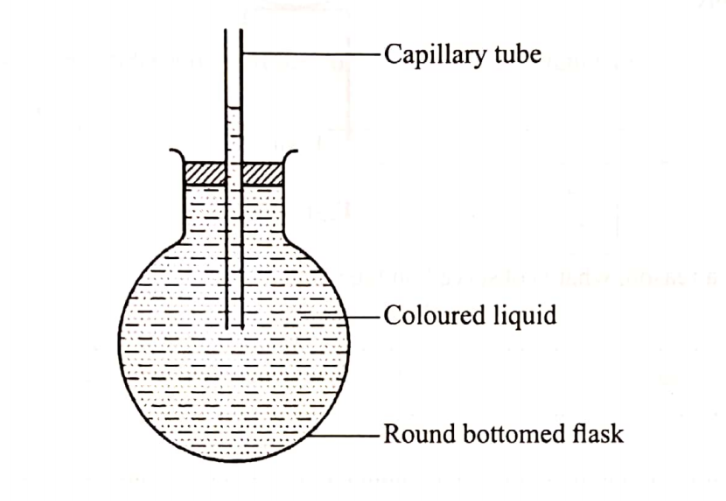
4. Figure 2 shows a round bottomed flask containing a coloured liquid.

The flask is fitted with a capillary tube.

It is observed that on holding the flask with bare hands, the level of the liquid in the capillary tube initially drops slightly and then rises. Explain this observation. (3 marks)

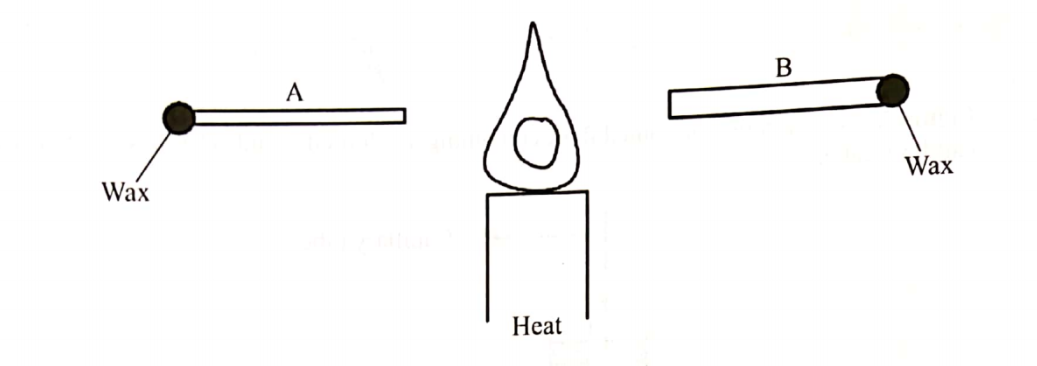
5. figure, 3 shows two metal rods A and B of equal length made of the same material but different diameters.Wax is attached at one end of each rod . A source of heat is placed between the two metal rods

State with a reason, what is observed on the wax. (2 marks)

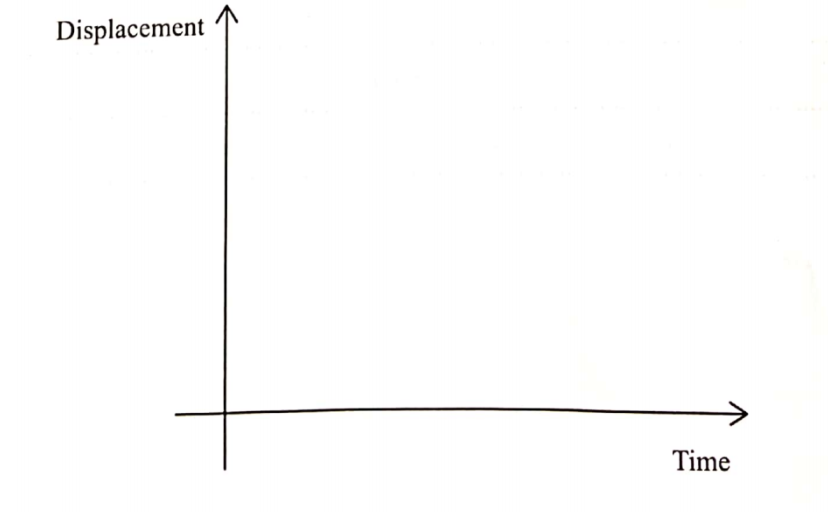
On the axes provided, sketch a displacement — time graph for a trolley moving down a frictionless inclined plane till it reaches the end of the incline.(1 mark)

7. A student carrying a heavy box using the right fund is observed to lean towards the left hand side. Explain this observntion. (2 marks)

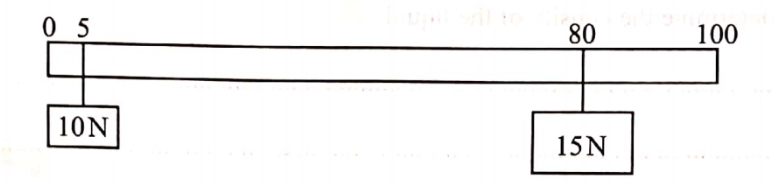
8. Figure 4 shows a one meter long uniform rod of negligible weight supporting two weights.

Determine the position of the fulcrum from Ocm for the rod to remain in equilibrium. (3 marks)

9. State the meaning of the term “radian” as a unit of measurement. ( 1 mark)

10. For a fluid flowing at a velocity V in a tube of cross-sectional area A, VA = assumptions made in deriving this equation. (2 marks)

11. A stone of volume 800 cm3 experiences an upthrust of 6.5 N when fully immersed in a certain liquid.Determine the density of the liquid. (2 marks)

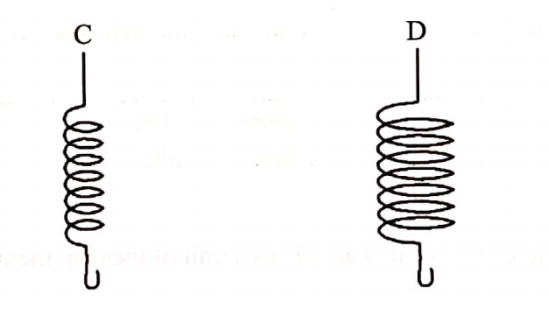
12. Figure 5 shows two springs C and D of the same length and equal number of turns made from the same wire.

State with a reason which of the two springs can support a heavier load before attaining the elastic limit. (2 marks)

13. Two boxes E and F of masses 2.0kg and 4.0kg respectively are dragged along a fiictioness surface using identical forces.

State with a reason which box moves with a higher velocity. (2 marks)

SECTION B (55 marks)

Answer all the questions in this section

14. (a) A student is provided with five 20g masses, a meter rule, a spring with a pointer,a stand,a boss and a clamp.

(i) In the space provided, sketch a labelled diagram of the setup that may be used in order to verify Hooke’s law using these apparatus. (3 marks)

(ii) State two measurements that should be recorded in order to plot a suitable graph so as to verify Hooke’s law. (2 marks)

(iii) Describe how the measurements made in (ii) can be used to determine tlic spring constant. (2 marks)

(b) A helical spring stretches by 0.6 cm when Supporting a weight Of 40 g. Determine the extension when the same spring supports a weight of 65 g. (3 marks)

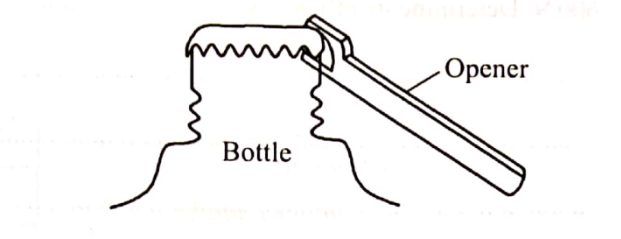
15. (il) Figure 6 shows a bottle top opener being used to open a bottle.

Indicate on the diagram the direection of the load and the effort. (2 marks)

(b) State two ways in which an inclined plane can be made to reduce the applied effort when pulling a load along the plane. (2 marks)

(c) A block and tackle system has three pulleys in the upper fixed block and two pulleys in the lower movable block.

(i) Draw a diagram to show how the system can be set up in order to lift a load and indicate the position of the load and effort. (3 marks)

(ii) State the velocity ratio of the set up. (1 mark)

(iii) In such a block and tackle system an effort of 200N is required to lift a load of 600 N. Determine its efficiency. (3 marks)

16. (a) State the meaning of the term “heat capacity.” (1 mark)

(b) State how pressure affects the melting point of a substance. (3 marks)

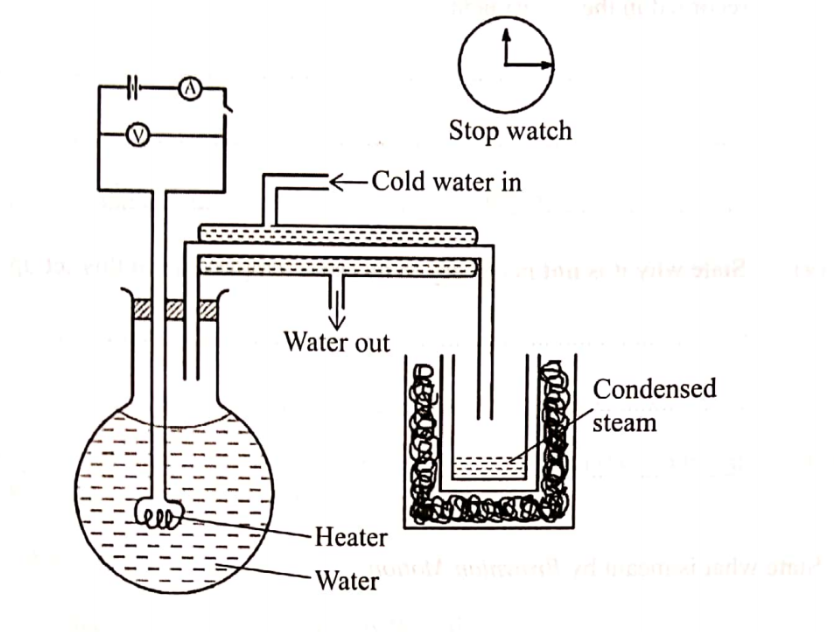
(C) Figure 7 Shows a set up of apparatus that may be used to measure the specific latent heat of vaporisntion of stenm.

(i) Describe how the mass of condensed steam is determined. (3 marks)

(ii) Other than mass and time, state two other measurements that should be taken during the experiment. (2 marks)

(iii) Show how the measurements in (c)(ii) can be used to determine the specific latent heat of vaporisation of water. (2 marks)

(iv) State the precautions that should be taken so that the mass of the condensed steamed measured corresponds to the actual mass of steam collected during the time recorded in the eperiment (1 mark)

(v) State why it is not necessary to measure temperature in this set up. (1 mark)

17. (a) State what is meant by Brownian Motion (I mark)

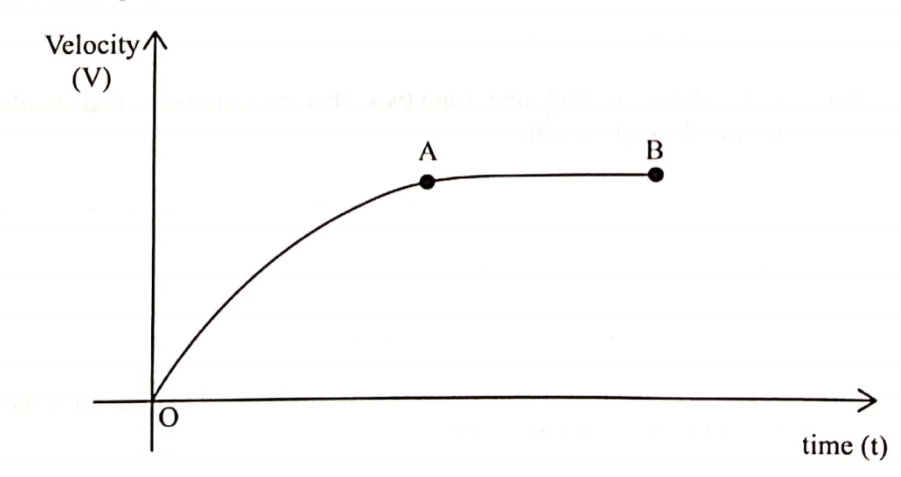
(b) Figure 8 shows the graph of velocity against tiiiic for a small steel ball falling in a viscous liquid.

(i) Describe the motion of the steal ball as represented my port OA. (1 mark)

(ii) Explain why the velocity between A and B is constant. (3 marks)

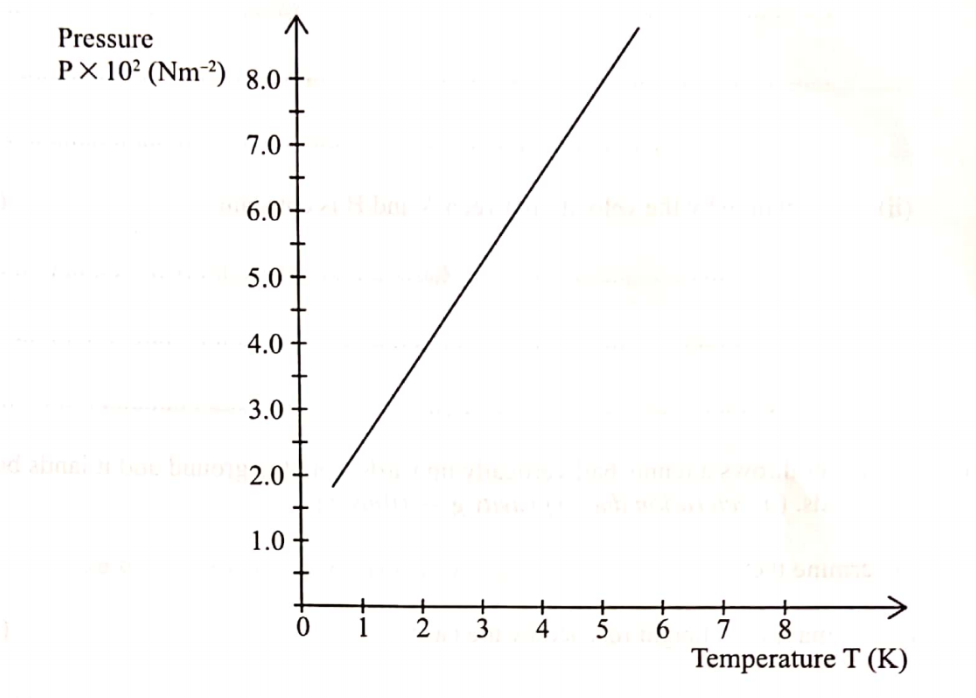
(ii) velocity with which the ball hits the ground. 18. (a) Figure 9 shows a graph of pressure against temperature for a fixed mass of gas at constant volume

From the graph, determine the values of n and c given that P = nT + c where n and c are constants. (4 marks)

(b) Explain why it is not possible to obtnin zcro pressure of a gas in real life situation. (2 marks)

(c) A fixed mass of a gas occupies 1.5 x 10⁻³m3 at a pressure of 760 mmHg and a temperature of 273 K. Determine the volume the gas will occupy at a temperature of 290 K and a pressure of 720 mmHg. (3 marks)

(d) State any three assumptions made in kinetic theory of gases. (3 marks)

KCSE Past Papers Mathematics 2019 (121/2)

KCSE Past Papers Mathematics 2019

Kenya Certificate of Secondary Education

KCSE Past Papers Mathematics 2019 (121/2)

2019 Mathematics Paper 2

Section I (50 marks)

Answer all the questions in this section.

1. Simplify √5+3∕ √5-2 . Give the answer in the form a + b∕c where a, b and c are integers. (2 marks)

2. Two types of flour, X and Y, cost Ksh60 and Ksh 72 per kilogram respectively.

The two types are mixed such that the cost of a kilogram of the mixture is Ksh 70. Calculate the ratio X:Y of the mixture.(3 marks)

3. A quantity P varies inversely as the square of another quantity L.

When P = 0.625, L = 4. Determine P when L — 0.2. (3 marks)

4. An arc of a circle subtends an angle of 150° at the circumference of the circle.

Calculate the angle subtended by the same arc at the centre of the circle. (2 marks)

5. Solve the equations:

x + 3y = 13
x² + 3y² = 43 (4 marks)

6. A bag contains 6 red counters and 4 blue counters.

Two counters are picked from the bag at random, without replacement.

(a) Represent the events using a tree diagram. (1 mark)

(b) Find the probability that the two counters picked are of the same colour. (2 marks)

7. Find the coordinates of the turning point of the curve y=x²-14x+10 (3 marks)

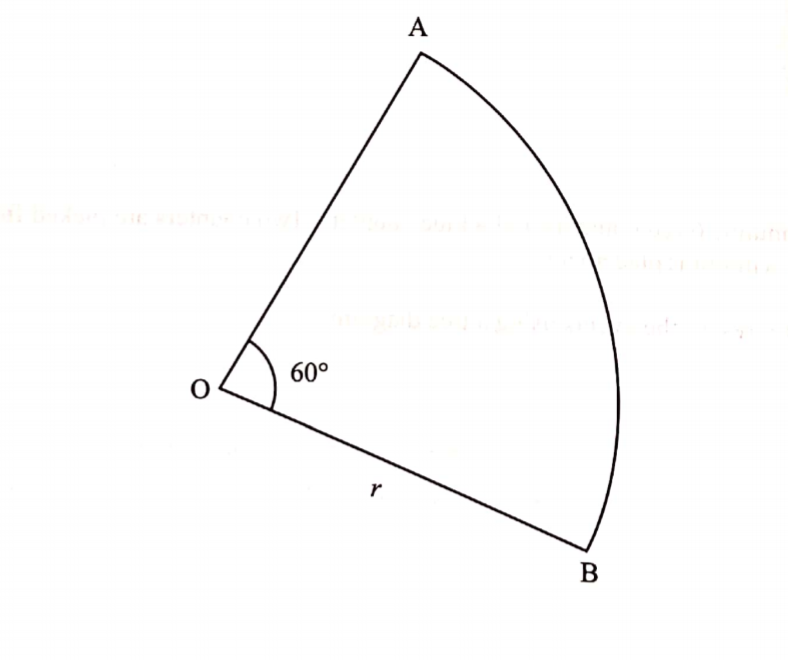
8. OAB is a Sector Of a circle of radius r cm. Angle AOB = 60°.

Find, in its simplest form, an expression in terms of r and z for the perimeter of the sector.(2 marks)

9. In a mathematics test, the scores obtained by 30 students were rccordcd as shown in the toblc below.

       Score (x) 59 61 65 K 71 72 73 75
      No. of students 2 3 5 6 7 4 2 1

The score K with a frequency of 6 is not given.

Given that ⅀fd∕⅀f = — 1.2 where d —— x – 69, and using an assumed mean of 69, determine score K.

10. Determine the amplitude and the period of the function y = 3 sin(2x + 40°). (4 marks)

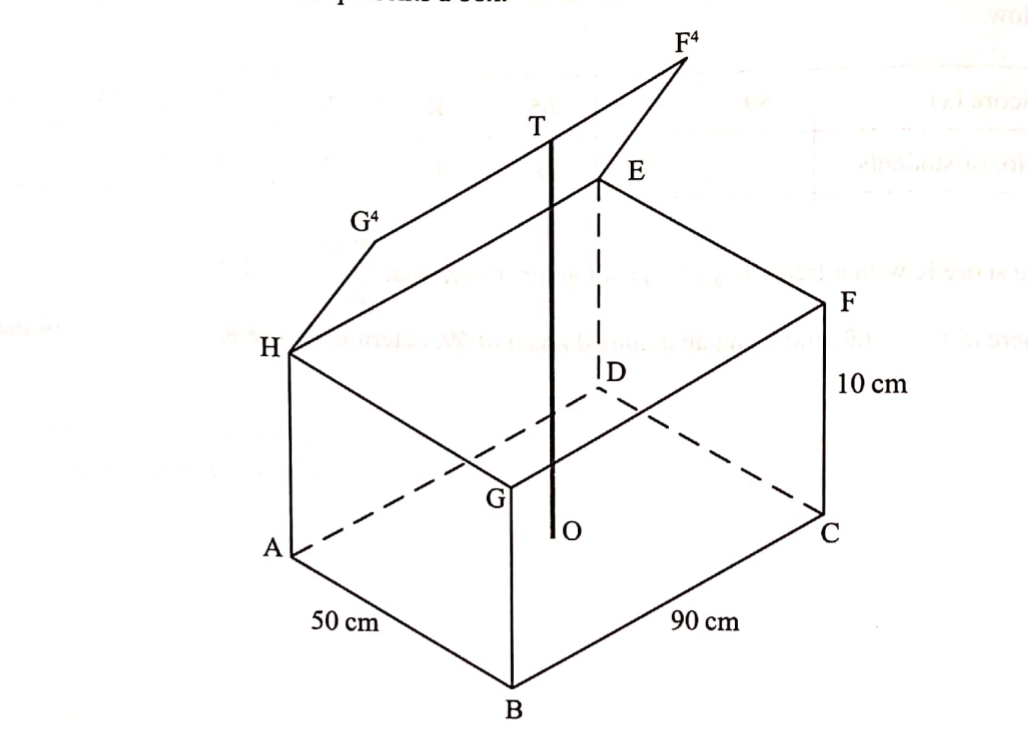
11. The figure ABCDEFGH represents a box.

The top lid of the box is opened such that the height OT is 35cm. Calculate the:

(a ) angle the top lid makes with the plane FGHE;

(b) length BE, correct to 2 decimal places.

12. The table below’ shows income tax rates in a certain year.

Monthly Income in ksh Tax rate  in each shilling
(%)
0  – 10164 10
    10165 – 19740 15
     19741 – 29316 20
     29317 – 38892 25
      38893 and above 30

In that year,mawira earned a salary of 41000 per month.calculate mawira’s income tax per month given that a monthly tax relief of ksh 1162 was allowed (3 marks)

13. The position vectors of points A,B and C are OA =[3/4],OB = [1/2] and OC =[7/-1] show that A,B and C are collinear (3 marks)

14. The vertices of a triangle PQR are P(-3, 2), Q(0, — 1) and R(2, — 1). A transformation matrix maps triangle PQR onto triangle P’Q’ R’ whose vertices are P'(—7, 2), Q'(2, — 1) and R’(4, – 1).

Find M°’, the transformation that maps P’Q’R’ onto PQR.(4 marks)

15. Solve for x in log(7x—3) + 2 log 5 = 2 + log(z + 3).(4 marks)

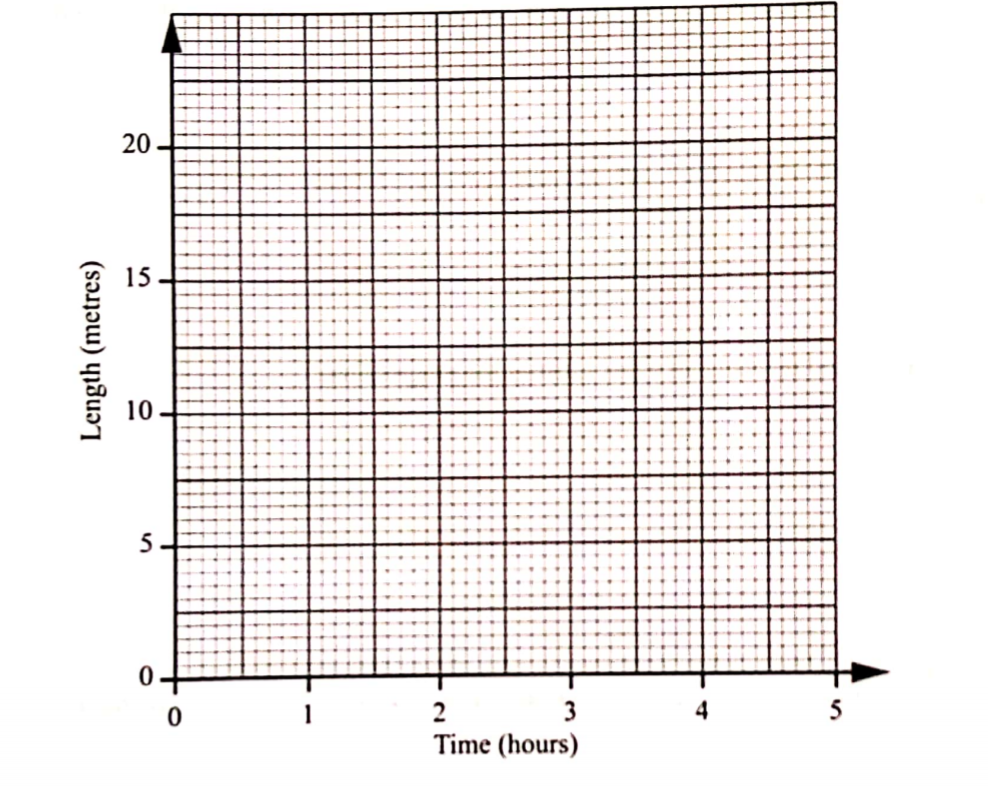
16. The length of a shadow’ of a mast was measured at intervals of 1 hour and recorded as shown in the table below.

Time( hr) 0 1 2 3 4 5
Length( m) 18.7 8.7 5.0 2.9 1.3 0

(a) On the grid prov’ided, draw the graph of length against time. (2 marks)

(b) Dctermine the rate of change of the shadow’ length at = 2 (2 marks)

SECTION II (50 MARKS)

Answer any five questions

17.The first term of an Arthmetic Progression(AP) is equal to the first term of a Geometric Progression (GP). The second team of the AP is equal to the fourth term Of the GP while the tenth term of the AP is equal to the seventh term of the GP.

(a) Given that a is the first term and d is the common difference of the AP while r is the common ratio of the GP, write the two equations connecting the AP and the GP. (2 marks)

(b) Find the value of r that satisfies the progressions.(4 marks)

(c) Given that the tenth term of the GP is 5120, find the values of a and d.(2 marks)

(d) Calculate the sum of the first 20 terms of the AP.( 2 marks)

18. Mbaka bought some plots at Ksh 400000 each. The value of each plot appreciated at the rate of 10% per annum. (a) Calculate the value of a plot after 2 years. (2 marks)

(b) After some time t, the value of a plot was Ksh 558400. Find i, to the nearest month. (4 marks)

(c) Mbaka sold all the plots he had bought after 4 years for Ksh2 928200.

Find the percentage profit Mbaka made, correct to 2 decimal places. (4 marks)

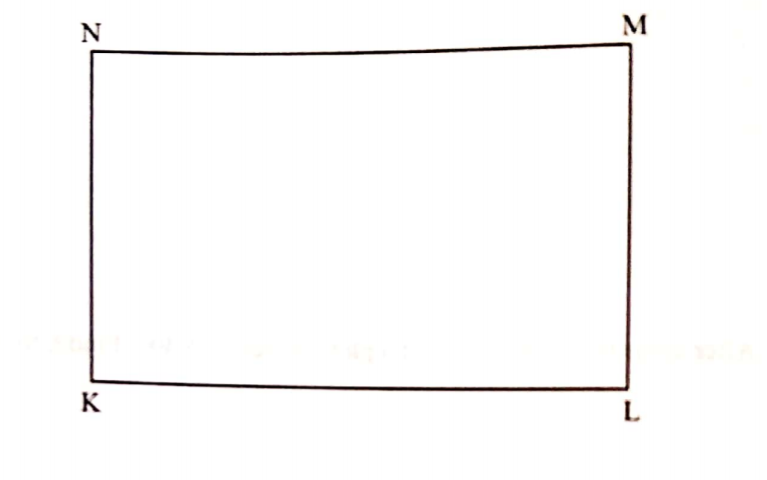
19. The figure KLMN below is a scale drawing of a rectangular piece of land of length KL = 80m

(a) On the figure, construct

(i) The locus of a poini P which is both equidistant trom points L and M It and from lines KL and LM. (3 marks)

(ii) the locus of a point Q such that ∠KQL = 90°. (3 marks)

(b) (i) Shade the region R bounded by the locus of Q and th Locus of poinis equidistant from KL and LM. (3 marks)

(ii) Find the area of the region R in m². (Take ℼ= 3.142). (3 marks)

20. A ship left point P(l0°S, 40°E) and sailed due East for 90 hours at an average speed of 24 knotS to a point R.

(Take I nautical mile (nm) to be 1.853 km and radius of the earth to be 6370 km) (a) Calculate the distance between P and R in:

(i) nm; (1 marks)

(ii) km. (1 marks)

(b) Determine the position of point R.( 5 marks)

(c) Find the local time, to the nearest minute, at point R when the time at P is II:00a.m. (3 marks)

21. A workshop makes cupboards and tables using two artisans A and B every cupboard made requires 3 days of work by artisan A and 2 days of work by artisan B.

Every table made requires 2 days of work by artisan A and 2 days of work by artisan B.

In one month artisan A worked in less than 24 while artisan B Worked for Not More Than 18 Days.

The workshop made x cupboards and y tables in that month.

(a) Write all the inequalities which must be satisfied by x and y. (3 marks)

(b) Represent the inequaliiies in (a) on the grid provided.(3 marks)

(c) The workshop makes a profit Of Ksh 6 000 on each cupboard and Ksh4 000 on each table.

Find the number of cupboards and the number of tables that must be made for maximum profit and hence determine the maximum profit. (4 marks)

22. The amount of money contributed by a group of students during a fundraising for a needy student was as shown in the table below.

Amount(  Ksh) 301 – 400 401 – 500 501 – 600 601 – 700 701 – 800 801 – 900 901 – 1000
No. of students    2      10 12 14 7 3      2

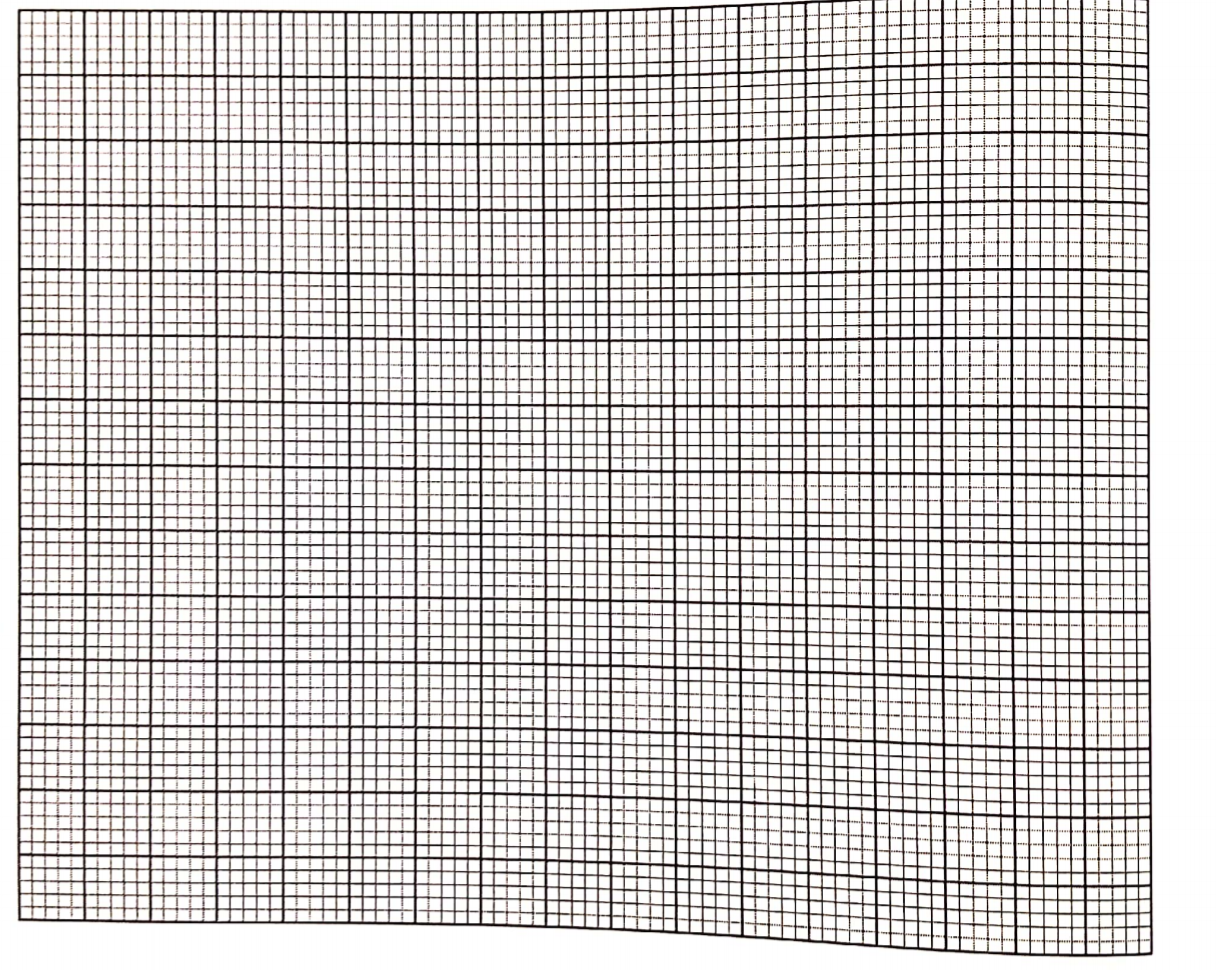
(a) On the grid provided draw an ogive to represent the data. (4 marks)

(b) Use the graph to estimate:

(i) The median; (1 marks)

(ii) The quartile deviation; (3 marks)

(iii) The percentage number of students who contributed at least Ksh 750.50. (2 marks)

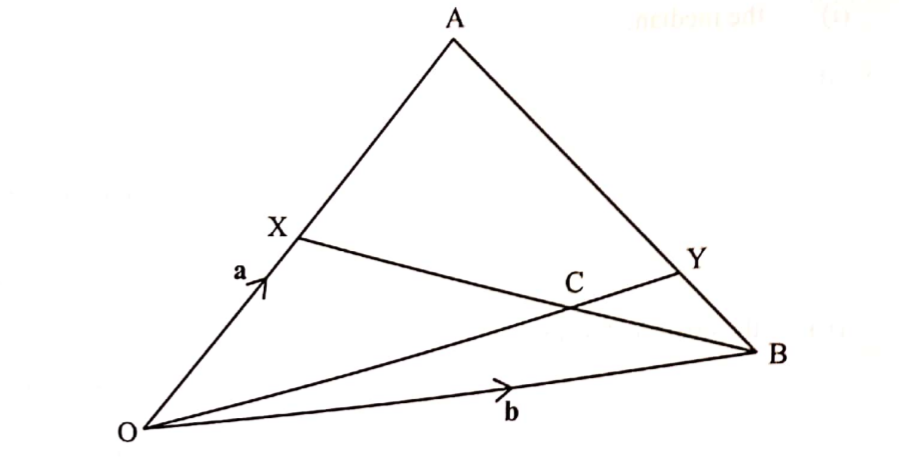
23. In the figure below, OA = a,OB = b and BX meets OY at C.OX:OA = 1:2 and BY:YA = 1:3.

(a) Express in terms of a and b: (1 marks)

(ii) OY; (2 marks)

(iii) BX. (1 marks)

(b) Given that OC = hOY and BC = kBX, determine the values of h and k. (6 marks)

24. A trapezium PQRS with vertices P(2, 2), Q(6, 2), R(6, 4) and S(2, 8) is mapped onto P’Q’R’5′ by a transformation matrix M = (—1/0 0/1).

(a) Find the coordinates of P’Q’R’ S’.(2 marks)

(b) On the grid provided draw PQRS and its image P’Q’R’S’ (2 marks)

(c) Find P”Q”R”S“, the image of P’Q’R’S’ under the transformation matrix. N = (-½/0 0/-½)(1 marks)

(ii) On the same Grid draw P”Q”R‘S”.(1 marks)

(d) (i) Find a single matrix that maps P”Q”R’S” onto P’Q’R’S’.(2 marks)

(ii) Describe fully the transformation thai maps P”Q”R”S” onto P’Q’R’s’.(2 marks)

KCSE Past Papers Mathematics 2019 (121/2)

KCSE Past Papers Mathematics 2019 (121/1)

KCSE Past Papers Mathematics 2019

Kenya Certificate of Secondary Education

KCSE Past Papers Mathematics 2019 (121/1)

2019 Mathematics Paper 1

Section I (50 marks)

Answer all the questions in this section.

1. Without using mathematical tables or a calculator, evaluate: 5.4∕ 0.025 x 3.6 (3 marks)

2. Express 1728 and 2025 in terms of their prime factors. Hence evaluate:(4 marks)

∛1728 √ 2025

3. Juma left his home at 8.30a.m. He drove a distance of l40km and arrived at his aunt’s home at 10.15 a.m.

Determine the average speed, in km/h, for Juma’s journey.(3 marks)

4. Expand and simplify:

4 (q – 6) + 7 (q — 3).(2 marks)

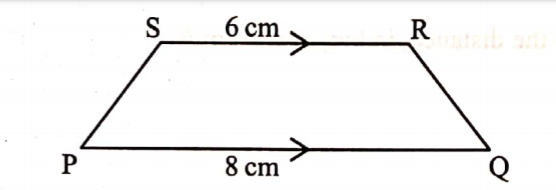
5. In the trapezium PQRS shown below, PQ = 8 cm and SR = 6 cm.

If the area of the trapezium is 28 cm², find the perpendicular distance between PQ and SR. (2 marks)

6.Given that = ∛ 94=3n find the value of n.(3 marks)

7. Three villages A, B and C rife Such that B is 53 km on a bearing of 295° from A and C IS 75 kin east of B.

(a) Using a scolc of 1 cm to represent 10 km, draw a diagram to show the relative positions of villages A, B and C. (2 marks)

(b) Determine the distance, in km, of C from A. (2 marks)

8. A retailer bought a bag of tea leaves. If the retailer were to repack the tea leaves into smaller packets of either 40 g, 250g or 350 g, determine the least mass, in grams, of the tea leaves in the bag.(3 marks)

9. Given that sin 2x = cos (3z — 10°), find tan z, correct to 4 significant figures. (3 marks)

10. A tourist converted 5820 US dollars into Kenya Shillings at the rate of Ksh 102.10 per dollar.

While in Kenya, he spent Ksh450 000 and converted the balance into dollars at the rate of Ksh 103.00 per dollar.

Calculate the amount of money, to the nearest dollar, that remained.(3 marks)

11. Given that b =

(2)
(4)

C,=

(3)
(2)

and a = 3c — 2b, find the magnitude of a, correct to 2 decimal (4 marks)

12. Using a ruler and a pair of compass only, construct a rhombus PQRS such that PQ = 6cm and dSPQ = 75°.

Measure the length of PR.

13. Solve the inequality 2x — 1 ≤ 3x + 4 < 7 — x. (3 marks)

14. Given that A = ( 2 3 4 4 ) B, ( X 1 2 3 ) and that AB is a Singular matrix, find the value ofx.(3 marks)

15. A trader bought two types of bulbs A and B at Ksh 60 and Ksh 56 respectively. She bought a total of 50 bulbs of both types ct a total of Ksh 2872.

Determine the number of type A bulbs that she bought. (3 marks)

16. A bus plies between two towns P and R via town Q daily. On each day it departs from P at 8.15 a.m. and stops for 40 minutes at Q before proceeding to R.

On a certain day, the bus took 5 hours 40 minutes to travel from P to Q and 3 hours 15 minutes to travel from Q to R.

Find, in 24 hour clock system, the time the bus arrived at R. (3 marks)

SECTION II (50 marks)

17. A rectangular water tank measures 2.4 m long, 2 m wide and 1.5 m high.

The tank contains some water up to a height of 0.45 m.

(a) Calculate the amount of water, in litres, needed to fill up the tank (3 marks)

(b) An inlet pipe was opened and water let to flow into the tank at a rate of 10 litres per minute.

After one hour, a drain pipe was opened and water allowed to flow out of the tank at a rate of 4 litres per minute.

Calculate:

(i) the height of water in the tank after 3 hours;(4 marks)

(ii) the total time taken to fill up the tank. (3 marks)

18. (a) A line, L, posies through tho points (3,3) and (5,7). Find the equation of L, in the form y = mx+c where m and c arc constonti. (3 marks)

(b) Another line L2 is perpendicular to L, and passes through (—2, 3). Find:

(i) the equation of L2;

(ii) the x-intercept of L2.

(c) Determine the point of intersection of L, and L2. (3 marks)

19. A triangle ABC wÎth Vertices A (—2,2),B (1,4)and C (-1,4) is mapped on to triangle A’B’C by a reflection in the line y=x+1.

(a) On the grid provided draw

(i) triangle ABC (3 marks)

(ii) the line y = x + 1; (2 marks)

(iii) triangle A’B’C’. (2 marks)

(b) Triangle A”B”C“ is the image of triangle A’B’ C’ under a negative quarter turn (0,0).

On the same grid, draw triangle A“B“C“. (3 marks)

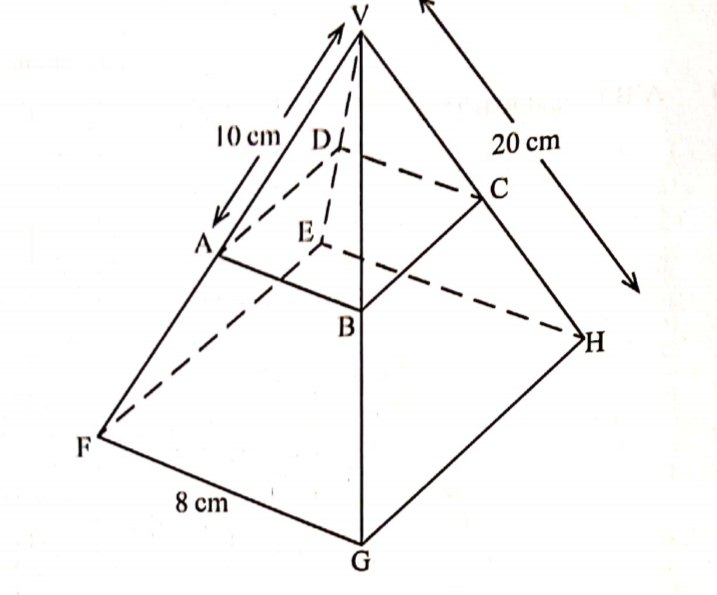
20.The figure below is a right pyramid VEFGHI with a square base of 8cm and a slant edge of 20cm Points A B C and D lie on the slant edges or the pyramid such that VA = VB = VC = VD = I0 cm and plane ABCD iS paralell to the base EFGH.

(a) Find the lenght of AB. (2 marks)

(b) Calculate to 2 decimal places

(i) The lengh of AC (2 marks)

(ii) The perpendicular height of the pyramid VABCD (2 marks)

(c) The pyramid VABCD was cut off.Find the volume of the frustrum ABCDEFGH correct to 2 decimal places (4 marks)

21. The heights of 40 athletes in a county athletics competition were as shown in the table below.

Height,cm Frequency
150 -159    2
160 – 169    8
170 – 179   10
180 – 189   x
190 -199   6
200 – 209   2

(a) Find the value of X. (1 mark)

(b) State the modal class. (1 mark)

(c) Calculate:

(i) The mean height of the athletes;(4 marks)

(ii) The median height, correct to 1 decimal place,of the athletes (4 marks)

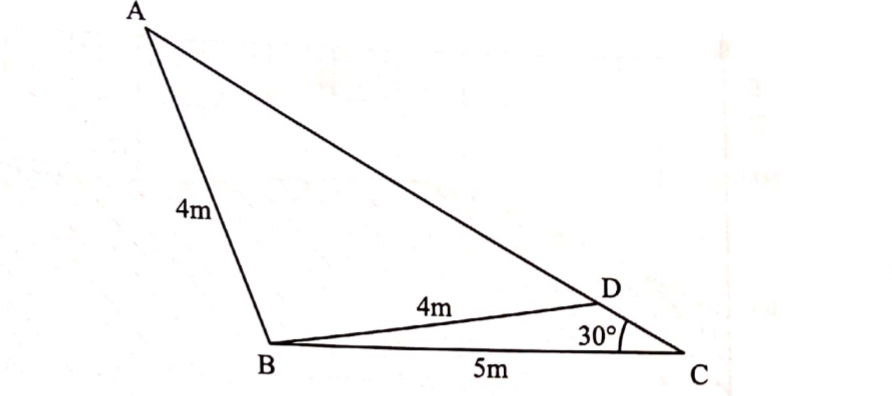
22. The figure below represe nts a triangular 8ower garden ABC in which AB = 4 in, BC = 5m and ∠BCA = 30°. Point D lies on AC such that BD = 4 m and ∠BDC is obtuse.

Find, correct to 2 decimal places: (a) ∠BDC; (3 marks)

(b) the length of AD; (3 marks)

(c) the length of DC; (2 marks)

(d) the area of the flower garden ABC. (2 marks)

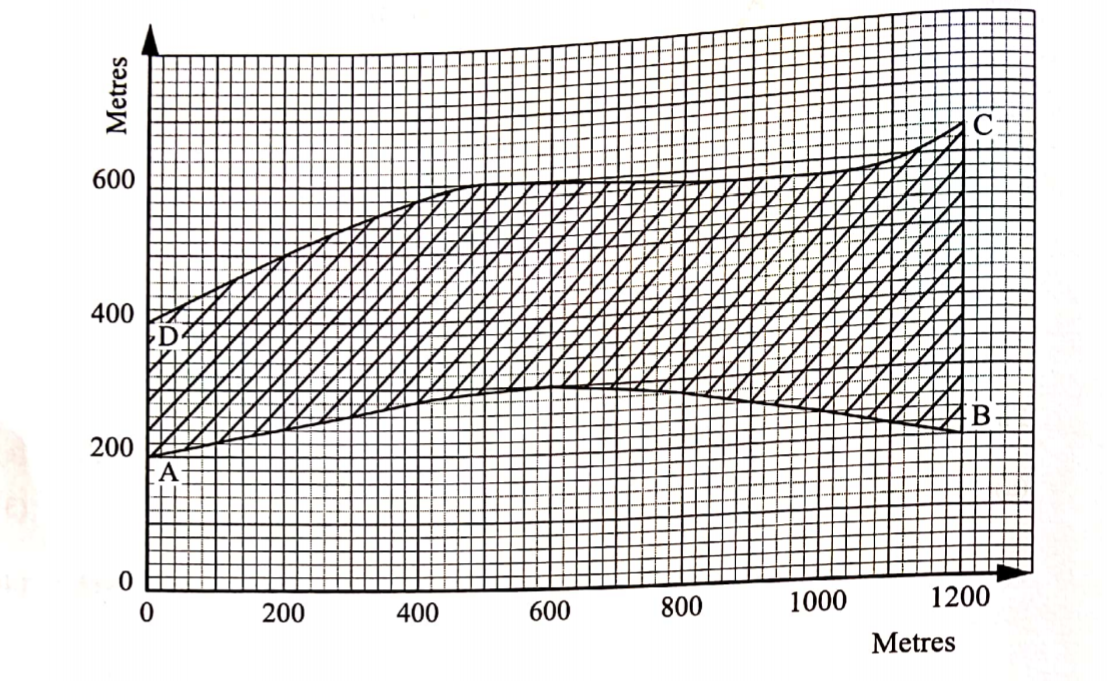
23. The shaded region on the graph below shows a piece of land ABCD earmarked for building a sub-county hospital.

(a) Write down the ordinates of curves AB and DC for x = 0, 200, 400, 600, 800, 1000 and 1200. (2 marks)

(b) Use trapezium rule, with 6 strips to estimate the area of the piece of land ABCD, in hectares.(4 marks)

(c) Use mid-ordinate rule with 3 strips to estimate the area of the piece of land, in hectarea. (4 marks)

24. The equation of a curve is y=x3+x2-x-1

(i) Determine the stationary point of the curve (3 marks)

(Îi) the nature of the stationary points in (a) (i) above.(2 marks)

(b) Determine:

(i) the equation of the tangent to the curve at x = 1; (3 marks)

(ii) the equation of the normal to the curve at x = 1. (2 marks)

KCSE Past Papers Mathematics 2019 (121/1)

KCSE Past Papers 2019 Kiswahili Karatasi ya 3 (102/3)

KCSE Past Papers 2019 Kiswahili Karatasi ya 3 (102/3)

Kenya Certificate of Secondary Education Kiswahili – Fasihi Karatasi ya 3

KCSE Past Papers 2019 Kiswahili Karatasi ya 3 (102/3)

SEHEMU A: RIWAYA

A. Matei: Chozi la Heri

1. Lazima

(a) “Sasa haya ameyapa kisogo … kufunguliwa kwa kituo hiki ni kama mana iliyomdondokea kinywani kutoka mbinguni.”

(i) Eleza muktadha wa dondoo hili. (alama 4)

(ii) Bainisha tamathali mbili za usemi ambazo zimetumiwa katika dondoo hili. (alama 2)

(iii) Fafanua umuhimu wa mhusika anayerejelewa katika dondoo hili katika kuijenga riwaya hii. (alama 6)

(b) Jadili mikakati mwafaka ambayo vijana wanatumia kukabiliana na hali yao ya maisha kwa kuwarejelea wahusika wafuatao:

(i) Chandachema (alama 4)

(ii) Dick (alama 4)

SEBEMU B: TAMTHILIA

P. Kea: Kigogo

Jibu swali la 2 au la 3

2. (a) Jadili mbinu kumi ambazo Wanasagamoyo wanatumia kupigana na utawala dhalimu. (alama 10)

(b) Eleza jinsi mbinu rejeshi ilivyotumiwa kukuza vipengele vifuatavyo katika tamthilia hii.

(i) Maudhui (alama 5)

(ii) Wahusika (alama 5)

3. (a) “Ushahidi utatoka wapi kama kipanga ndiye hakimu kwenye kesi ya kuku?”

(i) Eleza muktadha wa dondoo hili. (alama 4)

(ii) Fafanua dhima ya vipengele viwili vya kimtindo vinavyobainika katika dondoo hili. (alama 4)

(b) (i) Kwa kurejelea tamthilia jadili sifa sita za msemaji.(alama 6)

(ii) Eleza umuhimu wa mandhari katika tamthilia hii. (alama 6)

SEHEMU C: HADITHI FUPI

Jibu swali la 4 au la 5

A. Chokocho na D. Kayanda (Wah): Tumbo Lisiloshiha na Hadithi Nyingine

K. Walibora. “Nizikeni Papa Hapa”

4. (a) “Isije ikawa hapa habari ya kufuata asali ukafa mzingani.” “… Pana hasara gani nzi kufia kidondani?”

(i) Eleza muktadha wa dondoo hili. (alama 5)

(ii) Andika mbinu mbili za kimtindo zinazojitokeza katika dondoo hili. (alama 2)

(b) Hadithi, Nizikeni Papa Hapa inahimiza uwajibikaji. Jadili.(alama 5)

5. (a) Onyesha jinsi unafiki unavyoshughulikiwa katika hadithi, “Shogake Dada ana Ndevu.” (alama 8)

(b) Changanua mtindo katika dondoo lifuatalo: (alama 12)

“Bi. Hamida alitunga donge kifuani mwake. Na donge likaja juu. Likampanda na kumsakama kooni. Kweli? Uongo? Kweli au uongo yale maneno ya binti yake?

Labda kweli anamfıkiria mambo mabaya binti yake tu. Labda kweli dhana yake ni mbovu. Bi. Hamida alichanganyikiwa na mambo.

Alivutwa huku na huku na nafsi yake yenye chagizo. Upande mmoja sauti yake ya ndani ilikuwa inamtetea Safia, na upande wa pili wa nafsi yake ilikuwa ikimshuku Safia; na sauti zake zote mbili hizo zimo ndani ya kiwiliwili chake zinamvuta yeye mtu mmoja, Bi. Hamida. Hatimaye hakutambua afanye nini.”

SEHEMU D: USHAIRI

Jibu swali la 6 au la 7.

6.Soma shairi lifuatalo kisha ujibu maswali

Lilipo lile banda, lile pale,
Kuna tuja kakonda, kwa uwele,
Wala siye kupenda, hiyo ndwele,
Ndwele ya kutishwa!

Ni ndwele ya kutengwa, penye haki,
Uwele wa kusutwa, pasi haki,
Ugonjwa kupuuzwa, na miliki,
Ndwele ya kutwishwa!

Mwiliwe kawa sugu,
viwandani, Uso una kunyugu,
ziso fani, Ujira wake ndugu,
ni mapeni, Ndwele ya kutwishwa!
Na homa akipatwa, maishani,
Kwa tiba apuuzwa, kama nyani,
Hajulikani kuwa, yeye nani,
Ndwele ya kutwishwa!

Ana chawa nyweleni, ona dhiki,
Na kunguni nguoni, ahiliki,
Funza na miguuni, wamesaki,
Ndwele ya kutwishwa!

Bado yuasubiri, kisimati, Dhiki yake kutiri, ‘we tamati Ndipo iwe sururi, ya kidhati Nyota yake ni nyota ya huzuni.

(K.Wamitila)

(a) Fafanua kwa kutoa hoja sita kutoka kwenye shairi, jinsi nyota ya anayerejele wa ni ya huzuni. (alama 6)

(b) Eleza muundo wa shairi hili. (alama 6)

(c) Bainisha aina zifuatazo za uhuru wa kishairi katika shairi: (alama 6)

(i) inkisari

(ii) kujifanyanga sarufi

(d) Eleza tamthali tutu za usemi zilizotumiwa katika shairi hili. (alama 3)

(f) Eleza sifa mbili za anayelengwa katika shairi hili kwa kurejelea ubeti wa mwisho. (alama 2)

(g) Andika ubeti wa nne kwa lugha nathari. (alama 2)

7. Soma Shairi lifuatalo kisha ujibu maswali.

Kalma akili si mali, maskini na tajiri
Wangalimoja sampuli, asikuwepo fakiri
Na hangekuwa na mali, mwinyi bila kufikiri
Kama akİlİ si mali, usingeweza fikiri.

Ukeshapo kwa fikara, ni kwa wingi wa akili
Kuwaza kigaragara, una mengi si kalili
Na kuwa una tambara, metajirika kwa hili
Kama akili si mali, usingeweza fikiri.
Alokijenga kitanda, ana wingi wa akili
Hata asiwe na bunda, hamithili kwa akili
Hata naye paka nunda, pasipo akili hali
Kama akili si mali, usingeweza fikiri.

Akili kweli ni mali, kwa kuteua vya mwozo
Singetumia akili, ungevila vya angamizo
Afya ikawa thakili, na kuhiliki mawazo
Kama akili si mali, usingeweza fikiri.

Vipi gonjwa kikuganda, wawazia spitali?
Huachi ukawa ng’onda, ukanyauka muwili
Ugangani unakwenda, kutafuta afadhali,
Kama akili si mali, usingeweza fikiri.

Kama akili si mali, kusingekuwa na jela,
Kuwatenga kuwa mbali, wenye hiana na hila,
Kwa mbavu na ufidhuli, pamwe mbinu tolatola,
Kama akili si mali, usingeweza fikiri.

Tajiri na maskini wote wanayo akili,
Ni kuwa hayafanani, waliyonayo makali
Kabisa hawashibani, liwe lile au hili,
Kama akili si mali, usingeweza fikiri.

Kalma akili si mali, ‘singekuwa na hazina
Ya kudadisi mithali, na kumpinga yako mnna
Gani inadumu mali, kuliko huko kusana?
Kama akili si mali, usingeweza fikiri.

(T. Arege)

(a) “Ufanisi wa binadamu hutegemea akili.” Fafanua kwa kurejelea hoja sita kutoka kwenye shairi hili. (alama 6)

(b) Andika mifano ya vipengele vifuatavyo vya kimtindo katika shairi hili:(alama 4)

(i) sitiari

(ii) tanakuzi

(iii) Swali la balagha

(iv) kinaya

(c) Eleza mbinu nne ambazo mshairi ametumia kutosheleza mahitaji ya kiarudhi. (alama 4)

(d) Andika aina mbili za urudiaji zinazojitokeza katika shairi hili.(alama 2)

(e) Fafanua muundo wa shairi hili.(alama 4)

SEHEMU E: FASIHI SIMULIZI

8. Soma utungo ufuatao kisha ujibu maswali. Shangazi anambila
umewadia muda
wa kukiacha kiambo
cha Baba
Nende kujinasibisha
na ajinabi tusohusiana
kwa ngeu wala usaha
nache niwapendao
nache aila
nache matamanio
ya elimu kufuatiya.

Anambile shangazi
Hino ni neema
ela moyo wanirai
“Wajitia shemere”, nami nauambia,
“Najua si utashi wangu”
ila hiari sina

kwani lvii ni faradhi
mitamba mepokelewa
na ami kwa furaha
kilobaki ni kuvuka
kizingiti hiki.”
Kwaheri’i Mama, kwaheri wanuna.

(a) Ainisha wimbo huu kwa kuzingatia kipengele cha maudhui.(alama 2)

(b) Andika sifa mbili za jamii inayosawiriwa na wimbo huu. (alama 2)

(d) Unanuia kutumia mahojiano kukusanya habari kuhusu nyimbo za aina hii.

(i) Eleza manufaa matano ya kutumia mbinu hii.(alama 5)

(ii) Eleza changamoto tano za kutumia mbinu hii.(alama 5)

KCSE Past Papers 2019 Kiswahili Karatasi ya 3 (102/3)

KCSE Past Papers 2019 Kiswahili Karatasi ya 2 (102/2)

KCSE Past Papers 2019 Kiswahili Karatasi ya 2 (102/2)

KCSE Past Papers 2019 Kiswahili Karatasi ya 2 (102/2)

Kenya Certificate of Secondary Education Kiswahili Karatasi ya 2

UFAHAMU (Alama 15)

Soma kifungu kifuatacho kisha ujibu maswali.

Kijiji chetu kilikuwa kimeanza kuingiwa na wasiwasi. Katika kipindi cha miaka michache iliyopita tulikuwa tumewapoteza watu kadha na hakuna aliyeelewa kiini hasa cha majanga haya. WazeE walisikika wakisemezana kwa sauti za chini. Hatukujua hasa walichosema lakini ilikuwa bayana kuwa kijui chetu kilikuwa juu ya mchongoma. Ku umi kwetu kuna mambo yatokeayo yakaonekana miujiza.

Tunabaki kutapatapa kuelezea chanzo shake na wesemavyo, akili ni nywele kila mtu ana zake.

Ila zipo nywele za koto na za sings. Lakini kuna watu wenye kuandamwa na tata, mti wowote uliokuwa karibu ulishikiliwa kwa tumaini la kuleta nafuu.

Ndiyo, nafuu. Na ndivyo ilivyotokea kiasi cha kila mtu kuwa bingwa wa kufasiri asili ya janga na suluhu yake. Hali hii iliendelea mpaka walipofika wataalamu kuuini kwetu na kufanya utafiti wa kisayansi uliotufumbulia asili ya dhiki zetu.

Siku hiyo ya kutolewa matokeo ya utafiti, kuul kizima kilijumuika kwenye uwanja wa shule mapema.

Hakuna aliyeonyesha use wa furaha. Ilikuwa kama tuliokuwa mahakamani tunasubiri hukumu ya kesi ya jinai dhidi yetu. Siyakumbuki yote aliyosema yule mtaalamu lakini yapo yaliyotugusa sote.

“Najua mna hamu ya kujua tatizo liko wapi.

Kabla ya kulieleza tatizo lenyewe ningependa kusema poleni kwa misiba iliyowaandama.

Kuwapoteza wapendwa si pigo kwa familia tu, bali pia kwa kuui na taifa. Na kuanzia sasa ninawaomba tushirikiane kuibadilisha hali hii.

Hatuwezi kuendelea kuishi hivi,” alisema huku wanakuui wanamtazama kwa masikitiko makubwa. “Binadamu yumo katika awamu ya kujiangamiza”,aliendelea, “amefanya uvumbuzi wa teknolojia aali lakini ambayo sawa na mwaridi, ina miba.

Miba hii sasa inamchoma kila aitundaye teknolojia. Kwa sababu ya wingi wetu, sasa tunataka kuzalisha mazao yetu haraka.

Kwa sababu ya ongezeko kubwa la idadi ya watu walaji ni wengi lakini ardhi inazidi kujibana. Njia ya pekee ya kuongeza lishe ni kupitia uzalishaji zaidi wa vyakula. Katika ulimwengu ambapo vipando vile vile hurudiwa kupandwa kwenye ardhi ile ile, pato lake hupungua. Jibu la kuinua pato ni teknolojia.

Teknolojia hii imebuni uzalishaji wa mbolea ya kemikali ambazo huchochea rotuba kwenye ardhi. Urutubishaji wa ardhi yetu ndogo umetuwezesha lcuzalisha chai, kahawa, mahindi na mazao mengine kwa wingi ili kukidhi haja yetu ya chakula.

Zamani ardhi ilipokuwa kubwa na idadi ya watu ikawa ndogo, haja hii ya mbolea haikuwepo. Ardhi iliachwa kujirutubisha yenyewe. Madhara tuyaonayo sasa hayakuwepo wakati huo.” “Leo hii utashi wetu wa lcujitosheleza umetusukumizia ukingoni mwa maisha.

Vyakula vyetu sasa vina kemikali hatari kutokana na mizizi ya mimea kufyonza virutubisho vyenye nitrojeni.

Virutubisho hivi hustawisha mimea. Hata hivyo mimea hii tunayoila ina kemikali hatari kwa miili yetu. Kemikali hizi vilevile huingia kwenye nyasi ambazo huliwa na mifugo wetu. Mifugo hao hudhurika, nasi tunapofaidi bidhaa zao tunadhurika. Hata mito yetu na visima hupokea mikusanyiko ya kemikali hizi hatari, nasi tunazinywa kupitia kwa maji.

Kemikali hizi husababisha saratani, na hili ndilo tatizo la kuut hiki.” Kauli hii ya mwisho iliutikisa umati ule. Sauti za wanaktjui zilisikika zikinong’onezana.

Wengi wa wanakuut waliona kama kila kite pale kuutnt kilikuwa chanzo cha adhabu ya kifo kwao. Baada ya kule kutanabahishwa, ilisikika sauti ya mlevi mmoja aliyesema kwa sauti kubwa kabisa, “Ni hivi, ama tule hivyo vibaya tufe polepole au tuache kuvila tufe mara moja.” Tamko hili la mlevi liliwasisimua wote waliokuwa pale, wakapata walau sababu ya kucheka.

Kucheka huku kuliwatia watu matumaini, wakaanza kuuliza maswali. Kwa nini mbolea itengenezwe kutokana na kemikali hatari? Hivi dunia haijui kuwa ipo hatari kwenye mbolea hizo? Je, waache kunywa maji na kutupa vyakula walivyokuwa navyo? Waliuliza maswali haya na mengine mengi.

Yule mtaalamu hakuwa na mengi ya kusema kwa sababu alifahamu kuwa kila aina ya teknolojia ina faida na madhara yake. Kwa hivyo alieleza kwa ufupi.

“Kemikali hizo ndizo huchochea rutuba ya ardhi ambayo huiwezesha mimea kukua na kutupa mazao mcnbi.

Dunia inafahamu fika madhara ya kemikali zinazotumiwa kwenye mbolea lakini ifanyeje? Watu watakao kulishwa ni wengi.

Ardhi imepungua kwa sababu ya wingi wa watu. watu wanataka kula ilhali ardhi hiyo ndogo haina tena rutuba.

Hata maji hayo yaliyoathirika mtayanywa tu bado.

Mtaishije bila maji Mtapika vipi? Mtakunywa nini? Hali hii tunaweza kuiondoa polepole kwa kuwekeza kwsnye ufugaji wa kuku, ng’ornbe na mbuzi wengi ili tutumie mbolea yao kurutubisha ardhi yetu. Wanasayansi wanasema itachukua yapata miaka mitano kuirejesha ardhi katika hali yake asilia.”

Maelezo ya mtaalamu yule yalilta nafuu ya namna fulani kwa wanakijiji. Mzee mmoja alipewa nafasi kuzungumuza kabla ya kikao kufungwa.

Mkutano ulipomalizika kijiji kilijua tatizo lilipokuwa na kuumaliza uvumi uliokuwa unaoteshwa kila leo.

(a) Eleza sababu mbtli za wanakijiji kuuona ugonjwa uliozuka kuwa miujiza.(alama 2)

(b) Eleza madhara manne ya kemikali za mbolea kulingana na kifungu. (alama 4)

(c) Bainisha mambo matatu yanayochochea kubuniwa kwa teknolojia mpya kwa mujibu wa kifungu. (alama 3)

(d) Andika mambo mawili yanayoonyesha kuwa wazee wa jamii hii walikuwa na hadhi.(alama 2)

(e) Fafanua maana ya ‘nywele za koto’ na ‘nywele za singa’ kwa kurejelea kifungu hiki (alama 2)

(f) Kipe kifungu hiki anwani mwafaka (alama 2)

2. UFUPISHO (Alama 15)

Soma kifungu kifuatacho kisha ujibu maswali.

Denıokrasia ya uwakilishi huweza kujitokeza kwa namııa tofautitofauti kutegeıvca ır‹atakwa ya nchi mahususi. Demokrasia ya Urais ni aina mojawapo ya demoloasia ya uwakilishi. Aina hii ya demokrasia humpa rais mamlaka makuu jun ya serikali.

Rais huchaguliwa ama kwa njia ya rnojiı t.wa moja, au kwa kutumia wawakilishi. Yeye hawi tu kiongozi wa taifa, bali pia wa serikali kaına iliivyo Kenya, Marekani na Ajentina. Hali kadhalika, kuna Demokrasia ya Bunge.

Aina hii huipa bunge mamlaka makubwa.

Kitengo cha utekelezi cha serikali hupata mamlaka yake katika bungeni. Kiongozi wa taifa na kiongozi wa serikali huwa watu tofauti na wenye viwango tofauti vya mamlaka. Kwa kawaida, kiongozi wa serikali huwa na mamlaka makubwa zaidİ kama ilivyo Uingereza. Demokrasia ya kimabavu huelekea kupingana na dhana halisi ya deınokrasia.

Katikaa

demokrasia hii tabaka la juu pekee ndilo lenye haki ya kuchagua wawakilishİ Wa taifa. Umma lıauna lıaki hiyo. Mfano wa demokrasia hii ni Urusi.

Demokrasia ina manufaa mengi. Demokrasia hulinda masilahi ya wananchi wote; si walio wengi, si walio wachache, si wenye nguvu, si wanyonge…Demokrasia pia husaidia kugatua mamlaka, lıivyo kuzuia kundi dogo kuwa mamlakani daima.

Hili hufanikishwa na chaguzi za mara kwa mara. Kwa vile sheria haibagui, demokrasia basi hukuza usawa kwa wote. Wale wanaochaguliwa hujaribu kuweka sera mwafaka kwa kuwa hawadumu mamlakani. Kuhusishwa kwa umma katika kuamua watakaowatawala na kuwepo kwa kipındi mahususi cha kuhudumu hupunguza uwezekano wa kutokea kwa mapinduzi.

Hali kadhalika, demokrasia huchochea mabadiliko katıka nchi kwa kuwa kila utawala huwa na kipindi chake maalumu ambapo umma hupata nafasi ya kuubadilisha, na hivyo kubadili sera na rnwelekeo wa nchi.

Demokrasîa huipa umma nafasi ya kujifunza mambo mengi kuhusu siasa.

Wakati wa uchaguzi, wagombeaji hunadi sera na rawaza zao, na hivyo kuelimisha umma. Demokrasia pia huwafanya watawala kuwa na tahadhari na kuwajibika kwa kuwa umma ulioerevuka kisiasa unawatia kwenye mizani na huenda usiwachague tena.

Ni dhahiri kwamba demokrasia ina dhima kuu katika maendeleo ya nchi. Hivyo ipo haja ya kuthamini na kuendeleza mifumo ifaayo ya kidemokrasia ili kuhakikisha kwamba hak i ya ki la raia imelindwa.

(a) Fupisha ujumbe wa aya tano za kwanza kwa maneno 110. (alama 10; 1 ya mtiririko)

Matayarisho

————————————————————————— ————————————————————————— ————————————————————————— ————————————————————————— ————————————————————————— ————————————————————————— ————————————————————————— ————————————————————————— ————————————————————————— ————————————————————————— ————————————————————————— —————————————————————————

Nakala Safi

————————————————————————— ————————————————————————— ————————————————————————— ————————————————————————— ————————————————————————— ————————————————————————— ————————————————————————— —————————————————————————

(b) Kwa maneno 50, eleza masuala ambayo mwandishi anaibua katika aya tatu za mwisho. (alama 5; 1 ya mtiririko)

Matayarisho

————————————————————————— ————————————————————————— ————————————————————————— ————————————————————————— ————————————————————————— ————————————————————————— ————————————————————————— ————————————————————————— ————————————————————————— ————————————————————————— ————————————————————————— —————————————————————————

Nakala Safi

————————————————————————— ————————————————————————— ————————————————————————— ————————————————————————— ————————————————————————— ————————————————————————— ————————————————————————— —————————————————————————

3. Matumizi ya Lugha: (Alama 40)

(a) Andika maneno yenye miundo ifuatayo: (alama 2)

(i) irabu, konsoızanti, konsonartti irabu, konsonanti , irabu

(ii) konsonanti, konsonanti, irabtı, irabu

(b) Ainisha mofimu katika maneno yafuaatayo: (alama 2)

(i) asemavyo

(ii) mwangwi

(c) Onyesha aina za nomino katika sentensi ifuatayo.(alama 3)

Shule nzima ilifurahia ukarimu wa Shirika la Tugawane.

——————————————————

——————————————————

(d) Andika sentensi ifuatayo katika wingi (alama 1)

Seremala aliulainisha ubao huo ili kutengeneza kasha amuuzie mlinzi huyo.

————————————————————————-

(e) Tunga sentensi ukitumia vivumishi vinavyotoa maana zifuatazo:

(i) Nafasi katika orodha (alama 1)

———————————————

(ii) Kutobagua (alama 1)

———————————————–

(f) Andika sentensi ifuayavyo katika hali ya ukubwa (alama 1)

Mtu huyo alifuata njia iliyomwelekeza mjini

———————————————————————

(g) Andika upya sentensi zifuatazo kulingana na maagizo bila kupoteza maana.

(i) Mhadisi alikarabati mtambo.

Mtambo ulikuwa kiwandani.

(Unganisha kuwa sentensi moja bila kutumia kiunganishi.)(alama 1)

(ii) Kembo alishona fulana hiyo vizuri sana. (Tumia kielezi cha kiasi badala ya vile Yilivyopigiwa mstari.) (alama 1)

(h) Andika sentensi ifuatayo katika usemi halisi. (alama 2)

Mkurugenzi alisema kwamba wangetoa nyongeza ya mshahara mwaka ambao ungefuata.

(i) Geuza sentensi ifuatayo katika wakati uliopita hali timiIifu.(alama 1)

Ni wazi kwamba gharama ya maisha itapanda bei ya mafuta ikipanda.

(j) Andika sentensi ifuatayo katika hali yakinishi. (alama 1)

Badi huwa hapitii hapa, huenda usimpate.

(k) Zuri ni kwa baya, aminifu ni kwa ……………….. na vivu ni kwa …………..- (alama 2)

(l) Nomino zifuatazo ziko katika ngeli gani? (alama 2)

(i) sukari …………………………………………..

(ii) Teo ……………………………………………..

(m) Changanua sentensi ifuotayo kwa kielelezo Cha mistari (alama 2)

Mvua inseptısa na ıvatu wameanza kuondoka. ——————————————————————

——————————————————————–

(n) Vyakula viliandaliwa. Vyakula vilikuwa na viinilisha muhimu

(Unganisha kuunda sentensi changamano.)

(o) Bainisha yambwa na chagizo katika sentcnsi ifuatayo. (alama 3)

Zumari aliıntunzia Keto watoto hao kwa upendo. —————————————————————–

——————————————————————-

(p) Tunga sentensi mbili kuonyesha matumizi mnwili ya kiambishi ‘ku’.

(q) Ainisha vishazi katika sentensi ifuatayo.

Usalama ukiimarishwa watalii wengi watakuwa wanazuru humu.

(r) Unaporidhika na jambo unasema hewala, unaposhangilia timu yako kwa kupata ushindi unasema …………… na unapotaka usikivu unasema ……………….(alama 2)

(s) Jepesi ni kwa rahisi, ukuta ni kwa ………………….. na njia ni kwa ……… ………….. (alama 2)

(t) Tunga sentensi moja kutofautisha maana ya dua na tua.(alama 2)

(u) Mzee tuma ni mraibu wa vileo .Baada ya muda watoto wake wawili wanakuwa watumizi sugu wa vileo inayoweza kutumiwa kuelezea hali hii. (alama 1) ———————————————————————

(v) Tunga sentensi ukitumia kiunganishi cha uteuzi.(alama 2)

(d) ISIMUJAMII: (Alama 10)

Wewe ni nıhubiri katika Maabadi ya Shamu.

Umealikwa kuwahubiria wanafunzi wa Shule ya Upili ya Lulu. Fafanu a sifa kumi za lugha utakayotumia.

KCSE Past Papers 2019 Kiswahili Karatasi ya 1 (102/1)

KCSE Past Papers 2019 Kiswahili Karatasi ya 1

Kenya Certificate of Secondary Education

KCSE Past Papers 2019 Kiswahili Karatasi ya 1

Kiswahili Karatasi ya 1 – Insha

1. Lazima

Wewe ni Mkuu wa Elimu katika kaunti ndogo ya Tuangaze. Andika hotuba utakayowatolea Maafisa wa Elimu na Walimu Wakuu kuhusu umuhimu wa kustawisha vyuo vinavyotoa mafunzo ya kiufundi katika eneo lao.

2. “Usalama wa mwanafunzi unamtegemea yeye.” Jadili.

3. Andika insha itakayodhihirisha maana ya methali ifuatayo:

Mla nawe hafi nawe ila mzaliwa nawe.

4. Andika kisa kinachoanza kwa maneno yafuatayo:

Nilimtazama kwa muds.

Moyo wangu ulinituma kumuuliza kilichomfanya kuishi katika mazingira ya kudhalilisha kama hayo.